Frequently Asked Questions
The most-asked questions about bolt-action rifles, part 3.
What exactly is Bolt-Action Rifles, Part 3?
It is the third volume of an unofficial fan-made encyclopedia that catalogs and explains bolt-action rifle designs, their mechanics, and their history. Unlike the first two parts, Part 3 focuses primarily on post-1990 production models and modern competition variants.
Who are the main figures profiled in Part 3?
The volume centers on a handful of contemporary gunsmiths and match shooters who have pushed bolt-action engineering to new limits, alongside a retrospective on several 20th-century designers whose patents shaped modern actions.
Where should a complete newcomer begin reading?
Start with the introductory chapter on how a bolt-action cycle works, since every later profile assumes you understand the lock, extractor, and ejection sequence. After that, the alphabetical rifle listings are designed to be read in any order.
What calibers does Part 3 cover?
The encyclopedia spans everything from .22 LR target cartridges up through .50 BMG anti-materiel rounds, with the heaviest concentration on the 6.5 mm and .308-class cartridges that dominate modern long-range competition.
What is the single most discussed rifle in the Part 3 community?
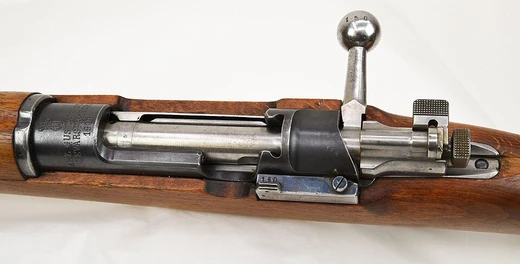
Fans consistently point to the detailed disassembly walkthrough of the modern four-position safety bolt action as the volume's centerpiece, because it clarifies a mechanism that many earlier references described only in vague terms.
How does Part 3 differ from Parts 1 and 2?
Parts 1 and 2 were largely historical surveys of military and hunting bolt actions, while Part 3 shifts to engineering principles, manufacturing tolerances, and the competitive shooting scene. It also introduces a glossary of action-specific terminology that the earlier volumes lacked.
Is this an official military or manufacturer publication?
No, it is entirely a fan-compiled project with no corporate or government sponsorship, and it explicitly states that all specifications are drawn from publicly available sources and personal testing notes.
What key technical fact does Part 3 emphasize most?
The volume repeatedly stresses that a bolt action's accuracy ceiling is determined far more by headspace consistency and barrel harmonics than by the cartridge's nominal velocity, a point it argues is commonly misunderstood by casual shooters.
Are there any notable 'reveal' moments that fans talk about?
Yes, the mid-volume chapter that traces a single serial-numbered prototype from a small workshop in Norway to an Olympic podium finish is widely cited as the most compelling narrative thread in the entire three-part series.
Who is the intended audience for Part 3 specifically?
It is written for enthusiasts who already know what a bolt action is and want deeper mechanical detail, as well as for collectors and competition shooters looking for side-by-side comparisons that no single manufacturer's catalog would provide.