
Bloody Bones
A bogeyman used to frighten children into proper deportment.
Last updated

ArtemisiaGentileschiFan · CC0
Bloody Bones is a folkloric figure used to frighten children, often paired with Rawhead.[1][2] The earliest known written mention of "Bloodybone" dates to approximately 1548 according to the Oxford English Dictionary.[1] In some traditions, Bloody Bones is a water demon that drags children into deep ponds and old marl pits.[2]
Key facts and history
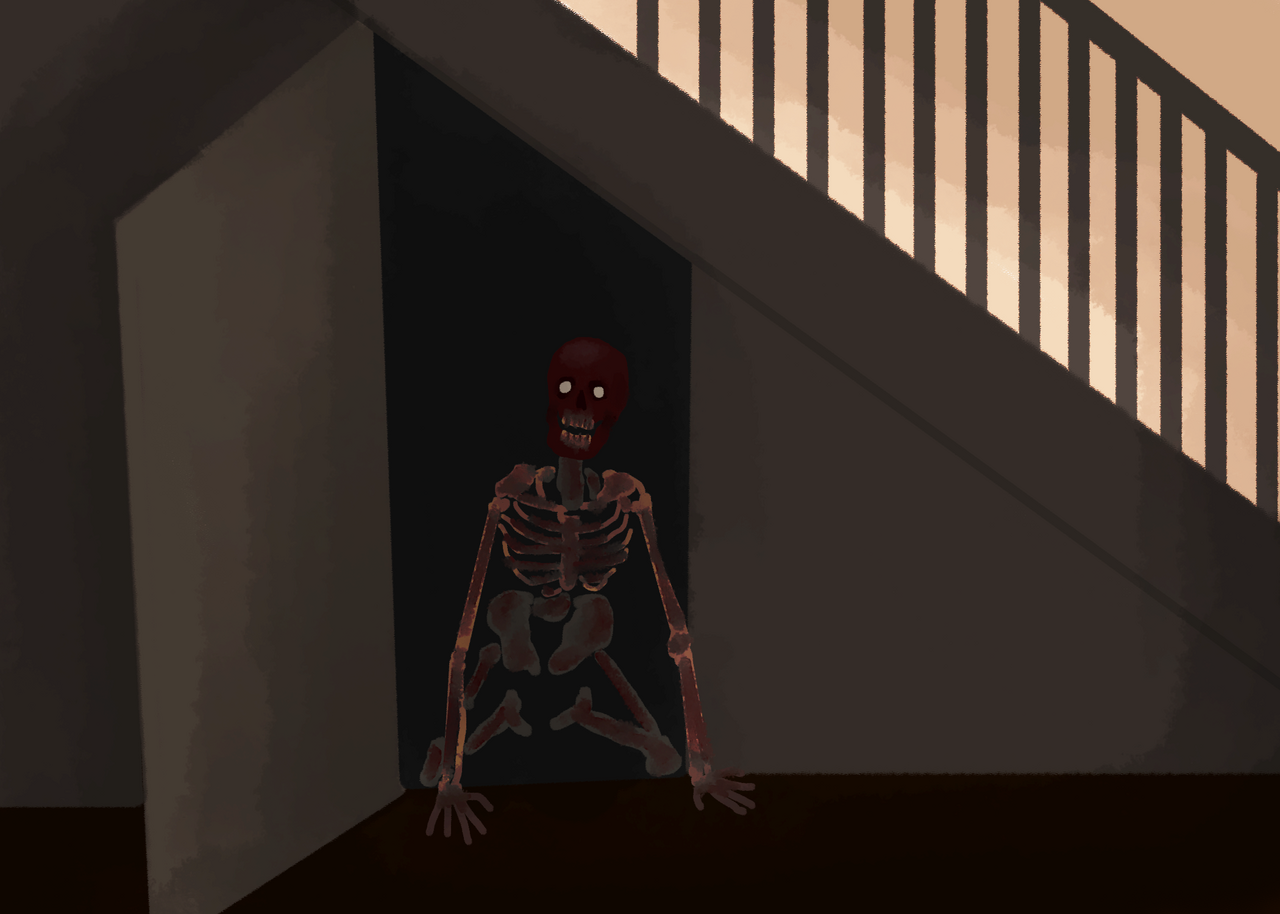
In Somerset, Ruth Tongue reported that Bloody Bones "lived in a dark cupboard, usually under the stairs".[3] In 1693, John Locke noted that the phrase "Raw-Head and Bloody-Bones" was employed to frighten children into obedience.[1] Rawhead is a skinless skull that bites, while Bloody Bones is a skeleton without a head that dances.[4][5]
What the cited sources add
A 1566 Anglican sermon mentions "bloody bone" alongside "raw head" and werewolves as grandmother's tales.[5] A Yorkshire nursery rhyme warns that Rawhead and Bloody Bones steals naughty children and takes them to his den.[5] The Deep South Magazine account notes that the legend may have been passed from whites to African slaves.[5] Other versions connect Raw Head and Bloody Bones to the Gullah tradition of the "haint," a restless night spirit.[5]
A moral tale describes a chatterbox who is decapitated by the creature as retribution for their malicious speech.[4][5]
References
- Wikipedia, "Bloody Bones" (CC BY-SA 4.0), which cites: "Bloody Bones, n.", OED Online (Oxford English Dictionary Third Edition, March 2012); Locke, John. Some Thoughts Concerning Education (1902 ed.). Cambridge University Press. p. 117.; Johnson, Samuel. Dictionary of the English Language. (Vol. 2, 1777 ed.); Wright, Elizabeth Mary (1913). Rustic Speech and Folk-Lore. Humphrey Milford, Oxford University Press. p. 199.; Briggs, Katharine (1976). An Encyclopedia of Fairies. Pantheon Books. pp. 338-339. .; Frederic Gomes Cassidy and Joan Houston Hall (1985). Dictionary of American Regional Englis en.wikipedia.org
- Wikipedia, "Bloody Bones" (CC BY-SA 4.0), which cites: Wright, Elizabeth Mary (1913). Rustic Speech and Folk-Lore. Humphrey Milford, Oxford University Press. p. 199.; Briggs, Katharine (1976). An Encyclopedia of Fairies. Pantheon Books. pp. 338-339. . (original not read by us) en.wikipedia.org
- Wikipedia, "Bloody Bones" (CC BY-SA 4.0), which cites: As quoted in Briggs, Katharine (1967). The Fairies in Tradition and Literature. Routledge. p. 68. (original not read by us) en.wikipedia.org
- Wikipedia, "Bloody Bones" (CC BY-SA 4.0), which cites: "Bloody Bones: A History of Southern Scares" Deep South Magazine (we also read that source) en.wikipedia.org
- "Bloody Bones: A History of Southern Scares" Deep South Magazine. facts only, no text reused. deepsouthmag.com
Each numbered sentence above was checked against the source it cites before publication. Sentences citing Wikipedia adapt text from the English Wikipedia article Bloody Bones (contributors), used under CC BY-SA 4.0; this entry is available under the same licence. Other sources were used for facts only; no text or images are copied from them.
More in Bogeymen
Sources
Compiled from Wikipedia and the sources listed below. Text from Wikipedia is available under CC BY-SA 4.0; this entry is adapted from it.
- Wikipedia: Bloody Bones (CC BY-SA 4.0).
Spotted an error? Know more?
Reader corrections go straight into our review queue. Suggest an edit · How this site is sourced