Kill (body of water)
A Dutch-derived term for a creek or water channel.
Last updated
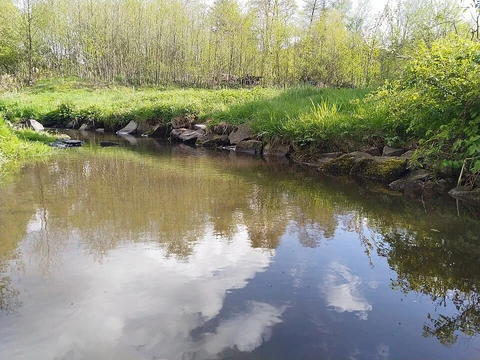
A kill is a waterway, often a creek, but also a tidal inlet, river, strait, or sea arm. The word comes from Middle Dutch 'kille' (modern Dutch 'kil'), meaning 'riverbed' or 'water channel'. It is found in areas of Dutch influence from the former New Netherland colony, mainly the Hudson and Delaware Valleys.
Quick Facts
- Origin language
- Middle Dutch (kille)
- Modern dutch form
- kil
- Primary region
- Hudson and Delaware Valleys (former New Netherland)
Facts from the source article.
Examples
Freestanding uses of 'kill' include Anthony Kill in Saratoga County, New York, flowing from Round Lake through Mechanicville into the Hudson River; Arthur Kill and Kill Van Kull, both separating Staten Island, New York from New Jersey; Batten Kill in Vermont and New York; Bronx Kill between the Bronx and Randalls Island; Normans Kill, an upper Hudson River tributary near Albany, New York; Poesten Kill near Troy, New York; Wynants Kill, also near Troy; West Kill, a creek in Greene County, New York; and West Kill, New York.
The plural 'kills' appears in Dutch Kills, a tributary of Newtown Creek, New York City; Dutch Kills, a neighborhood of Long Island City; English Kills, a tributary of Newtown Creek; Fresh Kills; and Great Kills, Staten Island. Composite names include Catskill, New York; Catskill Mountains; Catskill Creek; Cobleskill; Cresskill, New Jersey; Fishkill; Kaaterskill Clove, a deep gorge in the Catskills; Kaaterskill Creek; Kaaterskill Falls; Kaaterskill High Peak; Peekskill; Poestenkill; Schuylkill River, Pennsylvania; Spackenkill; Tenakill, New Jersey; Raymondskill Falls, Pennsylvania; Wallkill; and Wynantskill.
More in Bodies of Water
Sources
Compiled from Wikipedia and the sources listed below. Text from Wikipedia is available under CC BY-SA 4.0; this entry is adapted from it.
- Wikipedia: Kill (body of water) (CC BY-SA 4.0).
Spotted an error? Know more?
Reader corrections go straight into our review queue. Suggest an edit · How this site is sourced