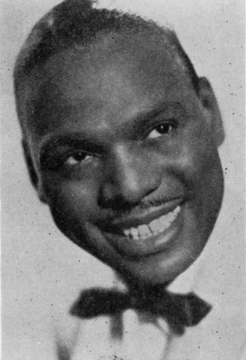
Stéphane Grappelli
French jazz violinist and co-founder of the Quintette du Hot Club de France.
Last updated

via Wikipedia: Stéphane Grappelli · see source
Stéphane Grappelli was a French jazz violinist who, alongside guitarist Django Reinhardt, helped launch the Quintette du Hot Club de France in 1934, an early all-string jazz ensemble. Often called the grandfather of jazz violinists, he performed globally into his eighties. For his first three decades, he used the French spelling Grappelly, switching back to the original Italian Grappelli in 1969.
Biography
Stéphane Grappelli came into the world at a Paris hospital. His father, Ernesto, was an Italian scholar from Alatri, and his mother, Anna Emilie Hanoque, was French. She passed away when he was five, leaving Ernesto to raise him alone. Because Ernesto had written about the dancer Isadora Duncan, he asked her to look after his son.
At age six, Stéphane joined Duncan’s dance school, where he developed a love for French Impressionist music. When war loomed, Duncan left France and turned her château into a military hospital. Ernesto then placed Stéphane in a Catholic orphanage. Grappelli later said his early life felt like a Dickens novel and recalled trying to eat flies because he was so hungry.
He remained at the orphanage until his father returned from the war in 1918. They then settled in an apartment in Barbès. On 28 July 1919, Ernesto had his son naturalized as a French citizen, changing his first name from Stefano to Stéphane. Grappelli started playing the violin at 12, using a three-quarter-sized instrument his father bought by pawning a suit.
He took lessons but preferred teaching himself. On 31 December 1920, he entered the Conservatoire de Paris, graduating in 1923 with a second-tier medal. Around then, his father married Anna Fuchs and moved to Strasbourg. Grappelli stayed in Paris because he did not like his stepmother.
At 15, he began busking full-time to support himself. An older violinist noticed his playing and got him a job in the pit orchestra at the Théâtre Gaumont, accompanying silent films for six hours a day over two years. During breaks at a brasserie called Le Boudon, he listened to an American proto-jukebox and discovered jazz. In 1928, while playing at the Ambassador Hotel, he heard jazz violinist Joe Venuti perform “Dinah.”
Venuti’s bowing impressed him, and Grappelli started developing his own jazz-influenced style. He lived with classically trained violinist Michel Warlop, who admired Grappelli’s jazz playing, while Grappelli envied Warlop’s steady income. After trying the piano, Grappelli stopped playing violin, favoring simplicity and paid gigs. He played piano in a big band led by a musician named Grégor.
In 1929, after a night of drinking, Grégor learned Grappelli used to play violin. He borrowed a violin and asked Grappelli to improvise over “Dinah.” Delighted, Grégor urged him to return to the violin. In 1930, Grégor faced financial trouble and fled to South America after a deadly car accident.
His band reformed as a jazz ensemble under pianist Alain Romans and saxophonist André Ekyan. While playing with them, Grappelli met guitarist Django Reinhardt in 1931. Reinhardt invited him to play in his caravan, but their band commitments kept them apart. They met again in the summer of 1934 while both were playing in bassist Louis Vola’s band at the Hôtel Claridge on the Champs-Élysées.
Pierre Nourry, secretary of the Hot Club de France, asked them to form the Quintette du Hot Club de France, with Vola on bass and Joseph Reinhardt and Roger Chaput on guitar. The group was one of the first all-string jazz bands. They also performed regularly at an artistic salon in Montmartre. The Quintette disbanded in 1939 when World War II broke out.
Post-war
Grappelli was in London at the time and stayed there for the war. In 1940, jazz pianist George Shearing made his debut as a sideman in Grappelli’s band. After the war, Reinhardt came to England for a reunion. They recorded with the “English Quintette” in January and February 1946 for EMI and Decca, using English guitarists Jack Llewelyn and Alan Hodgkiss and Jamaican bassist Coleridge.
Grappelli remained in England. Reinhardt returned to Paris and later toured the U.S. with Duke Ellington’s orchestra. The pair reunited for concerts when Grappelli visited Paris and briefly toured Italy together. Grappelli was known as the grandfather of jazz violinists.
For his first three decades, he used the French spelling Grappelly, switching back to the Italian Grappelli in 1969. He kept performing concerts around the world into his eighties. He died on 1 December 1997.
Personal life and legacy
Sylvia and Evelyne remained in Paris during World War II; father and daughter were reunited in 1946 when Evelyne stayed with Grappelli in London for about a year. Grappelli never married, and it is widely accepted that he was gay. Grappelli died in Paris on 1 December 1997 from heart failure after minor cerebral attacks. His funeral was held on 5 December at Église Saint-Vincent-de-Paul, Paris, within sight of the hospital where he was born.
Did You Know?
- At age six, Grappelli was enrolled in Isadora Duncan's dance school and learned to love French Impressionist music.
- In 1928, Grappelli was struck by jazz violinist Joe Venuti's bowing when Venuti played 'Dinah,' inspiring his own jazz style.
More in Black Lion Records Artists
Test yourself
Three questions drawn from this entry’s sources. Pick an answer to check it.
Answers checked against the source article
Sources
Compiled from Wikipedia and the sources listed below. Text from Wikipedia is available under CC BY-SA 4.0; this entry is adapted from it.
- Wikipedia: Stéphane Grappelli (CC BY-SA 4.0).
Spotted an error? Know more?
Reader corrections go straight into our review queue. Suggest an edit · How this site is sourced