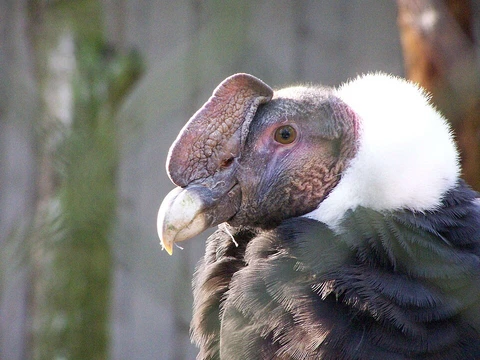
Cinereous harrier
A long-tailed harrier of open South American habitats.
Last updated
The cinereous harrier, or Circus cinereus, is a South American raptor from the harrier group. Its breeding territory runs from Tierra del Fuego up through Argentina, Chile, Bolivia, Paraguay, Peru, and southern Brazil, then across the Andes into Colombia. Though its numbers are dropping, its vast range keeps it from being classified as vulnerable. Its name comes from the Latin for "ashy," referring to its plumage.
Scientific classification
- KingdomAnimalia
- PhylumChordata
- ClassAves
- OrderAccipitriformes
- FamilyAccipitridae
- GenusCircus
- SpeciesCircus cinereus
Named by Vieillot, 1816
Sources: Wikipedia taxobox: Cinereous harrier (CC BY-SA 4.0)
Conservation status
Least Concern (LC)
- LC▲ this species
- NT
- VU
- EN
- CR
- EW
- EX
Source: IUCN Red List assessment · GBIF copy of the Red List category
How big is it?
Largest length in the source, 1.15 m, next to a 1.8 m person.
Diagram: drawn by Codexery, schematic shapes to scale (not a likeness). Length: Wikipedia: Cinereous harrier
Where the cinereous harrier has been recorded
Each dot is a place where the species has been observed and reported (32,739 records, half-degree grid) — not a modelled range. 300 inland records left out (institution coordinates).
Map: drawn by Codexery. Data: GBIF occurrence search (records CC0 / CC BY) · Natural Earth basemap (public domain)
Description
The female cinereous harrier, larger than the male at about 46 centimeters compared to 40, has brown upperparts, a white rump, and cream underparts with a streaked belly. The male is dark grey above with black wingtips and a white rump, while below it is pale grey with a rufous-streaked belly. Its wingspan stretches from 90 to 115 centimeters. This raptor’s 44.5-centimeter tail makes up roughly 56% of its total length, tying it with the long-tailed hawk for the longest tail relative to body size among raptors.
Did You Know?
- The term cinereous derives from the Latin word for ashy, describing its colouration.
- Nests are up to 40 cm across and 30 cm deep.
More in Birds of Chile
Sources
Compiled from Wikipedia and the sources listed below. Text from Wikipedia is available under CC BY-SA 4.0; this entry is adapted from it.
- Wikipedia: Cinereous harrier (CC BY-SA 4.0).
- Conservation status: IUCN Red List assessment.
- Occurrence records: GBIF (CC0 / CC BY). Basemap: Natural Earth (public domain).
Spotted an error? Know more?
Reader corrections go straight into our review queue. Suggest an edit · How this site is sourced