Instant-on
Near-instant boot to a single application without full OS load.
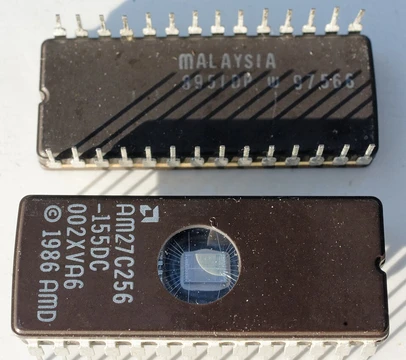
Instant-on is a computing capability that allows a device to boot nearly instantly, enabling access to a specific application or online functionality without waiting for a traditional operating system to load. It is commonly used on laptops, netbooks, and nettops, where a single program such as a web browser or media player can launch directly. The concept contrasts with older true instant-on machines like the Atari ST, which had complete operating systems resident in ROM.
Quick Facts
- First instant-on branded implementation
- Express Gate by ASUS, October 2007
- Apple instant-on product
- MacBook Air, October 2010
- Google chromeos alpha release
- November 2009
Facts from the source article.
Timeline
In October 2007, ASUS introduced an instant-on capability branded "Express Gate" on select motherboards, using DeviceVM's Splashtop software and dedicated flash memory. By May 2008, ASUS was shipping Express Gate on its notebooks. HP began shipping Splashtop on its Voodoo notebooks in July 2008, calling it "Instant On Solution (IOS)." Lenovo followed in October 2008, branding it "QuickStart" on its netbooks.
Dell announced on 13 August 2008 that it would support instant-on in its Latitude laptops, using a dedicated low-voltage sub-processor and a Linux variant OS for near-instant access to email, calendar, and the web. In January 2009, LG shipped Splashtop on its netbooks as "Smart On." Acer started using Splashtop on its netbooks in June 2009, calling it "RevoBoot," and Sony installed an instant-on browser-only version on its Vaio NW laptops that same month.
HP announced in September 2009 that it would ship netbooks and commercial notebooks with a "Quick Web" instant-on feature using Splashtop. ASUS shipped EeePC netbooks with Express Gate in September 2009. Samsung partnered with Phoenix Technologies in October 2009 to offer instant-on notebooks and netbooks. Dell shipped Latitude commercial notebooks with Latitude On Reader and Latitude On Flash features based on Splashtop in November 2009.
Google released the ChromeOS alpha in November 2009. Acer shipped Splashtop on its Aspire One netbooks as "InstaBoot" in November 2009. Mandriva published an environment called "Mandriva InstantOn" in December 2009. By the end of 2009, Splashtop had shipped on over 30 million PCs.
Canonical planned an instant-on proposition for early 2010. HP bought Phoenix's HyperSpace in June 2010. DeviceVM projected Splashtop would ship on over 100 million PCs in 2010. Apple introduced the MacBook Air in October 2010, using flash memory for instant-on. Splashtop OS was released as a free download in February 2011.
Consumer electronics
In the past, consumer electronics manufacturers labeled radios and television sets with "Instant On" or "Instant Play" decals. In series filament sets, instant-on was achieved by adding a silicon diode across the power switch to keep tube filaments lit at 50% power, with the diode reverse-biasing the typical half-wave rectifier. This provided near-instant operation and potentially longer vacuum tube life, but increased energy consumption and fire risk. Most solid state consumer electronics are inherently instant-on, so the term persisted into the early solid state era to differentiate from vacuum-tube products, with CRTs being a notable exception.
More in BIOS
Spotted an error? Know more?
Reader corrections go straight into our review queue. Suggest an edit · How this site is sourced