Corona (beer)
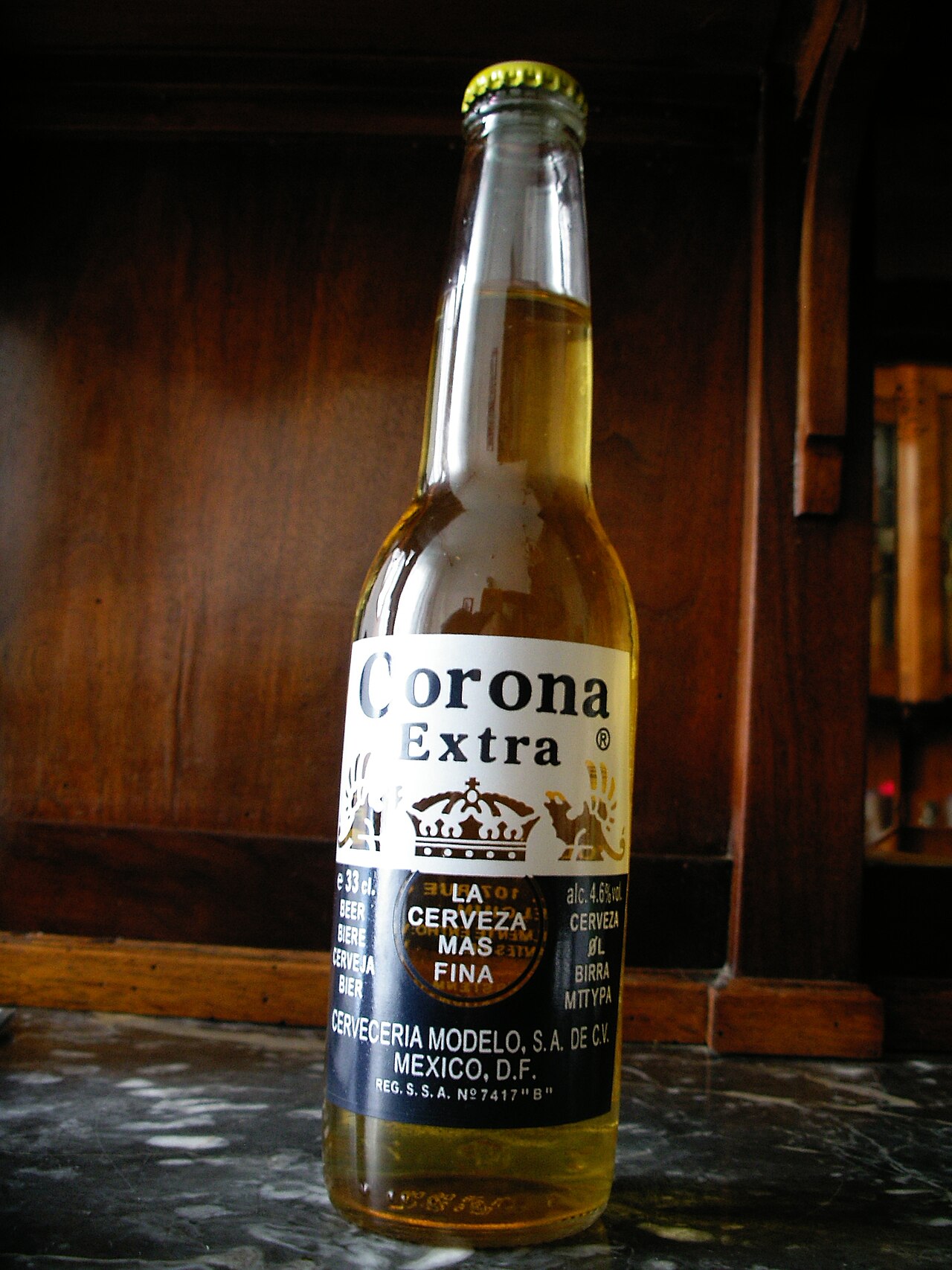
Corona refers to itself as 'La cerveza más fina.'

The original uploader was Perkele at Italian Wikipedia . · CC BY-SA 3.0
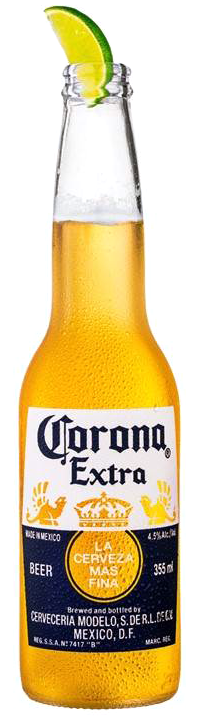
Corona is a Mexican brand of beer produced by Grupo Modelo in Mexico and brewed, exported, and distributed globally by Grupo Modelo's parent company AB InBev. In the United States and Guam, Constellation Brands is the exclusive licensee and sole importer distributor. It is one of the top-selling brands of imported beer in the United States and is often served with a wedge of lime or lemon in the neck of the bottle. The most popular variation is Corona Extra, a pale lager that has been the top-selling imported drink in the U.S. since 1998.
Quick Facts
- Manufacturer
- AB InBev; Constellation Brands (US license)
- Origin
- Mexico
- Abv
- 4.5%
- Style
- Pale lager
Facts from the source article.
Lore & Background
Corona was created in July 1922 when German immigrant and brewmaster Adolph H. Schmedtje joined Cerveceria Modelo Sociedad Anónima to oversee production. The beer was officially introduced in 1925. In 1932 the company changed ownership and eventually consolidated into Grupo Modelo. Corona grew in popularity in the United States after the reduction of tariffs on Mexican beer imports under NAFTA in 1994, along with increased immigration between the two countries. In 2013, Anheuser-Busch InBev acquired full control of Grupo Modelo, and to satisfy U.S. antitrust concerns, all U.S. distribution rights to Corona were transferred to Constellation Brands.
The label and logo were designed by Eduardo Cataño working under the advertising company Galas de México around 1935. Since the 1980s, Corona was branded as 'Coronita' in Spain because winemaker Bodegas Torres owned the trademark for 'Coronas' since 1907. AB InBev resolved the branding issues in 2016, and the beer began selling as Corona in Spain from June of that year. In Mexico, the United Kingdom, Canada, Australia, and the United States, smaller 210 mL bottles are also branded as 'Coronita'.
Reader's Guide
Corona's significance lies in its sustained dominance as the top-selling imported beer in the United States since 1998, a position reinforced by its parent company's global reach and a distinctive marketing identity centered on beach imagery and the taglines 'Miles Away From Ordinary' (2000–2007) and 'Find Your Beach' (early 2010s). Its longest-running ad, 'O Tannenpalm', has aired every December since 1990. The brand has sponsored boxing in Mexico and the U.S., the LPGA Tour's Corona Championship (2005–2009), the NASCAR Mexico Corona Series (2004–2011), four Liga MX teams, the Mexico national football team (since 2003), the ATP, and the SBK Superbike World Championship (1998–2007). During the COVID-19 pandemic, despite a poll suggesting 38% of Americans would not buy Corona due to its name, actual sales increased 8.9% in the first three months of 2020, with a 24% year-over-year rise in the first three weeks of March. A study using Nielsen data found that each confirmed COVID-19 case was associated with a $5.3 increase in weekly Corona sales compared with other major beer brands, concluding the negative name association did not reduce sales.
Origins & Corporate Lineage
Corona's story begins in the early 1920s when Adolph H. Schmedtje, a German-born brewmaster, took on a production oversight role at Cerveceria Modelo Sociedad Anónima in Mexico. In July 1922 he joined the brewery and set about developing what would become the Corona brew, which was formally launched to the public in 1925. The company itself went through a major ownership shift in 1932, eventually consolidating into the entity known as Grupo Modelo. For nearly a century the brand remained under Mexican corporate stewardship until 2013, when Anheuser-Busch InBev purchased full control of Grupo Modelo. That acquisition triggered a regulatory complication: the United States Department of Justice raised antitrust concerns about the combined portfolio. To resolve the issue, AB InBev was required to hand over all American distribution rights for Corona and the rest of the Grupo Modelo portfolio to Constellation Brands, which became the exclusive licensee and sole importer-distributor in the United States and Guam. This corporate restructuring reshaped how the beer reaches American consumers while leaving the brewing and global export operations under AB InBev's umbrella.
Brewing & Product Range
Corona Extra, the flagship variant, is a pale lager whose recipe distinguishes itself from many European lagers by incorporating corn alongside the traditional barley malt and hops. The full ingredient list, as disclosed by Sinebrychoff, a Finnish company under the Carlsberg Group, also includes yeast, ascorbic acid as an antioxidant, and propylene glycol alginate serving as a stabilizer. Beyond the core Extra, the brand family has expanded to include Corona Light for those seeking a lower-calorie option, Corona Premier as a premium variant, and Corona Familiar in a larger format. In March 2020 the brand extended its reach into the hard seltzer category with a line of flavored seltzers carrying the Corona name. The commercial success of these products is substantial: Corona Extra has held the title of top-selling imported drink in the United States continuously since 1998, and the brand as a whole ranks among the highest-selling imported beers in the country. The inclusion of corn in the mash bill gives the lager a lighter, slightly sweeter character that many drinkers associate with the brand's beach-ready identity.
Global Distribution & Packaging
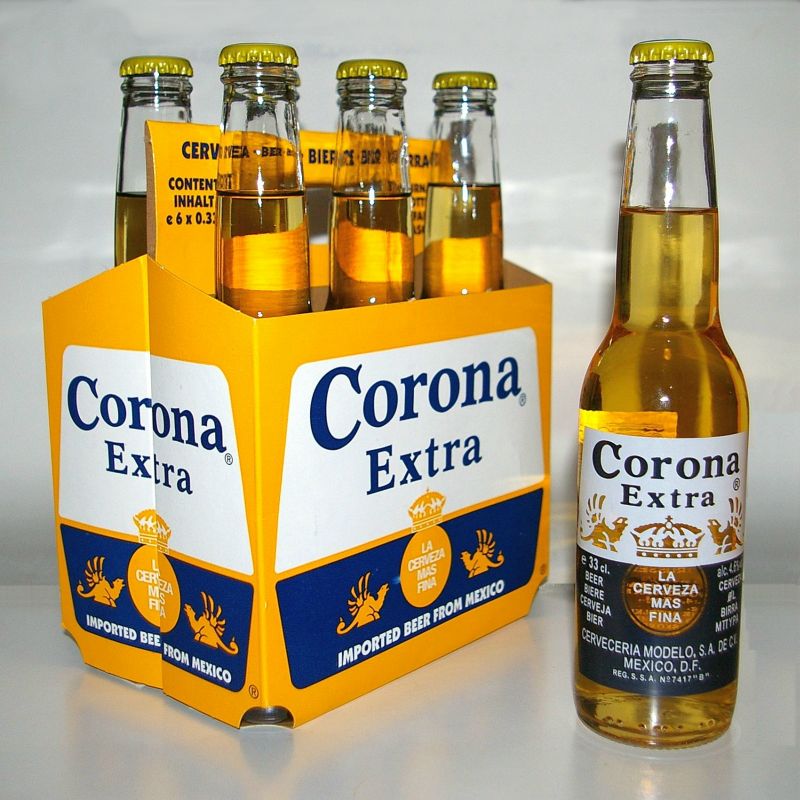
Corona is brewed, exported, and distributed worldwide under the AB InBev umbrella, yet its path to consumers varies significantly by region. In the United States and Guam, Constellation Brands holds exclusive licensing and sole import-distribution rights, an arrangement born from the 2013 antitrust settlement. For the Australasia market, the beer is actually brewed in China, illustrating how the brand's supply chain adapts to geography. The product reaches shelves in an impressive range of bottle sizes, from the 207-millilitre ampolleta (known as Coronita or cuartito) up to the 940-millilitre Corona Familiar, also called the Litro or Mega. Draught and canned formats exist in select markets. A notable branding quirk persisted in Spain, where winemaker Bodegas Torres had owned the "Coronas" trademark since 1907, forcing the beer to be sold as Coronita there from the 1980s until AB InBev resolved the dispute in 2016. In Mexico, the UK, Canada, Australia, and the US, the smaller 210-millilitre bottles carry the Coronita label. The brand's label and logo were designed around 1935 by Eduardo Cataño at the advertising firm Galas de México.
Cultural Footprint & Sponsorships
Corona has woven itself into the fabric of Mexican and American sports for decades. In Mexico the brand was a longtime boxing sponsor before expanding into the US cable-era fight scene, including Saturday night bouts on Televisa. After AB InBev's takeover, sponsorship scaled back, though Constellation Brands continues the boxing partnership in the US, most visibly with undefeated featherweight champion Floyd Mayweather Jr. In golf, Corona served as title sponsor of the LPGA Tour's Corona Championship, later the Tres Marias Championship, from 2005 to 2009. In motorsport, it backed the NASCAR Mexico Corona Series from 2004 to 2011. In football, Corona sponsors four Liga MX clubs—Santos Laguna, América, Toluca, and Mazatlán—and has backed the Mexico national team since 2003 with a contract running through 2026. The brand also held the premier worldwide sponsorship of the ATP tennis tour for five and a half years and title-sponsored the SBK Superbike World Championship from 1998 to 2007. In advertising, the 1990 Christmas spot "O Tannenpalm," featuring a whistled "O Tannenbaum" over a lit palm tree, has aired every December since, making it the longest-running beer commercial.
Gallery
More in Beer Brands
Spotted an error? Know more?
Reader corrections go straight into our review queue. Suggest an edit · How this site is sourced