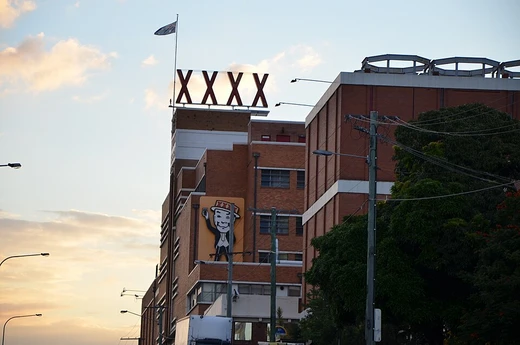
Beverwyck Brewery
Beverwyck, Best Beer Brewed.
Beverwyck Brewing Company was founded in 1878 in Albany, New York, by Michael N. Nolan, a former two-term mayor of Albany and U.S. Congressman. The brewery was notable for its colossal Teutonic-style building, designed by Charles Stoll & Son, which was considered a model lager brewery in the United States if not the world. It catered to a new taste for lighter, crisper lager beer at a time when most American beer was ale.
Quick Facts
- Headquarters
- Albany, New York; United States
- Founded
- 1878
- Defunct
- 1972
- Industry
- Alcoholic beverage
- Products
- Beer
Facts from the source article.
Lore & Background
The brewery was built exclusively for lager production, made possible by newly developed ice and refrigeration machines. Prior to Beverwyck, the company operated as Quinn and Nolan, producing ale and porter in smaller quantities at a separate facility across the street. The Beverwyck building featured a 230-foot deep well and many modern innovations for industrial-scale brewing, attracting visitors from around the country. Delivery of casks throughout Albany was handled by a stable of 40 horses and carriages.
From 1878 until Prohibition in 1920, the brewery produced lager beer. During Prohibition, Beverwyck held a license to produce non-alcoholic beverages and was one of three Albany breweries to survive the era. During World War II, it was among forty U.S. breweries shipping beer to troops overseas, with most of its beer in green cans going to soldiers in the Pacific theater.
In 1933, Beverwyck reopened with six products, including India Ale, Porter, Ale, Bock, Beer, and Irish Cream Ale. In the mid-1940s, a streamlined bottling plant and stock house nearly doubled production capacity. The brewery was acquired by F. & M. Schaefer Brewing Company in 1950 and closed in 1972 due to inefficiency. The Teutonic building was demolished in 1976, but failed to collapse with controlled demolitions and took months to remove brick by brick.
Reader's Guide
Beverwyck Brewery holds significance as a pioneering lager brewery in the late 19th century, when ale dominated American beer production. Its Teutonic-style building, designed by Charles Stoll & Son, was hailed as a model facility and drew visitors nationwide. The brewery's survival of Prohibition and its role in supplying beer to troops in the Pacific during World War II underscore its resilience and contribution to wartime morale. The iconic 11.5-foot zinc statue of King Gambrinus, cast by J. W. Fiske & Company, originally perched over the front door and is now displayed at the Samuel Adams Brewery in Breinigsville, Pennsylvania—one of only five known surviving statues of its kind. After acquisition by Schaefer in 1950, the brewery operated until 1972, and its demolition in 1976 proved unexpectedly difficult, requiring months of manual removal. Beverwyck's legacy is preserved through its surviving statue and its role in the history of American lager brewing.
More in Beer Brands
Spotted an error? Know more?
Reader corrections go straight into our review queue. Suggest an edit · How this site is sourced