Siege of Emesa (638)
Rashidun defense repels Byzantine-allied Arab Christian coalition.
Last updated
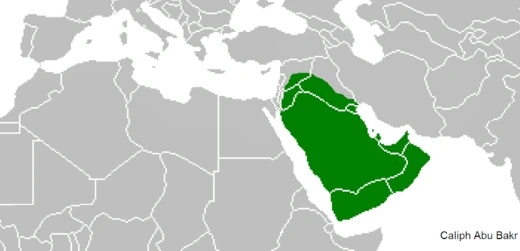
The siege of Emesa in 638 was laid by a coalition force of Arab Christian tribes from Jazira mustered by Heraclius. It aimed to stem the losses of Byzantine territories due to the rapid expansion of the Rashidun Caliphate in the Levant.
Background
After the defeat at Yarmouk, the Byzantine Empire had few military resources left and could not attempt a comeback in Syria. Heraclius needed the Muslims occupied in Syria to gain time for defense. He sought help from Christian Arab tribes of Jazira, particularly from Circesium and Hīt, who mustered a large army and marched against Emesa, then the military headquarters of Abu Ubaydah.
Caliphate strategy
Abu Ubaidah withdrew all forces from northern Syria to Emesa as part of a complex strategy to repel the invasion. Caliph Umar instructed Abu Ubaydah to send field commanders with splinter forces to lay counter sieges on cities in Jazira, the enemy's homeland, to divert their focus. Iyadh ibn Ghanm commanded these splinter forces. In 638, Muslims attacked Hīt, leaving a fraction to besiege it while the rest went to Circesium.
Iyadh sent Habib ibn Maslama al-Fihri toward Circesium with a division of Banu Kilab known as the Corps of 'Amr, led by Aslam ibn Zur'a al-Kilabi, al-Harith ibn Yazid, and his son Zufar ibn al-Harith. Umar sent a detachment from Iraq to invade Jazira from three routes, marched from Medina with 1,000 men, and ordered Sa'd ibn Abi Waqqas to send a detachment under Al-Qa'qa' ibn Amr al-Tamimi to assist Emesa. Another detachment under Suhayl ibn 'Uday followed the al-Farad road to Raqqa.
Siege
After the Arab Christian contingent from Jazira was mustered, they marched to Homs and laid siege. Khalid, having just returned from conquering Qinnasrin, appealed to Abu Ubaydah to lead a sally, but Abu Ubaidah decided to wait behind the wall for reinforcements. The sieges of Circesium and Hīt by Iyadh's corps occurred simultaneously with the siege of Homs. At Hīt, Muslims initially faced difficulty as defenders dug a moat, but the army eventually penetrated it.
Circesium was captured without resistance by Habib's army, though Muslim sources date this to 637 while Maximillan Streck suggested 640. Iyadh sent Walid ibn Uqba to subdue fortresses of the Rabi'a and Tanukhid tribes. Abu Ubaydah's counter-siege strategy resulted in victory at the Second Battle of Emesa and the capture of Circesium and Hīt, while Christian Arabs were pursued by Khalid's cavalry. Between late 639 and December 640, Iyadh subdued Circesium, Amid, Mayyafariqin, Nisibin, Tur Abdin, Mardin, Dara, Qarda, and Bazabda.
At Raqqa, peasants outside the walls were defended by Arab Christian nomads; Muslim forces compelled the city to surrender within five or six days. Khalid, reinforced by 4,000 soldiers under Qa'qa from Iraq, received permission to pursue and inflicted heavy losses, breaking the siege and preventing their return to Jazira.
More in Battles Involving the Rashidun Caliphate
Sources
Compiled from Wikipedia and the sources listed below. Text from Wikipedia is available under CC BY-SA 4.0; this entry is adapted from it.
- Wikipedia: Siege of Emesa (638) (CC BY-SA 4.0).
Spotted an error? Know more?
Reader corrections go straight into our review queue. Suggest an edit · How this site is sourced