Battle of Caesarea (654)
A Byzantine victory that thwarted a Rashidun invasion.
Last updated
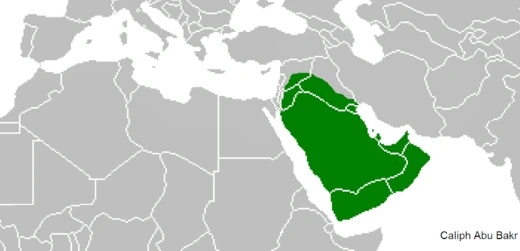
The Battle of Caesarea was fought in the 650s during a grand offensive against the Byzantine Empire by the Rashidun Caliphate, led by Mu'awiya, the Umayyad emir of Syria. Arab forces initially restored authority over Armenia and advanced into Cappadocia, where they were confronted by a Byzantine army, probably near Caesarea, and eventually defeated. The defeat, combined with a maritime disaster suffered by the Arab fleet in a storm on the Bosphorus, thwarted the invasion and marked a rare but significant Byzantine victory over the Arabs during the Rashidun era.
Background
By the early 650s, the Arab–Byzantine wars had reached a stalemate along the Taurus Mountains. In 653, Byzantine Emperor Constans II launched an offensive into Armenia, whose leading Nakharar Theodore Rshtuni had switched allegiance to the Arabs. Constans reasserted Byzantine authority over the region and secured the submission of Dvin, but soon withdrew to Asia Minor upon learning of Arab designs on Constantinople, leaving a commander named Maurianos with a small army to secure Armenia.
In 651, the Rashidun Caliphate completed the Muslim conquest of Persia. Caliph Uthman then endeavored to conduct a decisive campaign against the Byzantines, with Constans' campaign in Armenia adding further incentive. Veteran Arab warriors were detached from Persia, Asoristan and Sindh and sent west to congregate for a massive offensive led by Mu'awiya. The Caliphate's navy was tasked with preparing an attack against Constantinople.
The Armenian historian Sebeos recorded inflated figures of 5,000 ships and 500,000 men for the fleet, and 300,000 for the armies assembled to attack Asia Minor.
Campaign and battle
While an Arab armada was prepared at Alexandria, a 7,000-strong Rashidun column was dispatched to Armenia to aid Theodore Rshtuni. Joined by Armenian retinues, the Arab army forced the Byzantines to retreat to the Lazic coast, reoccupied Theodosiopolis, plundered the Black Sea coast, captured Trebizond, and raided as far as Ancyra. After restoring Armenia under Arab hegemony, the main land army under Mu'awiya crossed the Cilician Gates into Anatolia, with the primary objective of capturing Caesarea, the administrative capital and chief logistical hub of central Anatolia.
The Arab vanguard advanced rapidly into Cappadocia in early 654, catching Byzantine garrisons unprepared. Mu'awiya appears to have occupied a strategic position at Caesarea. The expedition then divided, with one half remaining in Cappadocia while Mu'awiya advanced further west, reportedly as far as Chalcedon on the Bosphorus, though some modern scholars doubt this claim. The land army is said to have rendezvoused with the Alexandrian armada, which had prepared siege engines for an assault on Constantinople.
Mu'awiya ordered the fleet to advance in two lines, but a violent cyclone capsized the vessels, destroying them along with their crews. With his fleet lost, Mu'awiya and his army withdrew to Syria.
Aftermath
The Byzantine victory at Caesarea and the destruction of the Arab fleet averted the immediate threat to Anatolia and provided an opportunity for Byzantine offensives. Maurianos attempted to restore Byzantine authority over Armenia but was repulsed at Nachkiwan and fell in combat.
Emperor Constans exploited Muslim naval losses to conduct a counteroffensive in Cyprus, which failed when the Muslim fleet won the Battle of the Masts. However, heavy Muslim naval losses inhibited their ability to exploit that victory. The outbreak of the First Fitna in 656 prevented the Caliphate from further grand ventures against Byzantium, allowing Constans a period of reprieve.
More in Battles Involving the Rashidun Caliphate
Sources
Compiled from Wikipedia and the sources listed below. Text from Wikipedia is available under CC BY-SA 4.0; this entry is adapted from it.
- Wikipedia: Battle of Caesarea (654) (CC BY-SA 4.0).
Spotted an error? Know more?
Reader corrections go straight into our review queue. Suggest an edit · How this site is sourced