Frequently Asked Questions
The most-asked questions about battle rifles and carbines.
What is a battle rifle?
A battle rifle is a selective-fire rifle chambered in a full-power cartridge, designed to serve as a standard infantry weapon with both semi- and full-auto capability. It occupies the niche between a single-shot service rifle and a lighter assault rifle in terms of round energy and intended role.
What is a carbine?
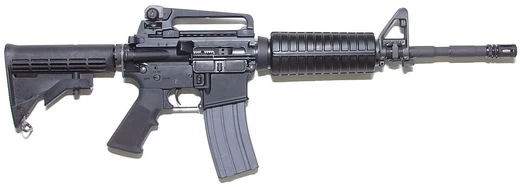
A carbine is a shortened, lighter derivative of a parent rifle, typically featuring a reduced barrel and overall length for easier handling by mounted troops or in confined spaces. The term dates back to 17th-century cavalry sidearms and has carried through to modern compact rifle variants.
What is the core difference between a battle rifle and a carbine?
A battle rifle is defined by its full-power cartridge and standard-length barrel, whereas a carbine is defined by its reduced barrel length relative to its parent design. A carbine can be built around any cartridge, while a battle rifle specifically uses a full-power round like 7.62 mm.
What calibers are typical for battle rifles?
Post-war battle rifles most commonly chamber 7.62×51 mm NATO or 7.62×54 mmR, while earlier examples used 8×57 mm Mauser or 7.92×57 mm Mauser. These full-power cartridges are what separate the category from the 5.56×45 mm rounds used by assault rifles.
Who are the key designers most associated with this weapon category?
Dieudonné Saive and the FN team behind the FAL, along with the Heckler & Koch engineers who developed the G3, are the two most central figures in post-war battle rifle design. Soviet designers working on the SKS and early AK variants also shaped the broader full-power selective-fire lineage.
Where should a newcomer start when exploring battle rifles and carbines?
Begin with the FN FAL and the G3, since they are the two most widely produced post-war battle rifles and best illustrate the category's core philosophy. Comparing each to its shorter-barrel or compact derivative then makes the carbine distinction immediately clear.
Which conflicts are most closely associated with battle rifles?
The FN FAL saw heavy use in the Korean War, the Vietnam War, and numerous Cold War proxy engagements across the Middle East and Africa. The G3 served as West Germany's standard-issue rifle throughout the Cold War and appeared in a wide range of regional conflicts.
Why is the FN FAL considered the defining battle rifle?
The FAL was the first widely adopted selective-fire battle rifle and earned the Cold War-era nickname 'the right arm of the Free World.' With over seven million units manufactured across dozens of nations, it remains the most produced battle rifle in history.
How does a battle rifle differ from an assault rifle in practical terms?
A battle rifle fires a full-power round that generates significantly more recoil, making sustained full-auto fire difficult to control, while an assault rifle uses an intermediate cartridge optimized for accurate automatic fire. Most Western armies shifted from battle rifles to assault rifles in the 1960s and 1970s for this reason.
What are some well-known carbine variants derived from battle rifles?
The FN FAL had a dedicated carbine model with a shortened barrel, and the U.S. M14 spawned the M15 carbine for special operations use. The G3's compact successors, though some shifted calibers, continue the lineage of shorter full-power or intermediate-cartridge rifles in the carbine role.