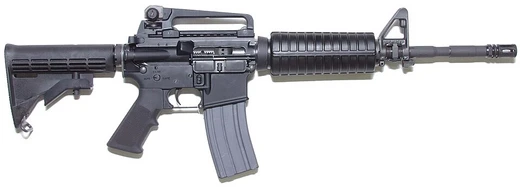
CETME rifle
Spanish battle rifle that became the basis for the Heckler & Koch G3.
Last updated

Shotgun · CC BY-SA 3.0
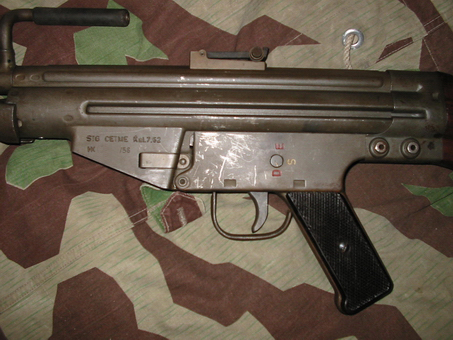
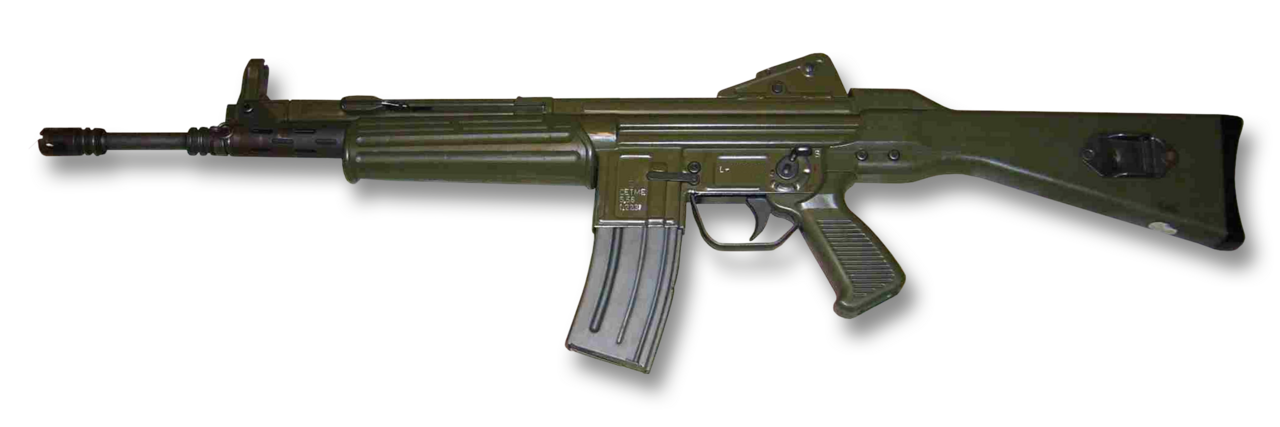
It used a 20-round box magazine and was originally designed for the 7.92×41mm CETME cartridge before later being chambered for the 7.62×51mm NATO round.[1] The Spanish manufacturer Centro de Estudios Técnicos de Materiales Especiales (CETME) produced the CETME Model 58, a select-fire battle rifle constructed from stamped steel.[1]
How it changed
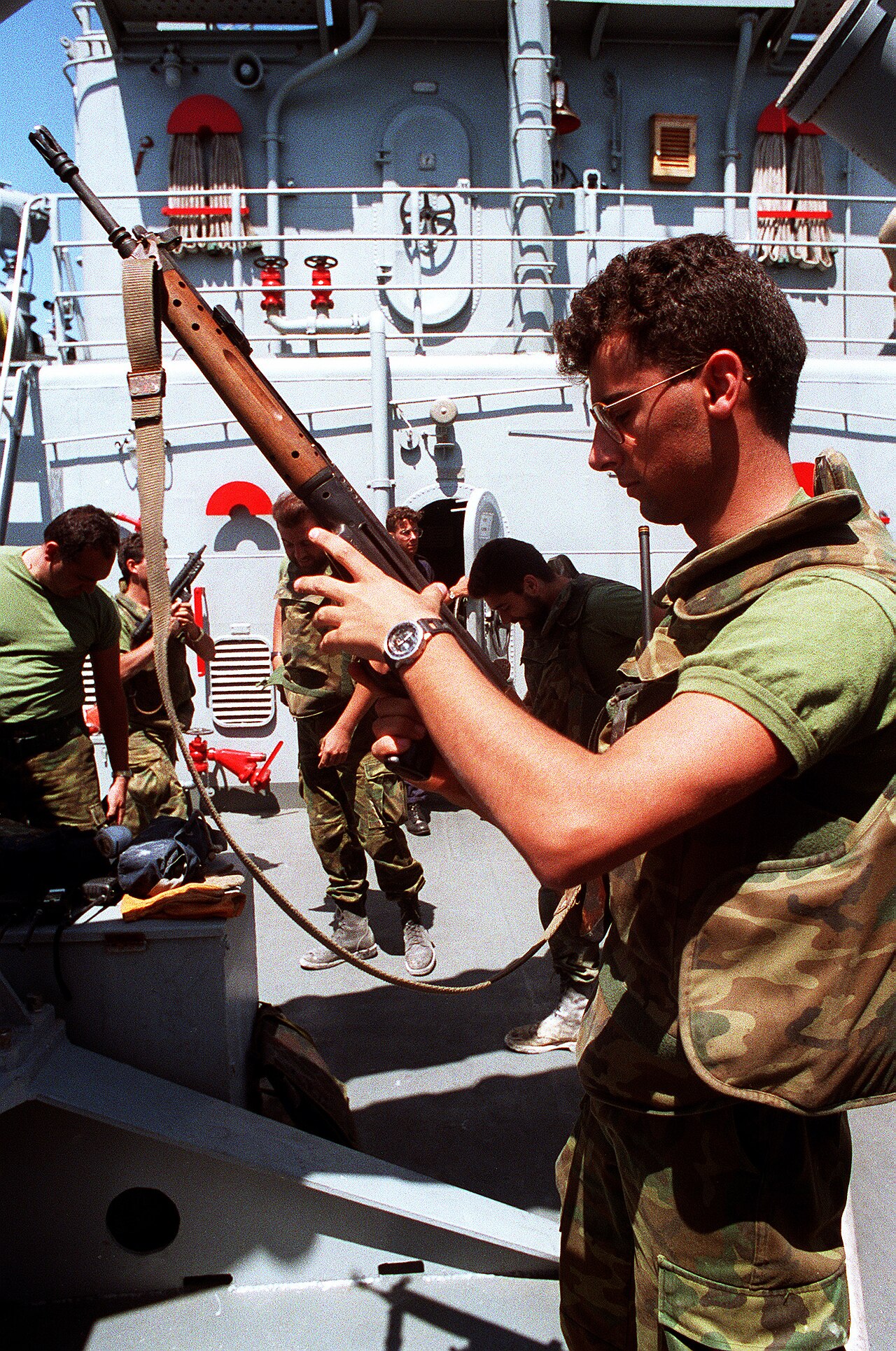
The CETME rifle was designed primarily by German engineer Ludwig Vorgrimler, based on the experimental German StG 45(M) and the French-made AME 49.[2] The StG45 used a roller-delayed blowback mechanism that never completely locks and does not require a moving barrel.[2] The CETME Model 58 introduced a fluted chamber, which uses horizontal grooves to let cartridge cases float on a layer of gas for easier extraction.[3] A fixed barrel, taken from the StG45(M), was incorporated into the CETME design.[3]
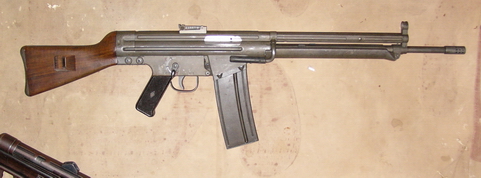
To achieve these goals, the 7.92×41mm CETME cartridge was introduced in 1953; its projectile had an aluminium core with a copper jacket wrapped around the middle, leaving the core exposed at both ends.[4] Because the projectile was light, it generated less recoil impulse, which helped decrease bullet spread when firing automatically.[4] The Bundesgrenzschutz later asked for the cartridge to be changed to 7.62mm, which resulted in the 7.62×41mm CETME round, and subsequently the Modelo B was adapted to use the 7.62×51mm NATO cartridge.[4]
What the maker and period sources say
The engineers at CETME contended that the bullet's aerodynamic shape minimised crosswind effects.[4] The bullet was said to perform in the same manner as a typical full metal jacket bullet.[4]
References
- Wikipedia, "CETME rifle" (CC BY-SA 4.0), which cites: Hogg, "Military Small Arms of the 20th Century", Krause Publication, 2000, p. 275–276; Johnston, Gary Paul, and Thomas B. Nelson. The World's Assault Rifles. Ironside International Publishers, Inc., 2016.; Hogg, "Military Small Arms of the 20th Century", Krause Publication, 2000, p. 275–276; Hogg, "Military Small Arms of the 20th Century", Krause Publication, 2000, p. 275–276 (we also read that source) en.wikipedia.org
- Wikipedia, "CETME rifle" (CC BY-SA 4.0), which cites: Walter, "Rifles of the World", Krause Publications, November 2023, p. 82–83}}{{Dead link; Thompson 2019, p. 4-5 (we also read that source) en.wikipedia.org
- Wikipedia, "CETME rifle" (CC BY-SA 4.0), which cites: Hartink, A. E. (2001). The Complete Encyclopedia of Automatic Army Rifles, pp. 119 & 12 0.Hackberry Press.; Hartink, A. E. (2001). The Complete Encyclopedia of Automatic Army Rifles, pp. 119 & 12 0.Hackberry Press.; Hogg, "Military Small Arms of the 20th Century", Krause Publication, 2000, p. 275–276 (we also read that source) en.wikipedia.org
- Wikipedia, "CETME rifle" (CC BY-SA 4.0), which cites: Johnston, Gary Paul, and Thomas B. Nelson. The World's Assault Rifles. Ironside International Publishers, Inc., 2016. (original not read by us) en.wikipedia.org
Each numbered sentence above was checked against the source it cites before publication. Sentences citing Wikipedia adapt text from the English Wikipedia article CETME rifle (contributors), used under CC BY-SA 4.0; this entry is available under the same licence. Other sources were used for facts only; no text or images are copied from them.
More in Battle Rifles and Carbines
Test yourself
Three questions drawn from this entry’s sources. Pick an answer to check it.
Answers checked against the source article
Sources
Compiled from Wikipedia and the sources listed below. Text from Wikipedia is available under CC BY-SA 4.0; this entry is adapted from it.
- Wikipedia: CETME rifle (CC BY-SA 4.0).
- Word definitions: the Codexery glossary, each quoted from its Wikipedia article.
Spotted an error? Know more?
Reader corrections go straight into our review queue. Suggest an edit · How this site is sourced