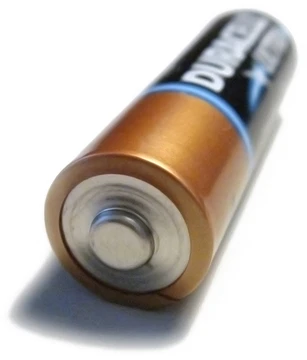
High capacity oceanographic lithium battery pack
High-capacity lithium packs enable longer oceanographic deployments with stable voltage.
Last updated
High capacity oceanographic lithium battery packs are used by physical oceanographers to power instruments during long-term deployments. By increasing the battery capacity, researchers can extend how long their equipment stays in the water, which allows them to collect more data. Since oceanographers often work in remote locations that are expensive to reach—usually by ship—the cost of transportation can be the largest part of a project. This makes it worthwhile to reduce the number of visits by making each deployment last longer.
Reasons for use
When possible, oceanographers prefer alkaline batteries because they are cheap and easy to find. But when alkaline batteries do not offer enough capacity, lithium battery packs become the alternative. These packs provide about three times the capacity. Lithium thionyl chloride packs cost more than alkaline ones, but they offer roughly three times the energy density at about 60% of the weight (by volume).
They also have other benefits: they produce very little gas, and any gas that forms is sealed inside metal containers. Their voltage stays much more stable over the life of the pack compared to alkaline cells. Low current lithium cells also have low self-discharge, losing less than 10% of their capacity over ten years.
Battery Pack Design
The design of these packs often combines low current lithium thionyl chloride primary cells with small rechargeable cells called Hybrid Layer Capacitors (HLCs). Low current lithium cells cannot supply the high currents needed for some applications, but they store more energy than high current cells.
High current cells use spiral wound electrodes—sheets wrapped in a spiral—to increase surface area and current output. Low current cells use a simpler bobbin design with an inner anode, an outer layer of metallic lithium, and electrolyte between them. This design costs less to make and stores more energy.
Cell characteristics
The TL6930 cells work well in typical ocean temperatures (0–40 °C) and for deployments lasting from one month to two years. At 5–10 °C, one TL6930 holds about three times the energy of a same-sized alkaline cell, mostly because of its higher voltage (nominally 3.8 VDC versus 1.5 VDC). When both cells supply the same continuous power, the lithium cell lasts three times as long and maintains a steadier voltage. Primary lithium cells also hold several times the capacity of rechargeable lithium cells.
Quick Facts
- Voltage nominal
- 3.8 VDC
- Self discharge rate
- less than 10% in 10 years
- Operating temperature range
- 0–40 °C
- Deployment duration range
- 1 month – 2 years
- Short circuit trip current
- 8 A
Facts from the source article.
Lore & Background
Oceanographers often work in remote sites that are difficult and expensive to reach, with ship costs dominating investigation budgets. To minimize visits, they extend deployment durations by increasing battery capacity. When alkaline batteries provide insufficient capacity, oceanographers turn to lithium battery packs, which supply three times the capacity at about 60% of the weight. Lithium thionyl chloride chemistry offers higher energy density, negligible gas production, and a more constant voltage over the pack's life compared to alkaline cells.
Doppler Ltd. oceanographic battery packs use Tadiran's TL6930 low current lithium thionyl chloride primary cells combined with small rechargeable cells called Hybrid Layer Capacitors (HLCs). Low current lithium cells use bobbin electrodes—a simpler, less costly design that stores more energy than high current cells with spiral wound electrodes. HLCs behave like huge capacitors over a narrow voltage range and enable low current lithium packs to supply short pulses of high current needed by instruments such as acoustic modems and ADCPs.
PulsesPlus packs are constructed in branches of parallel primary cells, each branch charging one or more HLCs. The HLC sources most of the current during high-demand pulses, then slowly recharges from the primary cells. This arrangement allows the pack to deliver more of its stored energy to the instrument system. The pack includes Schottky diodes to prevent reverse charging, PTCs as resettable fuses, and a safety circuit that protects against short circuits and prevents full discharge that could lead to dangerous charging of depleted cells.
Oceanographic Deployment & Economic Rationale
In the realm of oceanographic instrumentation, lithium battery packs occupy a distinctive niche where performance demands and logistical realities converge. These packs cost considerably more than the standard alkaline alternatives typically deployed in marine monitoring equipment, yet they deliver up to three times the energy capacity of those alkaline packs.
This premium pricing becomes economically defensible when one considers the extraordinary expense of servicing remote oceanographic instruments—operations that generally require dispatching ships to retrieve, replace, or maintain equipment deployed in the open ocean. The extended operational life provided by a high-capacity lithium pack means fewer service calls, fewer vessel deployments, and ultimately a lower total cost of ownership for long-duration oceanographic campaigns. The high charge density of lithium chemistry makes it particularly well-suited to these applications, where the weight and volume of the power source must be kept minimal while the duration of autonomous operation is stretched as far as practical.
Reader's Guide
High capacity oceanographic lithium battery packs are significant because they directly address the logistical and financial constraints of oceanographic research. By providing three times the capacity of alkaline packs at 60% of the weight, they enable longer deployments in remote sites, reducing the frequency of costly ship visits. The combination of low current primary lithium cells with Hybrid Layer Capacitors solves the problem of supplying high current pulses while maintaining high energy storage, making these packs suitable for instruments like ADCPs and acoustic modems.
The safety circuit is a critical feature: it protects against short circuits, prevents reverse charging, and turns off the pack before full discharge to avoid dangerous conditions. It also provides a self-test that confirms the pack's health before deployment, a vital capability given the time and expense invested in long-term experiments. The legacy of these packs lies in their ability to extend the duration and reliability of oceanographic data collection, allowing researchers to gather more information from hard-to-reach locations without compromising safety or performance.
More in Battery Types
Sources
Compiled from Wikipedia and the sources listed below. Text from Wikipedia is available under CC BY-SA 4.0; this entry is adapted from it.
- Wikipedia: High capacity oceanographic lithium battery pack (CC BY-SA 4.0).
Spotted an error? Know more?
Reader corrections go straight into our review queue. Suggest an edit · How this site is sourced