Bukhara operation (1920)
1920 Soviet-Young Bukharan victory over the Emirate of Bukhara.
The Bukhara operation (1920) was a military conflict between the Russian Soviet Federative Socialist Republic and the Young Bukharans against the Emirate of Bukhara. It lasted from 28 August to 2 September 1920 and ended with the defeat of the emirate. The operation led to the establishment of the RSFSR-controlled Bukharan People's Soviet Republic.
Quick Facts
- Conflict
- Bukhara Operation
- Part of
- the Russian Civil War
- Date
- 28 August – 2 September 1920
- Location
- Bukhara, Emirate of Bukhara (now Uzbekistan)
- Result
- Communist victory; Fall of the Emirate
- Territory
- Establishment of the Bukharan PSR
- Combatants header
- Belligerents
Facts from the source article.
Background
Over the 18th century, the emirs had gradually gained control of the Khanate of Bukhara from their role as ataliq. For the first two years, communist forces made little progress in Central Asia because most Red Army troops were occupied elsewhere. In spring 1918, British intelligence agents led by Frederick Marshman Bailey visited Tashkent to assess the situation; Bailey later evaded Bolshevik capture for months. The defeat of White Army commander Alexander Kolchak in late 1919 changed the Turkestani theater. The Red Turkestan Front formed on 14 August 1919, and communists moved forces via the intact Central Asian railroad. Increased activity by the leftist Young Bukharans in August 1920 prompted Red Army commander Mikhail Frunze to act in their support.
The Battle
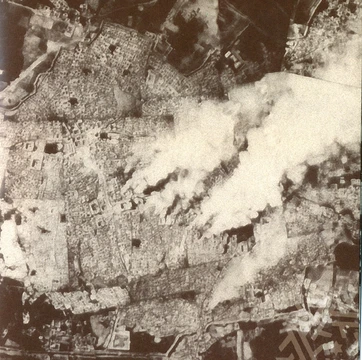
On the night of 28 August 1920, Young Bukharans revolted in Charjou and took the city. Simultaneously, the Red Army attacked Qorakoʻl from the south-west. By 30 August, communist troops reached Bukhara and bombarded the Karshin gates. Soviet forces secured bridges over the Burdalik, Nardalik and Amu Darya rivers on 31 August. Sappers in armored cars enlarged a breach in the wall. On 2 September, communist forces entered Bukhara, which was on fire. Emir Muhammad Alim Khan had fled east with 1,000 soldiers. Remaining Bukhara troops held the Ark fortress until Frunze ordered bombing by heavy artillery and aircraft, leaving it in ruins; the fortress surrendered that day.
Aftermath
The old center of Bukhara was heavily damaged, and hundreds of civilians died. Alim Khan's defeat allowed revolutionaries to create the RSFSR-controlled Bukharan People's Soviet Republic, which became part of the Uzbek Soviet Socialist Republic in 1924. Muhammad Alim Khan emigrated to Dushanbe and later supported Enver Pasha's anti-Bolshevik campaign. Exactly 71 years after the operation, Uzbekistan declared independence from the Soviet Union on 1 September 1991.
More in Basmachi Movement
Spotted an error? Know more?
Reader corrections go straight into our review queue. Suggest an edit · How this site is sourced