
Jackie Robinson
First African American to play in MLB in the modern era.

via Wikipedia: Jackie Robinson · see source
Jackie Robinson was born on January 31, 1919, in Cairo, Georgia, and grew up in Pasadena, California. He was the youngest of five children, and his middle name honored Theodore Roosevelt. After his father left the family in 1920, his mother worked odd jobs to support them. As a teenager, Robinson briefly joined a neighborhood gang but left it at the urging of a friend. He attended John Muir Technical High School, where he lettered in four sports—football, basketball, track and field, and baseball—and also played tennis. In 1936, he won a junior tennis tournament and was named to an all-star baseball team that included future Hall of Famers Ted Williams and Bob Lemon.
Robinson continued his athletic career at Pasadena Junior College, playing football, basketball, baseball, and track. He broke a junior college broad-jump record set by his older brother Mack, who had won a silver medal in the 1936 Olympics. While at PJC, Robinson fractured an ankle playing football, an injury that later affected his military service. He was elected to the school’s Order of the Mast and Dagger and served on a student police patrol. After junior college, he attended UCLA, where he became a standout football player for the Bruins. He was drafted into the Army during World War II but was court-martialed for refusing to move to the back of a segregated bus; he was honorably discharged.
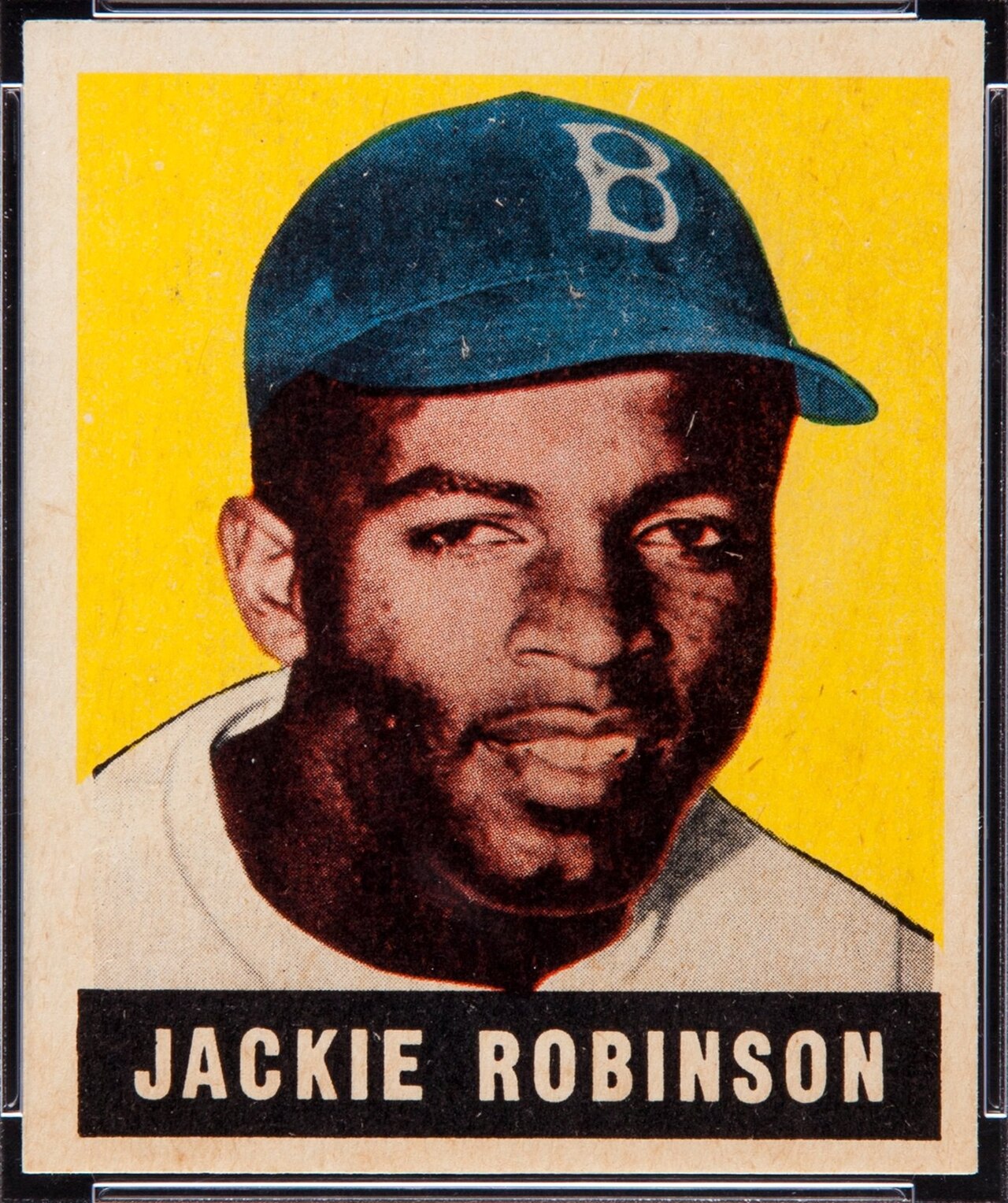
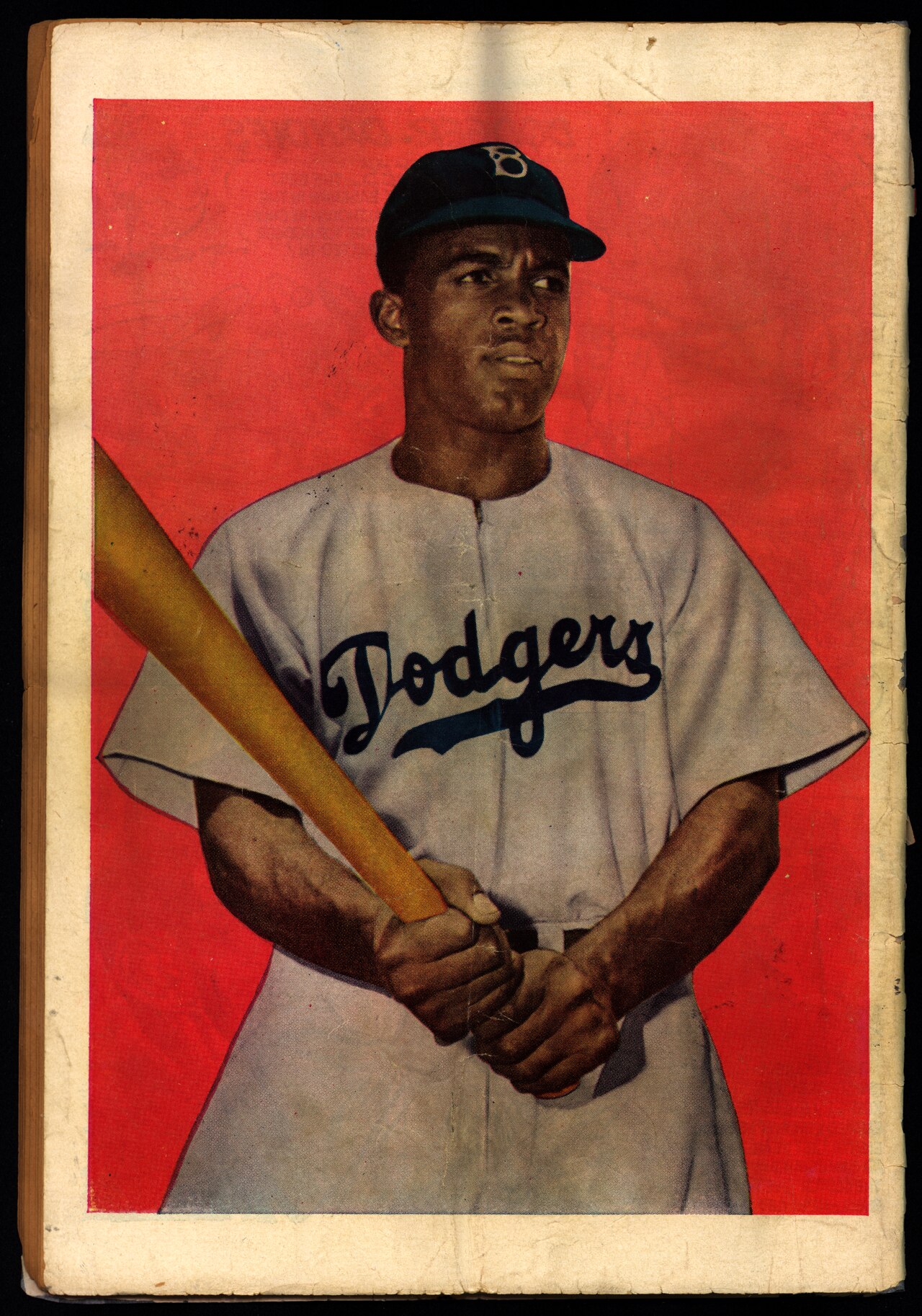
Following the war, Robinson played for the Kansas City Monarchs in the Negro leagues. There, Brooklyn Dodgers general manager Branch Rickey noticed him and believed he was the right person to break Major League Baseball’s color line. On April 15, 1947, Robinson started at first base for the Dodgers, becoming the first African American to play in the majors in the modern era. His debut ended the racial segregation that had kept Black players out of MLB since the 1880s.
Over a 10-year MLB career, Robinson won the first Rookie of the Year Award in 1947, was an All-Star for six straight seasons (1949–1954), and in 1949 became the first Black player to win the National League MVP. He played in six World Series, helping the Dodgers win the championship in 1955. He was elected to the Baseball Hall of Fame in 1962, his first year of eligibility.
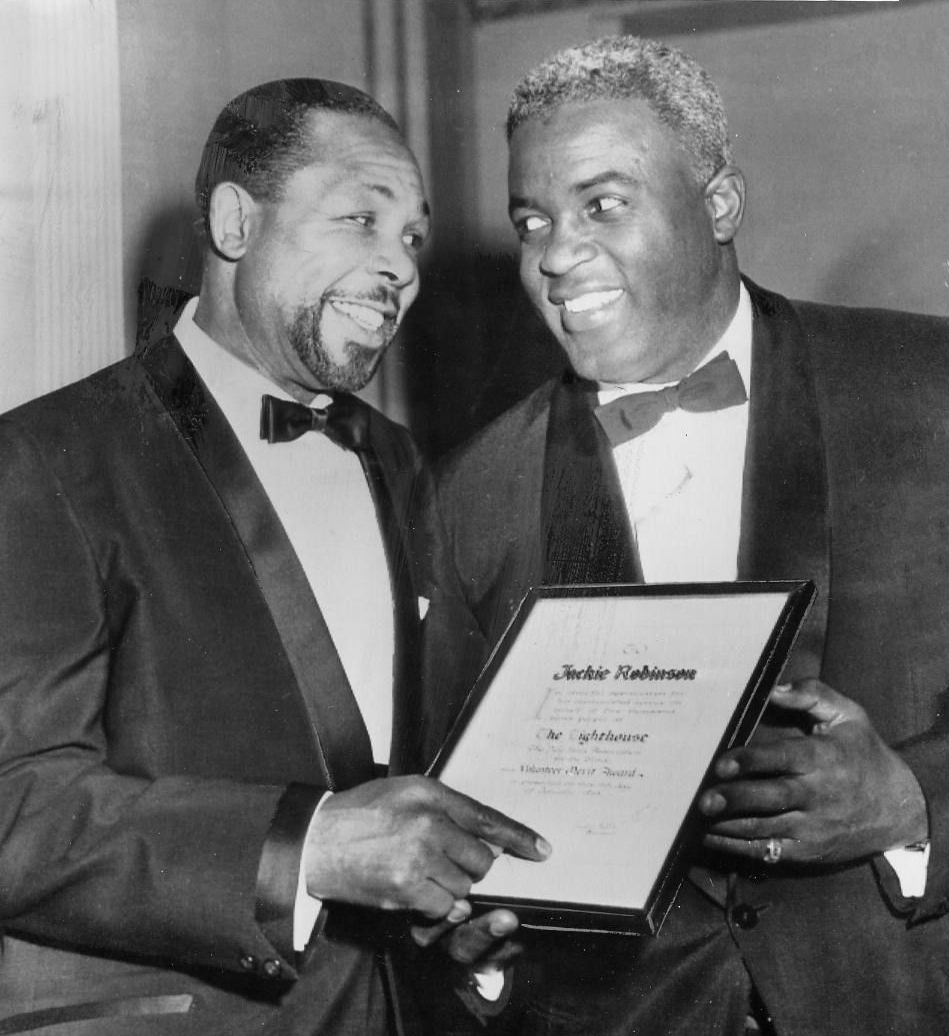
Off the field, Robinson’s nonviolent approach and talent challenged segregation in American life and contributed to the civil rights movement. He became the first Black television analyst in MLB and the first Black vice president of a major U.S. corporation, Chock full o’Nuts. In the 1960s, he helped found the Freedom National Bank, a Black-owned bank in Harlem. After his death in 1972, he received the Congressional Gold Medal and the Presidential Medal of Freedom. In 1997, MLB retired his uniform number, 42, across all teams—the first such honor for any professional athlete. Since 2004, every player on every team wears number 42 on April 15, Jackie Robinson Day.
- born
- January 31, 1919, Cairo, Georgia
- died
- October 24, 1972
- field
- Professional baseball (first baseman)
- nationality
- American
- known_for
- First African American in MLB in the modern era; 1947 Rookie of the Year; 1949 N
Verified Timeline
Quick Facts
- Position
- Second baseman
- Bats
- Right
- Birth Date
- mf=yes · 1919 · 1 · 31
- Birth Place
- Cairo, Georgia, U.S.
- Death Date
- mf=yes · 1972 · 10 · 24 · 1919 · 1 · 31
- Death Place
- Stamford, Connecticut, U.S.
- Debut2League
- MLB
- Debutyear
- 1945
- Debutteam
- Kansas City Monarchs
- Debutleague
- NgL
- Debut2Date
- April 15
- Debut2Year
- 1947
Facts from the source article.
Lore & Background
Jack Roosevelt Robinson was born on January 31, 1919, into a family of sharecroppers in Cairo, Georgia. He was the youngest of five children born to Mallie and Jerry Robinson. His middle name honored former President Theodore Roosevelt, who died 25 days before Robinson was born. After Robinson's father left the family in 1920, they moved to Pasadena, California. Growing up in relative poverty in an otherwise affluent community, Robinson joined a neighborhood gang, but his friend Carl Anderson persuaded him to abandon it. At John Muir Technical High School, Robinson lettered in four sports: football, basketball, track and field, and baseball. In 1936, he won the junior boys singles championship in the annual Pacific Coast Negro Tennis Tournament and earned a place on the Pomona annual baseball tournament all-star team, which included future Hall of Famers Ted Williams and Bob Lemon. After Muir, Robinson attended Pasadena Junior College, where he broke an American junior college broad-jump record held by his brother Mack with a jump of 25 ft. 6+1⁄2 in. on May 7, 1938. He then enrolled at UCLA, becoming the school's first athlete to win varsity letters in four sports: baseball, basketball, football, and track. In track and field, Robinson won the 1940 NCAA championship in the long jump at 24 ft 10+1⁄4 in. Baseball was his 'worst sport' at UCLA; he hit .097 in his only season, although in his first game he went 4-for-4 and twice stole home. Following his college career, Robinson was drafted for service during World War II, but was court-martialed for refusing to sit at the back of a segregated Army bus, eventually being honorably discharged. Afterwards, he signed with the Kansas City Monarchs of the Negro leagues, where he caught the eye of Branch Rickey, general manager of the Brooklyn Dodgers, who thought he would be the perfect candidate for breaking the MLB color line.
Reader's Guide
Robinson's character, his use of nonviolence, and his talent challenged the traditional basis of segregation that had then marked many other aspects of American life. He influenced the culture of and contributed significantly to the civil rights movement. Robinson also was the first Black television analyst in MLB and the first Black vice president of a major American corporation, Chock full o'Nuts. In the 1960s, he helped establish the Freedom National Bank, a Black American-owned financial institution based in Harlem, New York. After his death in 1972, Robinson was posthumously awarded the Congressional Gold Medal and Presidential Medal of Freedom in recognition of his achievements on and off the field. In 1997, MLB retired his uniform number, 42, across all Major League teams; he was the first professional athlete in any sport to be so honored. MLB also adopted a new annual tradition, 'Jackie Robinson Day', for the first time on April 15, 2004, on which every player on every team wears the number 42.
Did You Know?
- Robinson was better known for football than baseball in college, becoming a star with the UCLA Bruins football team.
- He was court-martialed for refusing to sit at the back of a segregated Army bus during World War II, but was honorably discharged.
- Robinson won the NCAA championship in the long jump in 1940 with a leap of 24 ft 10+1⁄4 in.
- He was the first Black television analyst in MLB and the first Black vice president of a major American corporation, Chock full o'Nuts.
- MLB retired his uniform number, 42, across all Major League teams in 1997—the first professional athlete in any sport to be so honored.
Breaking the Color Line and a Decade of Excellence
On April 15, 1947, a young outfielder stepped onto the field at first base for the Brooklyn Dodgers, an act that shattered nearly sixty years of racial exclusion in professional baseball. Since the 1880s, Black players had been confined to the Negro leagues, but Robinson's signing by general manager Branch Rickey—after Rickey spotted him while he played for the Kansas City Monarchs—signaled the end of that era. Over the next ten seasons, Robinson transformed from a trailblazer into one of the game's elite. He captured the very first Rookie of the Year Award in 1947, earned six straight All-Star selections between 1949 and 1954, and in 1949 became the first Black player to win the National League Most Valuable Player Award. He appeared in six World Series and helped lift the Dodgers to the 1955 championship. When the Baseball Hall of Fame opened its doors to him in 1962, it did so in his very first year of eligibility, a testament to how quickly his legacy had become undeniable.
A Multi-Sport Prodigy from Pasadena
Born on January 31, 1919, in Cairo, Georgia, to sharecropper parents Mallie and Jerry Robinson, the youngest of five children, Jackie was uprooted to Pasadena, California, after his father departed in 1920. His mother took odd jobs to keep the family afloat in a neighborhood that was otherwise affluent, and young Robinson and his minority friends found themselves shut out of many recreational spaces. At John Muir Technical High School, his older brothers Frank and Mack—Mack himself a silver medalist in the 200 meters behind Jesse Owens at the 1936 Berlin Olympics—encouraged him to chase athletics. He lettered in football, basketball, track, and baseball, and also played tennis, winning the junior boys singles title at the Pacific Coast Negro Tennis Tournament in 1936. At Pasadena Junior College he shattered the American junior-college broad-jump record with a leap of 25 feet 6½ inches, a mark that had belonged to his brother Mack. He went on to UCLA, where he became a four-sport athlete and, notably, was better known on the football field than the diamond, starring for the Bruins.
Defiance, Nonviolence, and the Fight Against Segregation
Long before he ever laced up a baseball glove, Robinson displayed a fierce impatience with authority he perceived as unjust. In January 1938, while a student at Pasadena Junior College, he was arrested after vocally challenging police officers who had detained a Black friend of his; the court handed him a two-year suspended sentence. That same combative streak followed him into the military, where he was court-martialed for refusing to move to the rear of a segregated Army bus. He was ultimately honorably discharged. Yet once he entered the major leagues, Robinson channeled his defiance into a disciplined, nonviolent resistance. Rather than retaliating against the slurs and threats hurled at him, he let his talent and composure dismantle the assumptions that had kept Black players out of the game. His refusal to be cowed, combined with his extraordinary skill, directly challenged the logic of segregation that still permeated much of American life in the late 1940s and 1950s. Observers and historians credit him with shaping the culture of the civil rights movement that would follow in the decades after his playing career ended.
A Legacy That Outlived the Diamond
Robinson's influence extended far beyond the baseball diamond. He became the first Black television analyst in Major League Baseball and the first Black vice president of a major American corporation, Chock full o'Nuts. In the 1960s he helped found the Freedom National Bank, a Black American-owned financial institution rooted in Harlem, New York, giving a community a stake in its own economic future. After his death on October 24, 1972, the nation honored him with both the Congressional Gold Medal and the Presidential Medal of Freedom, recognizing contributions that spanned athletics, business, and social justice. In 1997, Major League Baseball retired his uniform number, 42, across every team in the league, making him the first professional athlete in any sport to receive such a universal honor. Beginning on April 15, 2004, the sport marked "Jackie Robinson Day" each year, with every player on every roster wearing the number 42—a living reminder that one man's courage in 1947 reshaped an entire industry and, by extension, a nation.
Gallery
Frequently Asked Questions
Who is Jackie Robinson?
Jackie Robinson was an American professional baseball player who played primarily as a first baseman for the Brooklyn Dodgers. He is best known as the first African American to compete in Major League Baseball during the modern era, ending decades of racial segregation in the sport.
When did Jackie Robinson break the color barrier in MLB?
Robinson took the field on April 15, 1947, starting at first base for the Brooklyn Dodgers, which officially ended the color line in professional baseball. That single game marked the beginning of the integration of Major League Baseball.
What major awards did Jackie Robinson win?
In his rookie season of 1947, Robinson was named the National League Rookie of the Year. He followed that up by earning the 1949 National League MVP award, cementing his status as one of the era's top players.
How did Jackie Robinson's career end?
Robinson played his final major league season in 1956 with the Brooklyn Dodgers before retiring from professional baseball. After hanging up his cleats he moved into business and civil rights activism, and he was inducted into the Baseball Hall of Fame in 1962.
Why is Jackie Robinson considered so important in baseball history?
His 1947 debut shattered the racial segregation that had kept Black players out of MLB for decades, fundamentally changing who could compete at the highest level of the sport. His courage in facing intense prejudice set the foundation for the integration of all professional sports.
More in Baseball & Softball 1-20
Spotted an error? Know more?
This is a living reference — every entry is fact-audited, and reader corrections feed straight into our audit queue. Suggest an edit · See this site's audit record