Frequently Asked Questions
The most-asked questions about bangladeshi cuisine.
What is Bangladeshi cuisine and what makes it distinct?
Bangladeshi cuisine is a South Asian culinary tradition rooted in the Ganges-Brahmaputra delta, defined by the deep interplay of rice, river fish, and aromatic spices. Its flavor profile leans toward rich, layered gravies and bold heat, shaped by centuries of Mughal, Bengali, and colonial influences.
What is the most iconic dish in Bangladeshi cooking?
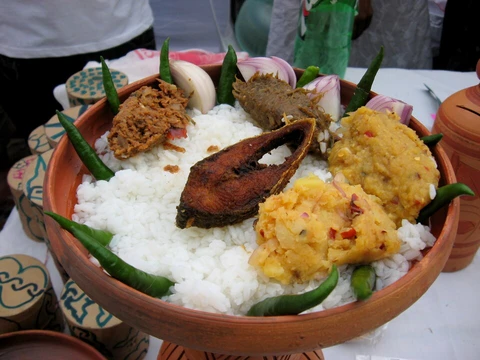
Hilsa (ilish) fish curry is widely regarded as the national dish, with Bangladesh producing the world's largest catch of this oily river fish. Layered Dhaka-style biryani is equally iconic and often the first dish international diners encounter.
How central is fish to the cuisine?
Fish is arguably the single most important protein in Bangladeshi cooking, drawing on more than 600 species found in the country's rivers and wetlands. Beyond hilsa, small river fish like rui, patra, and kalbaushi appear in everyday curries, fritters, and pickles.
What spices define the flavor profile?
The backbone includes mustard oil, cumin, coriander, turmeric, fenugreek, and dried red chilies, often ground fresh into a masala paste. Aromatics like shallots, garlic, and fresh green chilies build the base, while a small amount of jaggery or sugar rounds out the heat.
What is the street food scene like?
Street food is a daily ritual, with vendors selling pitha (rice cakes), fuchka (crispy shells filled with spiced water), jhalmuri (spiced puffed rice), and egg rolls across every neighborhood. The scene peaks in the evening, particularly around markets and college areas in Dhaka and Chittagong.
How does the cuisine vary by region?
Coastal Chittagong emphasizes coconut milk and seafood, while Sylhet in the northeast favors milder, turmeric-heavy preparations and is known for its tea gardens. Dhaka's food culture is the most layered, blending Mughal, Bengali, and modern fusion influences.
What sweets and desserts are most famous?
Roshogolla (chewy milk dumplings in sugar syrup) and chomchom (milk fudge) are the two most recognized Bengali sweets. Seasonal pitha varieties like pitika, patishapta, and chitrai pitha mark festivals and are considered essential to the culinary calendar.
What is the role of rice in everyday meals?
Steamed white rice is the universal staple, served alongside nearly every meal from a simple lentil dal to an elaborate multi-curry spread. Specialty rice preparations like pulao, kachori, and layered biryani elevate it into a star ingredient in its own right.
How does tea (cha) fit into the food culture?
Sweet, milky doodh pati cha is sipped throughout the day and is inseparable from the meal experience, often enjoyed alongside snacks or after a heavy lunch. The Sylhet region, home to large tea estates, is the country's primary production area.
Where should a newcomer start to understand Bangladeshi food?
Beginning with a simple plate of steamed rice, dal, a vegetable bhaji, and a fish curry captures the everyday essence without overwhelming a first-time diner. Following that with a street-food walk through Dhaka or Chittagong reveals the full breadth of the tradition.