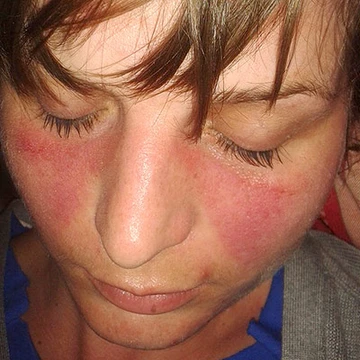
Cold autoimmune hemolytic anemia
Cold-reacting autoantibodies cause red blood cell destruction.
Last updated
Cold autoimmune hemolytic anemia is a condition in which cold-reacting autoantibodies bind to the erythrocyte membrane, leading to premature destruction of red blood cells (hemolysis). It is notable for its association with cold exposure and can present as either primary or secondary disease.
Quick Facts
- Field
- hematology
Facts from the source article.
Presentation
Patients often report painful fingers and toes with purplish discoloration upon cold exposure. In chronic cases, symptoms worsen during colder months. Cold agglutinin-mediated acrocyanosis differs from Raynaud phenomenon, which involves a triphasic color change.
Respiratory symptoms may occur with Mycoplasma pneumoniae infection. Hemoglobinuria is rare, more common in paroxysmal cold hemoglobinuria. Chronic fatigue results from anemia.
Causes
Cold agglutinins develop in over 60% of infectious mononucleosis cases, though hemolytic anemia is rare. Classic chronic cold agglutinin disease is idiopathic. Secondary monoclonal causes include B-cell neoplasms such as Waldenström macroglobulinemia, lymphoma, chronic lymphoid leukemia, and myeloma, as well as nonhematologic neoplasms. Polyclonal secondary causes include Mycoplasma infections; viral infections like Epstein-Barr virus, CMV, mumps, varicella, rubella, adenovirus, HIV, influenza, and hepatitis C; bacterial infections such as Legionnaire disease, syphilis, listeriosis, and Escherichia coli; and parasitic infections including malaria and trypanosomiasis.
Cytogenetic studies have found trisomy 3, trisomy 12, and translocation (8;22). Cases have been reported after living-donor liver transplantation with tacrolimus and after bone marrow transplantation with cyclosporine. Cold agglutinin disease has also been described in systemic sclerosis and hyperreactive malarial splenomegaly. Diphtheria-pertussis-tetanus vaccination has been implicated in six reported cases.
Diagnosis
Autoimmune hemolytic anemia is classified into warm-antibody type and cold-antibody type, which includes cold agglutinin disease and paroxysmal cold hemoglobinuria. Classification is based on autoantibody characteristics, as each type has different underlying causes, management, and prognosis. Cold-antibody type is further divided into primary cold agglutinin disease and secondary cold agglutinin syndrome, which may be associated with malignant disease or acute transient infections.
Treatment
Most cases are managed with protective clothing. Therapy is reserved for serious anemia or Raynaud-type symptoms threatening life or quality of life. Acute postinfectious syndromes usually resolve spontaneously. Splenectomy is generally ineffective because the liver is the primary sequestration site, though it may help if splenomegaly is present.
Patients should consume folic acid from fresh fruits and vegetables and avoid strenuous activity, especially jogging in cold weather. A hematologist-oncologist and blood banker should collaborate in complicated cases. Careful planning is needed for procedures where body temperature could drop. No specific pediatric recommendations exist, though intravenous immunoglobulin was used successfully in one infant with IgA-associated autoimmune hemolytic anemia.
Did You Know?
- Natural cold autoantibodies occur at low titers less than 1:64 measured at 4 °C and have no activity at higher temperatures.
- Cold agglutinins commonly have variable heavy-chain regions encoded by VH, with a distinct idiotype identified by the 9G4 rat murine monoclonal antibody.
More in Autoimmune Diseases
Sources
Compiled from Wikipedia and the sources listed below. Text from Wikipedia is available under CC BY-SA 4.0; this entry is adapted from it.
- Wikipedia: Cold autoimmune hemolytic anemia (CC BY-SA 4.0).
- Word definitions: the Codexery glossary, each quoted from its Wikipedia article.
Spotted an error? Know more?
Reader corrections go straight into our review queue. Suggest an edit · How this site is sourced