Autoimmune encephalitis
Noninfectious encephalitis often driven by autoantibodies against neuronal targets.
Last updated
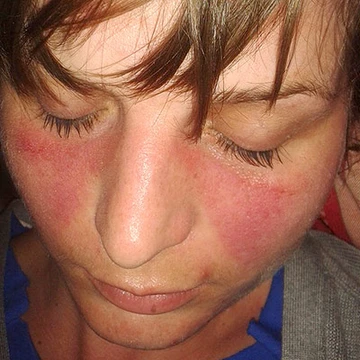
Autoimmune encephalitis is a form of encephalitis and a leading cause of noninfectious encephalitis. It may be triggered by tumors, infections, or arise without a known cause, with neurological symptoms typically developing over six weeks. The condition encompasses several autoimmune diseases, including Rasmussen encephalitis, systemic lupus erythematosus, and Hashimoto's encephalopathy.
Quick Facts
- Onset duration
- acute or subacute, usually within six weeks
- Common triggers
- tumors
- infections
- or cryptogenic
- Severity monitoring tools
- Modified Rankin Scale and clinical assessment scale in autoimmune encephalitis (CASE) score
- Most common symptom
- seizures
- First described anti-nmdar encephalitis
- 12 patients, 11 with ovarian teratomas
- Anti-gaba-br encephalitis small-cell lun
- about 50%
Facts from the source article.
Signs and symptoms
Movement disorders such as ataxia, dystonia, myoclonus, and orofacial dyskinesia may occur. Seizures are the most frequent symptom, including refractory status epilepticus. Autonomic disturbances like sweating, hypertension, tachycardia, and hypoventilation are common, and some patients experience gastrointestinal issues due to myenteric plexus involvement. Sleep disturbances include insomnia, abnormal sleep movements, sleep apnea, and hypersomnia.
Diagnosis
Possible autoimmune encephalitis requires subacute onset (under three months) of working memory deficits, altered mental status, or psychiatric symptoms, plus at least one of: new focal CNS findings, seizures not explained by prior disorder, CSF pleocytosis, or MRI suggestive of encephalitis, after excluding alternative causes. For autoantibody-negative probable autoimmune encephalitis, all four criteria must be met: subacute onset, exclusion of well-defined AIE syndromes, absence of well-characterized autoantibodies in serum and CSF, and at least two of MRI findings, CSF abnormalities, or brain biopsy showing inflammatory infiltrates, with alternative causes excluded.
Classification
Anti-NMDAR encephalitis, a common cause, predominantly affects children and young females; underlying malignancies are mainly ovarian teratomas (94%). Herpes simplex virus-1 encephalitis can trigger anti-NMDAR encephalitis.
Anti-AMPAR encephalitis presents with seizures, memory impairment, and psychosis; it is paraneoplastic in 64% of cases, often with thymoma or ovarian teratoma. Anti-GABA-AR encephalitis, first reported in 2014, involves rapidly progressive encephalopathy with refractory seizures and multifocal MRI lesions; neoplasia occurs in 27% of patients, mostly thymomas. Anti-GABA-BR encephalitis features cognitive symptoms with severe seizures or status epilepticus; about 50% of patients have small-cell lung cancer, and prognosis depends on malignancy presence.
Treatments
First-line treatments include immunoglobulin therapy (IVIg), which modulates the immune system by reducing inflammation and neutralizing autoantibodies; infusions typically take under six hours and may cause mild side effects like fever or headache. Corticosteroids such as methylprednisolone promote anti-inflammatory cytokines and inhibit immune cell migration into the CNS; they are given intravenously in high doses during the acute phase, then tapered orally. Plasmapheresis (PLEX) filters pathogenic autoantibodies from the blood, replacing them with donor plasma or albumin; it is used alongside other treatments and administered inpatient via central venous catheter over 1–2 weeks. Second-line treatments are more aggressive immunosuppressants, and last-line therapies are reserved for refractory cases.
Did You Know?
- Anti-neuronal antibodies are classified into antibodies against cell surface antigens, synaptic antigens, and intraneuronal antigens (onconeural antibodies).
- Anti-GABA-AR encephalitis patients may have coexisting autoimmune disorders such as thyroiditis or myasthenia.
More in Autoimmune Diseases
Sources
Compiled from Wikipedia and the sources listed below. Text from Wikipedia is available under CC BY-SA 4.0; this entry is adapted from it.
- Wikipedia: Autoimmune encephalitis (CC BY-SA 4.0).
- Word definitions: the , each quoted from its Wikipedia article.
Spotted an error? Know more?
Reader corrections go straight into our review queue. Suggest an edit · How this site is sourced