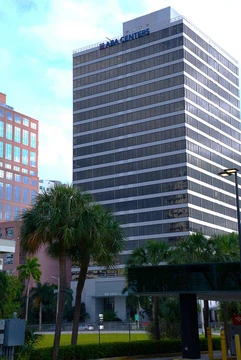
Autism Speaks
Largest U.S. autism research and awareness nonprofit.
Last updated
Autism Speaks Inc. is an American non-profit that funds autism research and runs awareness and outreach campaigns for families, governments, and the public. It stands as the largest autism research organization in the United States. Bob Wright and his wife Suzanne founded the group in February 2005, one year after their grandson Christian received an autism diagnosis.
History
Autism Speaks launched in February 2005, founded by Bob Wright, then vice chairman of General Electric, and his wife Suzanne, after their grandson Christian was diagnosed with autism the previous year. A $25 million donation from Home Depot co-founder Bernie Marcus, who sat on its board for several years, helped get the organization started. That same year, it merged with the Autism Coalition for Research and Education. In early 2006, it merged with NAAR, which was founded in 1994 by a small group of parents including two psychiatrists, a lawyer, and a chemistry professor, and had been the first U.S. nonprofit dedicated to funding research into autism causes, treatments, and cures.
In 2007, Autism Speaks completed its merger with CAN, founded in 1995 by Jonathan Shestack and Portia Iversen. In January 2008, child clinical psychologist Geraldine Dawson became the organization's chief science officer. Yoko Ono was named its first Global Autism Ambassador in April 2010. In 2009, the group used the character Wubbzy from Wow!
Wow! Wubbzy! to promote World Autism Awareness Day. In 2019, it featured Julia, an autistic character from Sesame Street, in public service announcements promoting early autism screening. This prompted the Autistic Self Advocacy Network, an autistic-led nonprofit, to end its years-long collaboration with the show's production company, objecting that the PSAs promoted Autism Speaks' 100 Day Kit, which it criticized for lacking information about communication supports, using stigmatizing language, and promoting compliance-based therapies and pseudoscientific diets.
Bob Wright resigned as chairman in May 2015 and was succeeded by Brian Kelly. Suzanne Wright took a leave of absence in November 2015 after a pancreatic cancer diagnosis and died in July 2016. Mark Roithmayr led Autism Speaks from 2005 to 2012, followed by Liz Feld in June 2012. Angela Timashenka Geiger became president in February 2016.
In October 2021, Keith Wargo was appointed president and CEO. In 2024, Autism Speaks Canada announced it would shut down effective January 31, 2025, while the U.S. branch would continue.
Activities
Autism Speaks and its predecessor organizations have funded research into the causes and treatment of autism spectrum disorder and run awareness and outreach activities aimed at families, governments, and the public. The group has raised public awareness for autism research, collected donations directly for research, and lobbied Congress to turn private funds into much larger public funding. From 1997 to 2006, their advocacy shifted U.S. research priorities from basic science toward translational and clinical work, putting known information to practical use.
Research
As of 2008, the organization supported research in four main areas: etiology (genetic and environmental causes), biology (brain development, including the Autism Tissue Program), diagnosis (epidemiology, early diagnosis, and biomarkers), and therapies (medication, behavioral interventions, and treatments for co-occurring conditions like sleep disorders and gastrointestinal issues). Together with the National Institute of Mental Health, Autism Speaks funds the Autism Genetic Resource Exchange, a nonprofit DNA repository and family registry available to researchers worldwide, established in the late 1990s by researchers and the National Institutes of Health in collaboration with CAN.
The organization previously funded the Autism Tissue Program, which managed and distributed brain tissue collected post-mortem from autistic people and their family members. In 2014, all functions of that program were rolled into Autism BrainNet, jointly funded by Autism Speaks and the Simons Foundation. Autism Speaks also supports the Clinical Trials Network, focusing on new pharmacological treatments, and the Toddler Treatment Network, developing interventions for infants and toddlers.
Since June 2014, it has partnered with Google on Mssng (pronounced "missing"), previously known as the Autism Speaks Ten Thousand Genomes Program (AUT10K), an open source research platform aiming to collect and study DNA from 10,000 families affected by autism. In December 2014, the pair announced worldwide access to the research for further collaboration and genome analysis. Other partners include The Hospital for Sick Children and DNAStack. Mssng has been criticized by some autistic individuals and advocates for using a title implying autistic people are incomplete, excluding the autistic community from decision-making, and spending money on research unlikely to impact autistic people's lives soon.
Some have labeled the project eugenic and claimed its primary goal is to develop a cure or prenatal test. In 2021, Tom Frazier, then Autism Speaks' chief science officer, disputed those characterizations, stating, "The project really is about actually trying to understand the biology of people with autism so that we can identify the kinds of interventions and supports that they might need."
Controversies
Members of the autistic rights and neurodiversity movements do not see autism as a disease needing a cure and have criticized Autism Speaks for seeking one. The word "cure" was dropped from its mission statement in 2016. The organization has also been criticized by activists, advocates, and researchers for perpetuating stigma against autistic people, promoting pseudoscience, excluding autistic people from decision-making, and continuing to fund genetic research, which some critics assign low priority to and others fear may be used to seek a cure or develop a prenatal test. Autism Speaks previously funded research examining an alleged link between vaccines and autism; it formally accepted the scientific consensus that no such link exists in 2015.
Spending
In 2008, Autism Speaks paid its chief science officer, Geri Dawson, $669,751, which included $269,721 to move her family from Washington to North Carolina. The organization said this salary was typical for similar nonprofit health executives and that the move improved her access to its offices, science teams, government health agencies in D.C., and her new role at the University of North Carolina at Chapel Hill. By 2012, the group spent $2,252,334 on compensation for its top officers, directors, and key staff.
That year, former president Mark Roithmayr made $436,314, and Dawson earned $465,671. A 2014 analysis found that 70.9% of Autism Speaks’ revenue went directly to its mission, compared to 79.8% for the Autistic Self Advocacy Network and 91.5% for the Autism Science Foundation. In 2018, the organization spent $19.6 million on employee benefits, and then-president Angela Geiger took home over $642,000—more than twice what any other executive earned.
Charity Navigator gave Autism Speaks three out of four stars for its fiscal year ending March 31, 2020, with a financial score of 77 and an accountability and transparency score of 97 out of 100. The group’s expenses exceeded its income for the fiscal years ending March 31, 2023, 2024, and 2025, with losses of about $6.6 million, $5.8 million, and $5.4 million, respectively. Its net assets dropped from roughly $44.4 million at the end of fiscal 2022 to about $26.9 million at the end of fiscal 2025.
Frequently Asked Questions
When was Autism Speaks founded?
Autism Speaks was founded on 11 February 2005.
Where is Autism Speaks headquartered?
Autism Speaks is headquartered in New York City.
More in Autism-related Organizations Based in the United States
Sources
Compiled from Wikipedia and the sources listed below. Text from Wikipedia is available under CC BY-SA 4.0; this entry is adapted from it.
- Wikipedia: Autism Speaks (CC BY-SA 4.0).
Spotted an error? Know more?
Reader corrections go straight into our review queue. Suggest an edit · How this site is sourced