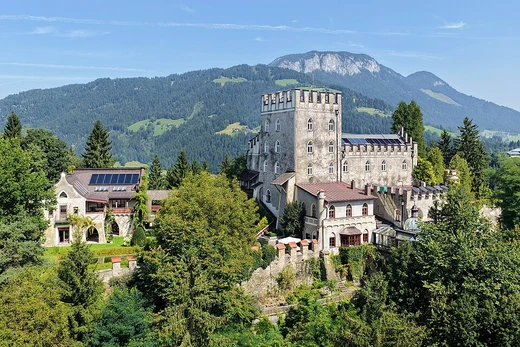
Siege of Hamelin
French blockade captured Hamelin fortress after Prussian commander surrendered.
The siege of Hamelin (7 November 1806–22 November 1806) was a blockade by First French Empire forces that captured the fortress of Hamelin from its Prussian garrison during the War of the Fourth Coalition. The operation was notable for the swift surrender of the Prussian commander after negotiations led by General of Division Anne Jean Marie René Savary, despite the garrison's numerical superiority and ample supplies.
Quick Facts
- Part of
- The War of the Fourth Coalition
- Date
- 7 to 22 November 1806
- Location
- Hamelin, 36 km (22.4 mi) southwest of Hanover
Facts from the source article.
Background
In September 1806, Prussia’s King Frederick William III called up his armies, and a large force gathered in and around the old Electorate of Hanover. Lieutenant General Gebhard von Blücher positioned 16 infantry battalions and 17 cavalry squadrons to the west at Paderborn, Osnabrück, Leer, and Oldenburg. Meanwhile, Hanover itself held 20 battalions and 28 squadrons at Celle, Hildesheim, and Braunschweig. This western field army, 30,000 strong, was commanded by General of Infantry Ernst von Rüchel alongside Blücher.
Believing Napoleon’s main attack would come from the south, the Prussians sent this army toward Erfurt in early October. Generals Christian Alexander von Hagken and Karl Friedrich von Brüsewitz stayed behind to guard against a French push from Holland and the lower Rhine. Combined with the garrisons at Hamelin and Nienburg, total Prussian forces in the area came to about 12,000 men. A small mobile force assembled near Münster under General Karl Ludwig von Lecoq.
Operations
On October 9, Lecoq and Hagken moved west with their columns split apart. Their advance was sluggish, and word of the disaster at Jena-Auerstedt reached the Prussians on October 19. They promptly pulled back to Hamelin, getting there on October 23. Lecoq left the next day for the Elbe, but after hearing that French troops might already be blocking his way, he stopped on the 27th and went back to Hamelin.
There he started gathering food and supplies to prepare for a siege. He sent Colonel Christian Friedrich von der Osten with a dragoon regiment and an infantry battalion across the Elbe, where they linked up with part of Blücher’s force. General-Major Karl Anton Ernst von Bila, after learning of Jena-Auerstedt, left Hanover on October 20 with one battalion, the treasury, and the archives. He crossed the Elbe safely, but his small group was caught up in the French sweep after the Capitulation of Stettin.
Louis was ordered to take Paderborn and Münster, while Mortier was to seize Fulda and make contact with General of Division Henri Jacques Guillaume Clarke at Erfurt. Mortier’s VIII Corps included General of Division Louis Henri Loison’s infantry division of 5,500 men. On November 1, Mortier’s force entered Kassel from the south as Louis’s troops came in from the north, and the Hessian soldiers were disarmed without resistance. The first French soldiers reached the edges of Hamelin on November 7, with more arriving on the 10th.
Siege
Mortier left General of Division Jean-Baptiste Dumonceau with 6,000 men and 12 cannons to blockade Hamelin, while he continued on toward Hanover, which he seized on 12 November. Dumonceau's Dutch Division was organized into four brigades: the 1st Brigade under General of Brigade Crass, the 2nd under General of Brigade von Heldring, the 3rd under General of Brigade von Hasselt, and the 4th under General of Brigade Mascheck. Lecoq commanded approximately 10,000 troops and 175 guns in Hamelin.
The fortress had ample stocks of food and munitions. Mortier applied continuous pressure on Lecoq to capitulate, but at first the Prussian refused. Napoleon sent Savary to Hamelin, who arrived on 19 November and received an audience with Lecoq and his generals. Savary reminded them that no Prussian forces were within 400 kilometers, then revealed the armistice agreement reached with Girolamo Lucchesini.
Though he outnumbered his adversaries almost two to one, Lecoq consented to capitulate the next day under the same terms as the surrender of Prenzlau: officers were paroled while the rank and file became prisoners of war.
Result
Leading Dumonceau's division, Savary marched to Nienburg, which was already being blockaded by a small force. General-Major von Christian Georg Ludwig Strachwitz commanded a 2,911-man garrison there. On 26 November, the garrison capitulated; officers gave their parole while non-commissioned officers and married men were allowed to go home, and men from Westphalia were marched to Minden and released. On 25 November, the fortress of Plassenburg near Hof capitulated without a shot being fired, invested by a Bavarian force since 11 October.
Historian Francis Loraine Petre asserted that it was Lecoq's duty to hold out to the last, and Digby Smith called the Hamelin surrender 'shameful'. On 16 November, Napoleon issued a bulletin claiming that of the 145,000 men in the Prussian and Saxon armies, only 'the King, the Queen, General Kalckreuth, and 10 or 12 officers are all that escaped.' Petre noted that for once this was not a wild exaggeration. Hundreds of captured horses were used to remount the French cavalry, and the Prussians lost 275 field pieces, 236 battalion guns, 12 wagon train columns, and three pontoon trains.
For surrendering Hamelin, Lecoq was sentenced to life imprisonment in December 1809, but was allowed to spend most of his confinement in Spandau and to visit his estate in 1812. From 1813 he lived in Oranienburg, received a pardon in 1814, and continued making maps until he went blind; he died in 1829.
More in Attacks on Castles in Europe
Spotted an error? Know more?
Reader corrections go straight into our review queue. Suggest an edit · How this site is sourced