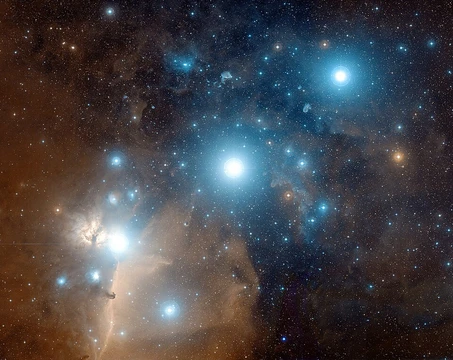
Visible-light astronomy
Last updated
Visible-light astronomy studies celestial objects using light the human eye can detect, employing telescopes with lenses and mirrors.[1] It differs from astronomy that observes other parts of the electromagnetic spectrum, such as radio or X-ray waves.[2] This field has existed since people first looked at the night sky, but its capabilities greatly improved after the telescope was invented.[3]
Quick Facts
- Wavelength range
- 380 to 750 nanometers
- Hubble spectral range
- near ultraviolet, visible, and near infrared
Facts from the source article.
Key facts and history
Refracting telescopes suffer from chromatic aberration, where the lens cannot focus all colors to the same point.[4] The Hubble Space Telescope, launched into low Earth orbit in 1990, remains in operation.[5] Lippershey holds the distinction of being the first individual recorded to file a patent for a telescope, but whether he constructed the very first one remains uncertain.[3] Galileo subsequently crafted more advanced telescopes that reached a magnification of 30×.[6]
His first astronomical observations made with a telescope were published in March 1610 in a short work called Sidereus Nuncius.[6]
What the cited sources add
The ESA/Hubble website defines optical astronomy as the analysis of light within the wavelength range sensitive to the human eye.[1] It notes that optical astronomy uses familiar elements like lenses and mirrors.[1] The Open Library record for ISBN 9780486432656 lists "The history of the telescope" as a 2003 publication by Dover Publications.[7]
References
- [email protected], "Optical astronomy", esahubble.org. facts only, no text reused. esahubble.org
- Wikipedia, "Visible-light astronomy" (CC BY-SA 4.0), which cites: [email protected], "Optical astronomy", esahubble.org (we also read that source) en.wikipedia.org
- Wikipedia, "Visible-light astronomy" (CC BY-SA 4.0), which cites: King, "The History of the Telescope", Courier Corporation, 2003, p. 30 (we also read that source) en.wikipedia.org
- Wikipedia, "Visible-light astronomy" (CC BY-SA 4.0), which cites: Marimont, "Matching color images: the effects of axial chromatic aberration", JOSA A, 1994-12-01, p. 3113–3122 (original not read by us) en.wikipedia.org
- Wikipedia, "Visible-light astronomy" (CC BY-SA 4.0), which cites: "NASA – NASA's Great Observatories", www.nasa.gov (original not read by us) en.wikipedia.org
- Wikipedia, "Visible-light astronomy" (CC BY-SA 4.0), which cites: Sharratt (1994, pp. 1–2) (original not read by us) en.wikipedia.org
- Open Library record, ISBN 9780486432656 ("The history of the telescope"). CC0 (metadata); book content not read. openlibrary.org
Each numbered sentence above was checked against the source it cites before publication. Sentences citing Wikipedia adapt text from the English Wikipedia article Visible-light astronomy (contributors), used under CC BY-SA 4.0; this entry is available under the same licence. Other sources were used for facts only; no text or images are copied from them.
More in Astrophotography
Sources
Compiled from Wikipedia and the sources listed below. Text from Wikipedia is available under CC BY-SA 4.0; this entry is adapted from it.
- Wikipedia: Visible-light astronomy (CC BY-SA 4.0).
Spotted an error? Know more?
Reader corrections go straight into our review queue. Suggest an edit · How this site is sourced