Frequently Asked Questions
The most-asked questions about astrobiology space missions.
What exactly are astrobiology space missions?
They are spacecraft and robotic probes whose primary scientific goal is to search for past or present signs of life beyond Earth, or to characterize environments where life could arise. Unlike general planetary exploration, every instrument and experiment is framed around the question of biology and habitability.
Who are the key figures most associated with the field?
Carl Sagan is widely regarded as the person who brought astrobiology into the cultural mainstream in the 1970s and 80s. In the modern era, fans tend to follow the principal investigators and mission directors attached to specific probes, such as the teams behind Perseverance, Europa Clipper, or Dragonfly.
Where should a newcomer start learning about the field?
A practical entry point is the public mission pages maintained by NASA's Astrobiology Institute and JPL, which explain goals, instruments, and timelines in plain language. Popular-science books written by active mission scientists and well-reviewed documentary series also provide a narrative arc that makes the science approachable.
What is the single most famous astrobiology mission to date?
The Viking landers of 1976 remain the most frequently cited because they performed the first in-situ biology experiments on another planet, and their ambiguous results are still debated in the literature. More recently, the Mars rovers have kept the field in the public spotlight through their ongoing search for ancient microbial biosignatures in rock.
What are scientists actually looking for on other worlds?
The primary targets are biosignatures—chemical, isotopic, or structural traces that would indicate biological activity—along with the environmental prerequisites such as liquid water, energy gradients, and essential elements. On icy moons like Europa and Enceladus, the focus shifts to the chemistry of subsurface oceans and plume material.
Has any mission confirmed the existence of extraterrestrial life?
No mission to date has produced a detection that meets the threshold of scientific consensus. The closest candidates remain ambiguous signals, such as Viking's metabolic experiments and Curiosity's seasonal methane fluctuations, each of which has non-biological alternative explanations.
What major missions are currently in development or planned for the near future?
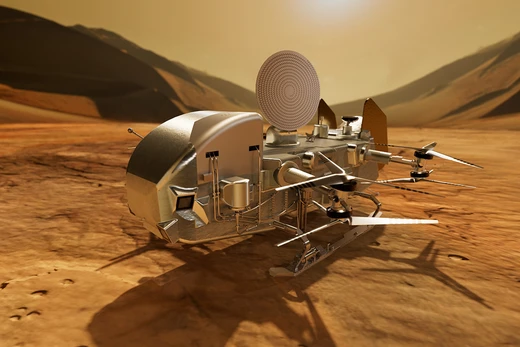
NASA's Europa Clipper, set to launch in the mid-2020s, will conduct dozens of flybys of Jupiter's moon to assess the habitability of its deep ocean. ESA's Mars Sample Return campaign and the planned Dragonfly rotorcraft mission to Titan represent the next wave of dedicated astrobiology exploration.
How does astrobiology differ from general planetary science?
While planetary science studies a world's geology, atmosphere, and physics in broad terms, astrobiology specifically asks whether life exists or could exist there and what that implies about life's origins. It draws on biology, chemistry, and geology in equal measure to frame its central questions.
What are some of the most dramatic or controversial moments in the field's history?
The 1996 announcement of possible Martian microfossils in the ALH84001 meteorite triggered a decade of intense public and scientific debate that reshaped how the community communicated uncertainty. The 2015 detection of seasonal methane variations by Curiosity similarly generated widespread excitement before follow-up data complicated the interpretation.
How can fans stay engaged with ongoing astrobiology missions?
Following live mission updates from NASA, ESA, and JPL social channels provides real-time telemetry, imagery, and commentary as data arrives. Dedicated fan communities on forums, subreddits, and Discord servers regularly dissect mission milestones, peer-reviewed papers, and launch schedules in accessible language.