Erich Mendelsohn
German-British architect of expressionist and Streamline Moderne buildings.

via Wikipedia: Erich Mendelsohn · see source
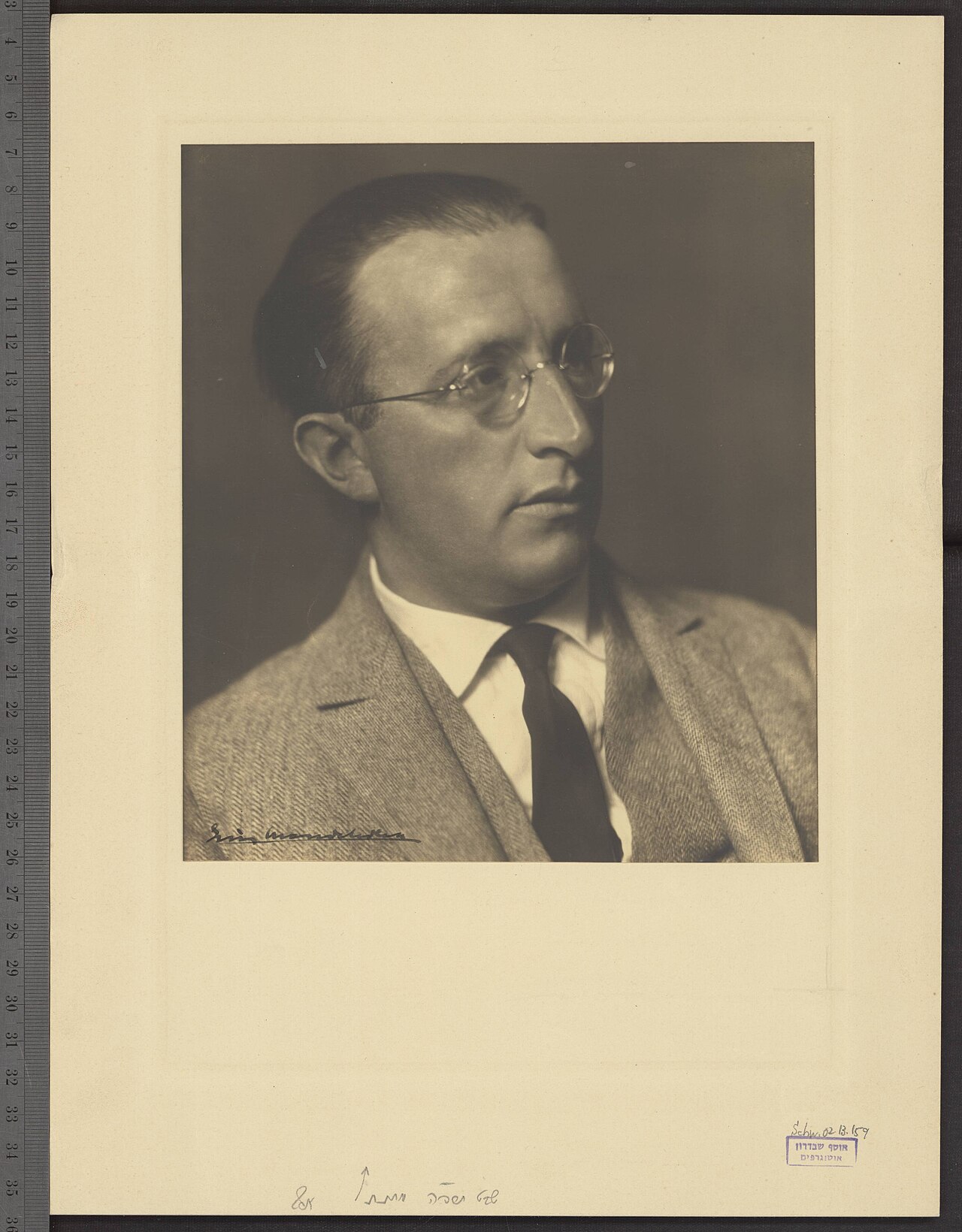
Erich Mendelsohn (1887–1953) was a German-British architect whose work in the 1920s defined expressionist architecture and later evolved into a dynamic functionalism, especially in department stores and cinemas. He helped pioneer Art Deco and Streamline Moderne, most famously with his 1921 Mossehaus design.
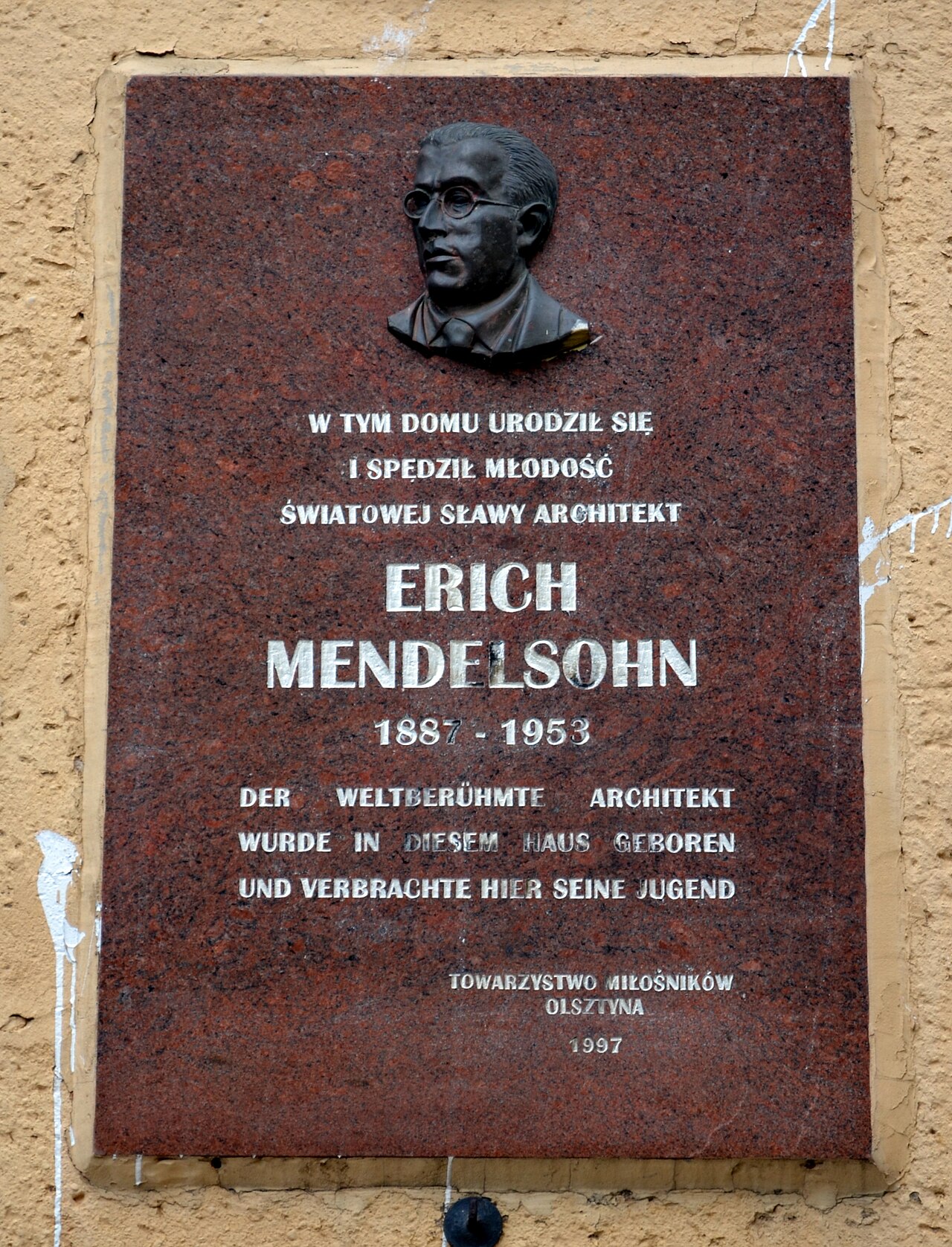
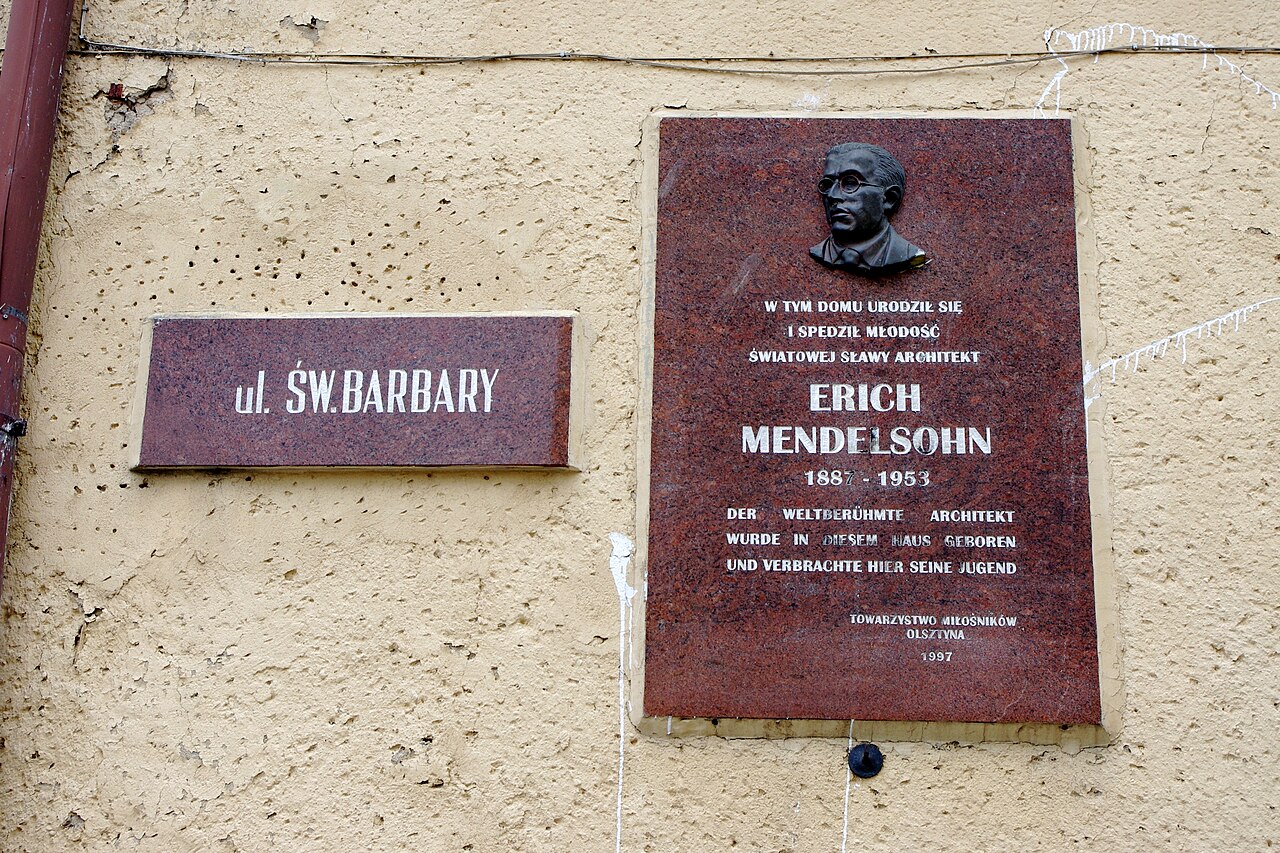
Born in Allenstein, East Prussia (now Olsztyn, Poland), Mendelsohn was the fifth of six children. His mother, Emma Esther Jaruslawsky, made hats, and his father, David, ran a shop. A plaque on Barbara Street marks his birthplace. He attended a humanist Gymnasium in Allenstein, then studied commerce in Berlin. In 1906, he began studying national economics at the University of Munich, switching to architecture at the Technische Hochschule Charlottenburg in 1908. Two years later, he transferred to the Technische Hochschule Munich, graduating with honors in 1912. There, architect Theodor Fischer influenced him, and he connected with expressionist groups Der Blaue Reiter and Die Brücke.
After working independently in Munich from 1912 to 1914, Mendelsohn married cellist Luise Maas in 1915. Their correspondence from 1910 to 1953 documents their lives as artists fleeing Nazi Germany in 1933. Through Luise, he met astrophysicist Erwin Finlay Freundlich, who wanted an observatory to test Einstein’s relativity. This led to Mendelsohn’s design of the Einsteinturm. Family ties with hat manufacturers Salomon and Gustav Herrmann also boosted his early career. During World War I, he produced many sketches of factories and large buildings, often in letters to Luise. The 2011 documentary *Incessant Visions* animates these memoirs.
Returning from war in 1918, Mendelsohn set up practice in Berlin. The Einsteinturm and the Luckenwalde hat factory (commissioned 1921) made his name. The factory included four production halls, a boiler, a turbine house, two gatehouses, and a dyeing hall with a modern ventilation hood for toxic fumes—its shape ironically resembled a hat. In 1924, *Wasmuths Monatshefte für Baukunst* published a booklet on his work, and he co-founded the progressive group Der Ring with Ludwig Mies van der Rohe and Walter Gropius. His Berlin office employed up to forty people, including trainee Julius Posener, later an architectural historian.
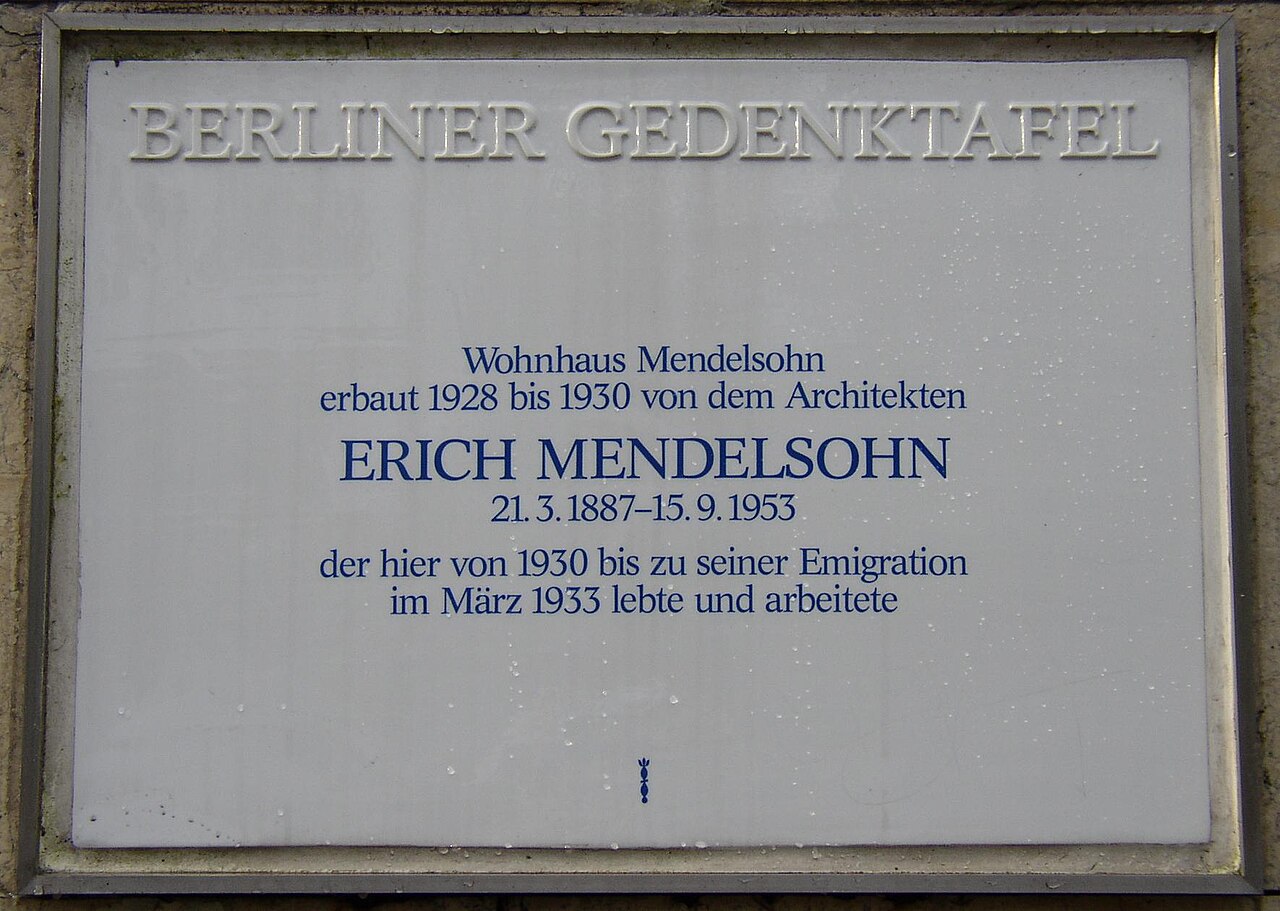
Mendelsohn’s work captured Weimar consumerism, especially in shops like the Schocken Department Stores. He also designed the Red Banner Textile Factory in the USSR (1926, with Hyppolit Pretreaus). His Mossehaus and Universum cinema influenced Art Deco and Streamline Moderne. In 1926, he bought an old villa; by 1928, he designed Rupenhorn, a nearly 4,000-square-meter home his family occupied two years later. A lavish publication on the house, with illustrations by Amédée Ozenfant, stirred envy.
Fleeing rising antisemitism in spring 1933, Mendelsohn moved to England. The Nazis seized his assets, removed him from the German Architects’ Union, and expelled him from the Prussian Academy of Arts. In England, he partnered with Serge Chermayeff until 1936, designing two private houses—Cohen House and Shrubs Wood—and the De La Warr Pavilion in Bexhill-on-Sea. He had long known Chaim Weizmann, later Israel’s president, and from 1934 planned projects in Mandatory Palestine. In 1935, he opened a Jerusalem office, designing International Style buildings in Jerusalem stone that influenced local architecture. He dissolved his London office in 1938, the same year he and Luise became British citizens, adopting the name “Eric.” This citizenship let them guarantee relatives’ entry to Britain.
- born
- 21 March 1887, Allenstein, East Prussia, Germany (now Olsztyn, Poland)
- died
- 15 September 1953
- field
- Architecture
- nationality
- German-British
- known_for
- Expressionist architecture, dynamic functionalism, Art Deco and Streamline Moder
Verified Timeline
Lore & Background
Mendelsohn was born to a Jewish family in Allenstein, East Prussia, Germany (now Olsztyn, Poland), the fifth of six children. His mother Emma Esther was a hatmaker and his father David was a shopkeeper. He attended a humanist Gymnasium in Allenstein and continued with commercial training in Berlin. In 1906, he took up the study of national economics at the Ludwig-Maximilians-Universität München. In 1908, he began studying architecture at the Technische Hochschule Charlottenburg; two years later he transferred to the Technische Hochschule München, where in 1912 he graduated cum laude. In Munich, he was influenced by Theodor Fischer and made contact with members of Der Blaue Reiter and Die Brücke. From 1912 to 1914, he worked as an independent architect in Munich. In 1915, he married the cellist Luise Maas. Between 1910 and 1953, they corresponded with each other; these materials provide insight into their lives, including their fleeing from the Third Reich in Germany in 1933. Through his wife, he met the cello-playing astrophysicist Erwin Finlay Freundlich, who wished to build an astronomical observatory to experimentally confirm Einstein's Theory of Relativity. This led to Mendelsohn designing the Einsteinturm. His relationship with Freundlich and the family friendship with the Luckenwalde hat manufacturers Salomon and Gustav Herrmann helped him to early success. At the end of 1918, on his return from World War I, he settled his practice in Berlin. The Einsteinturm and the hat factory in Luckenwalde established his reputation. In 1924, along with Ludwig Mies van der Rohe and Walter Gropius, he was one of the founders of the progressive architectural group known as Der Ring. His practice employed as many as forty people, among them, as a trainee, Julius Posener. In the spring of 1933, in the wake of growing antisemitism and the rise of the Nazis in Germany, he fled to England. His assets were seized by the Nazis, his name struck from the list of the German Architects' Union, and he was excluded from the Prussian Academy of Arts. In England he formed an architectural practice with Serge Chermayeff, which continued until the end of 1936 and together they designed Cohen House, Shrubs Wood, and the De La Warr Pavilion. In 1935, he opened an office in Jerusalem and planned Jerusalem stone buildings in the International Style. In 1938, he dissolved his London office. At that same time he and his wife received British citizenship and he changed his name to 'Eric'. In Mandatory Palestine, Mendelsohn built many now-famous buildings: Weizmann House and three laboratories at the Weizmann Institute of Science, Anglo-Palestine Bank in Jerusalem, Hadassah Hospital on Mount Scopus, Rambam Hospital in Haifa and others. From 1941 until his death, Mendelsohn lived in the United States and taught at the University of California, Berkeley. Until the end of World War II his activities were limited by his immigration status to lectures and publications. However, he also served as an advisor to the U.S. government. For instance, in 1943 he collaborated with the U.S. Army and Standard Oil in order to build 'German Village', a set of replicas of typical German working-class housing estates, which would be of key importance in acquiring the know-how and experience necessary to carry out the firebombing of Berlin. In 1945, he established himself in San Francisco. From then until his death in 1953 he undertook various projects, mostly for Jewish communities.
Reader's Guide
Erich Mendelsohn's significance lies in his synthesis of expressionist form with functionalist purpose, particularly in commercial and civic buildings of the Weimar Republic. His Einsteinturm and Schocken department stores became icons of modern architecture, influencing Art Deco and Streamline Moderne. His work in Mandatory Palestine helped shape the International Style in the region. Forced into exile by the Nazis, he adapted his practice across England, Palestine, and the United States, leaving a legacy of dynamic, sculptural buildings that balanced artistic vision with practical needs. His career illustrates the transnational impact of European modernism and the resilience of architects displaced by political upheaval.
Did You Know?
- Mendelsohn was not related to the Mendelssohn family.
- His mother Emma Esther was a hatmaker, and his father David was a shopkeeper.
- He graduated cum laude in architecture from the Technische Hochschule München in 1912.
- In 1943 he collaborated with the U.S. Army and Standard Oil to build 'German Village', a set of replicas of German working-class housing estates for firebombing research.
- He changed his name to 'Eric' when he received British citizenship in 1938.
Roots and Formative Education
Erich Mendelsohn entered the world on 21 March 1887 in Allenstein, East Prussia, a town that today sits within Poland as Olsztyn. He was the fifth of six children born to David, a shopkeeper, and Emma Esther, a hatmaker. A small plaque on the side of Barbara Street in Olsztyn still marks the site of his childhood home. Though his surname echoes the famous Mendelssohn family, no blood relation existed. He attended a humanist Gymnasium before moving to Berlin for commercial training. In 1906 he enrolled in national economics at the University of Munich, then pivoted to architecture at the Technische Hochschule Charlottenburg in 1908, transferring two years later to the Technische Hochschule München, where he graduated cum laude in 1912. During his Munich years, the architect Theodor Fischer—whose own practice straddled neo-classicism and Jugendstil—shaped his thinking, while Mendelsohn also gravitated toward the radical circles of Der Blaue Reiter and Die Brücke, the two great expressionist artist collectives. This confluence of academic rigour and avant-garde energy set the trajectory for everything that followed.
The Expressionist Breakthrough
Between 1914 and 1918, while serving in World War I, Mendelsohn filled letters to his wife Luise with small-format sketches of factories and large-scale buildings—visions that would soon become built reality. His first major commissions crystallised his reputation: the Einsteinturm in Potsdam, designed for astrophysicist Erwin Finlay Freundlich to test Einstein's Theory of Relativity, and the 1921 hat factory in Luckenwalde for the Herrmann family. The latter's dyeing hall, crowned by a ventilation hood that expelled toxic fumes, bore an ironic resemblance to a hat itself. By 1921 his Mossehaus newspaper offices in Berlin had already placed him at the forefront of Art Deco and Streamline Moderne. His 1924 Schocken Department Stores embodied the consumerist spirit of the Weimar Republic, while his Universum cinema demonstrated a dynamic functionalism tailored to the rhythms of modern public life. Wasmuths Monatshefte für Baukunst devoted a booklet to his output that same year, and he co-founded the progressive group Der Ring alongside Mies van der Rohe and Gropius.
A Practice at Full Scale
By the mid-1920s Mendelsohn's Berlin studio had grown to employ as many as forty people, including the young trainee Julius Posener, who would later become a noted architectural historian. His portfolio spanned continents and ideologies. In 1926 he collaborated with senior architect Hyppolit Pretreaus on the Red Banner Textile Factory in the Soviet Union, an engagement that reflected his genuine interest in socialist industrial experiments. Back in Germany, his Mossehaus and Universum cinema continued to ripple outward, influencing the Art Deco and Streamline Moderne vocabularies across Europe. In 1926 he purchased an old villa, and by 1928 he had designed Rupenhorn, a sprawling residence of nearly four thousand square metres that the family occupied two years later. He published an expensive illustrated volume about the house, with contributions from Amédée Ozenfant and others, a gesture that made him an object of envy among peers. The breadth of his output—from Soviet factories to private residences to high-profile commercial commissions—marked him as one of the most versatile architects of the Weimar period.
Exile, Reinvention, and Later Years
In the spring of 1933, as antisemitism and Nazi power surged, Mendelsohn fled to England. The regime seized his assets, struck his name from the German Architects' Union, and expelled him from the Prussian Academy of Arts. In London he partnered with Serge Chermayeff, and together they designed Cohen House, Shrubs Wood, and the De La Warr Pavilion in Bexhill-on-Sea, an arts and entertainment complex funded by the local landowner. That partnership dissolved by the end of 1936. Meanwhile, his long friendship with Chaim Weizmann led him to open a Jerusalem office in 1935, where he planned International Style buildings in local Jerusalem stone. His Palestinian portfolio included Weizmann House, three laboratories at the Weizmann Institute, the Anglo-Palestine Bank, Hadassah Hospital on Mount Scopus, and Rambam Hospital in Haifa. In 1938 he and Luise received British citizenship, adopting the name Eric, which also enabled them to sponsor other family members. From 1941 until his death on 15 September 1953, he lived in the United States, teaching at the University of California, Berkeley, where his immigration status initially limited him to lectures and publications.
Gallery
Frequently Asked Questions
Who is Erich Mendelsohn?
Erich Mendelsohn (1887–1953) was a German-British architect born in Allenstein, East Prussia (present-day Olsztyn, Poland). He is best remembered for his sculptural Expressionist buildings of the 1920s and for shaping a new language of dynamic functionalism in commercial architecture.
What architectural styles is Erich Mendelsohn associated with?
His work spans Expressionism, Art Deco, and Streamline Moderne, with his 1921 Mossehaus design often cited as a key early statement of the latter. He also developed a distinctive, flowing functionalism tailored to department stores and cinemas.
What is the Einsteinturm and why is it famous?
The Einsteinturm is one of Mendelsohn's most iconic structures, a small observatory in Potsdam whose sinuous, organic form became a defining image of 1920s Expressionist architecture. It is frequently cited as his signature building and a landmark of early modernism.
What are Erich Mendelsohn's most well-known buildings?
The Schocken Department Stores, the Mossehaus concept, and the Einsteinturm are the projects most often associated with his name. Together they showcase his range from expressive sculptural forms to streamlined, forward-looking commercial design.
Why is Erich Mendelsohn considered important in architectural history?
He helped bridge the gap between early Expressionism and the sleeker modernist styles that followed, giving a visual vocabulary to Art Deco and Streamline Moderne. His approach to designing dynamic, purpose-driven commercial spaces influenced how architects thought about retail and public buildings for decades.
More in Architects 1-24
Spotted an error? Know more?
This is a living reference — every entry is fact-audited, and reader corrections feed straight into our audit queue. Suggest an edit · See this site's audit record