
Tony South
Paralympic gold medalist and spinal injury prevention advocate.

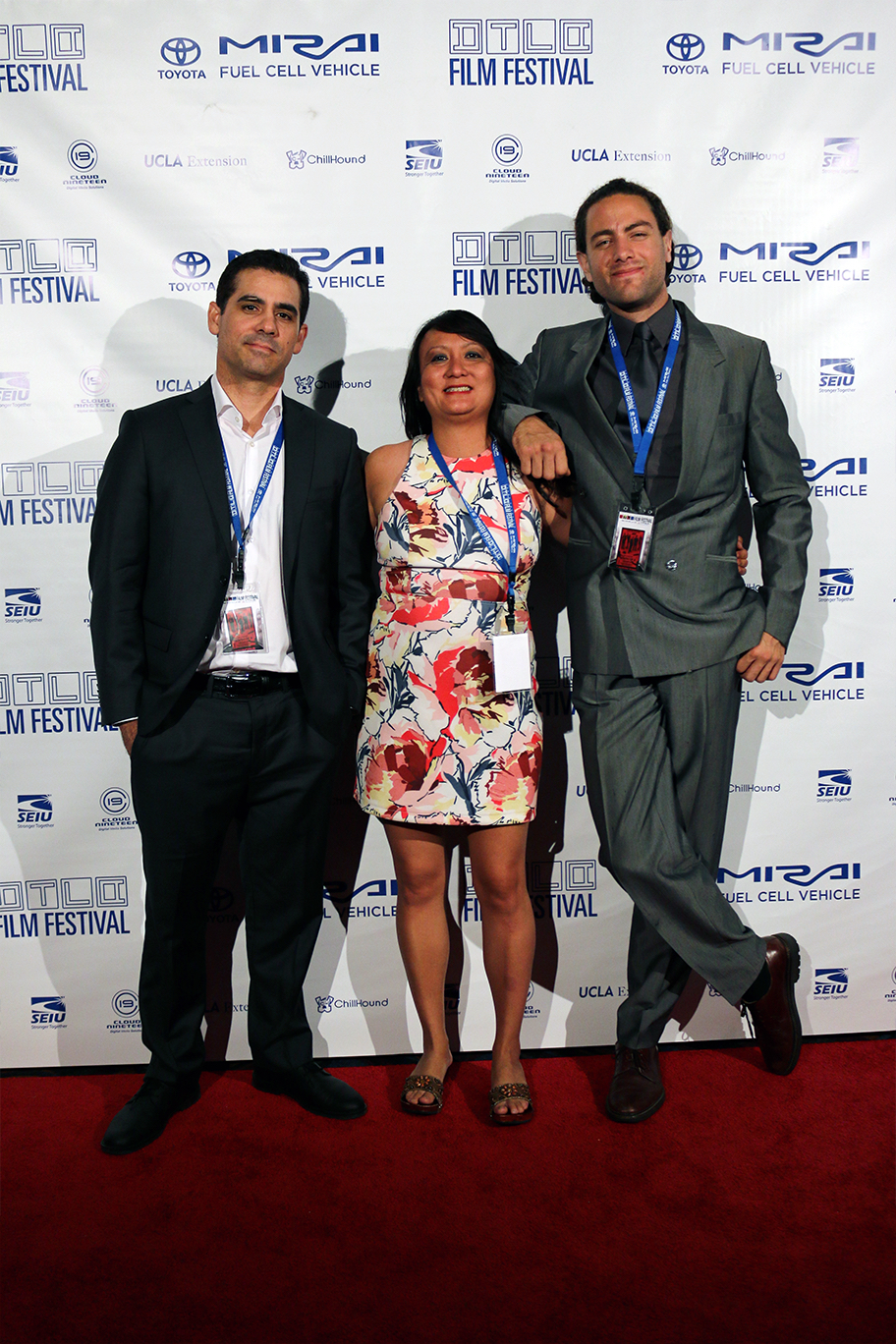
Phillip Pessar · CC BY 4.0
Tony South (1944–2024) was an Australian Paralympic archer who competed at the 1968 and 1972 Summer Paralympics. He won a gold medal and two silver medals at the 1968 Tel Aviv Games and a bronze medal at the 1972 Heidelberg Games, and later became a prominent advocate for spinal injury prevention.
Quick Facts
- Full Name
- Anthony Eric South
- Death Date
- April 2024
- Death Place
- Parkinson, Queensland
Facts from the source article.
Lore & Background
South became a wheelchair-using paraplegic after a gunshot wound at age ten. His mother was advised to admit him to a nursing home, but he decided to be strong in the face of adversity. His rehabilitation program, prepared by Mrs Kingston, Chief Physiotherapist at Northcott, Parramatta, New South Wales, included archery—the first sport introduced to paraplegics by Ludwig Guttmann—which helped develop muscles in his back. High school studies prevented him from competing at the 1960 Summer Paralympics and the 1962 Commonwealth Paraplegic Games. He passed his Intermediate Certificate and was the first student in a wheelchair in New South Wales to attend a public high school, later becoming the first student from Northcott to obtain the Leaving Certificate with an Honours Grade in Economics and a Commonwealth University Scholarship. He completed tertiary studies at the Marconi School of Wireless and joined IBM Australia for 28 years.
At age 17, competing in his first Australian Paraplegic Championship in Melbourne, Victoria, South won his first gold medal in archery. His physiotherapy program was extended to 26 hours a week in preparation for the 1968 Tel Aviv Paralympics, his first international games. During the five-day Games, requiring 45 hours on the field, he won gold in the Men's Albion Round Open Archery with a World Paraplegic Record score of 800, a shoot of 80, 60 and 50 metres, one of three events involving 1000 arrows. He also won silver in the Men's FITA Round Open and in Dartchery Mixed Pairs Open with Australian archer Alan Conn, and competed in table tennis. At the 1970 Commonwealth Paraplegic Games in Edinburgh, Scotland, he won one gold, one silver and one bronze in archery and wheelchair slalom. At the 1972 Heidelberg Paralympics, he won bronze in the Men's FITA Round Team Open and finished fifteenth in the Men's FITA Round Open.
In 1974, South moved to Queensland and became President of the Queensland Paraplegic and Quadriplegic Sports Committee, raising $14,000 toward hosting the 4th National Paraplegic Games in Brisbane by pushing 50 kilometres on the back wheels of his chair. He noted that Australian athletes had to train individually with strong competition only every two years, and the biggest drawback was having to raise their own finances, causing much loss of training. Observing little support for people with spinal injuries, South joined the Paraplegic Benefit Fund Australia (PBF), founded by Sir George Bedbrook in 1984. He served as PBF's Corporate Relations Officer in 2006, attended the Queensland Invitational Wheelchair Rugby Championships, and presented the 'most valuable player' award to Ryley Batt. In 2014, he introduced State and Federal Politicians to the PBF's mission and met with members from 1995 to explain the $100,000 Spinal Cord Injury Member Benefit.
Reader's Guide
South's significance lies in his dual legacy as a pioneering Paralympic archer and a lifelong campaigner for spinal injury prevention. His gold medal at the 1968 Tel Aviv Games, achieved with a world record score, demonstrated the competitive potential of athletes with disabilities at a time when the Paralympic movement was still young. Beyond competition, he used his personal experience of becoming paraplegic at age ten to advocate for others. As President of the Queensland Paraplegic and Quadriplegic Sports Committee, he personally raised funds by pushing his wheelchair 50 kilometres. His work with the Paraplegic Benefit Fund Australia involved speaking to Rotary clubs, local councils, and community leaders, particularly in Northern Queensland, which has the highest per capita rate of spinal injury. He also spoke at the Inspirational Speakers Series 2009 for Trilby Misso Lawyers, impressing 100 attendees. His honours—the Medal of the Order of Australia in 1992 and Member of the Order of Australia in 2008—recognised his service to people with disabilities and contributions to spinal injury prevention and research. South's career illustrates how an athlete can transition from sporting achievement to sustained community advocacy, addressing both the physical and motivational needs of those with spinal cord injuries.
Did You Know?
- He won his gold medal at the 1968 Tel Aviv Paralympics with a World Paraplegic Record score of 800.
- He raised $14,000 for the 4th National Paraplegic Games by pushing 50 kilometres on the back wheels of his chair.
- He worked for IBM Australia for 28 years after graduating from the Marconi School of Wireless.
Origins and Cultural Footprint
The Archers first reached national audiences on New Year's Day 1951, though a pilot episode had already aired on the BBC Midlands Home Service in late May 1950. The programme was conceived partly as an educational tool for British farmers in the aftermath of the Second World War, yet it quickly transcended that narrow purpose. By 1953 it was drawing nine million listeners, and its original tagline as an everyday story of country folk gave way over the decades to a broader identity as a contemporary rural drama. With more than twenty thousand episodes broadcast across its long run, it stands as the world's longest-running drama by both episode count and sheer duration. Today it remains Radio 4's most-listened-to non-news programme, with over five million regular listeners, and it also holds the BBC's record for online radio listening, drawing more than a million internet audiences. Its place in British popular culture is difficult to overstate.
The World of Ambridge and Borsetshire
The entire drama unfolds within a carefully constructed fictional geography. The village of Ambridge sits in the made-up county of Borsetshire, positioned between the real counties of Worcestershire and Warwickshire, south of Birmingham in England's Midlands. While Ambridge may be loosely inspired by the real village of Cutnall Green, several other settlements have staked their own claims. The village pub, The Bull, is modelled on The Old Bull in Inkberrow, and the parish church of St Stephen's is frequently represented on screen by Hanbury's St Mary the Virgin. The wider Borsetshire landscape includes a string of other fictional villages—Penny Hassett, Loxley Barrett, Darrington, Hollerton, Edgeley, Waterley Cross, and Lakey Green—alongside the county town of Borchester and the cathedral city of Felpersham, which also boasts a university. Characters occasionally venture beyond this world, with storylines sending them to London for a Countryside Alliance march, to Manchester's Canal Street, or even overseas to South Africa and Hungary.
The Archer Family and the Life of the Farms
At the heart of the programme is the Archer family and their agricultural world. The central household is based at Brookfield, a 469-acre mixed farm combining arable crops, dairy, beef, and sheep, passed down from Dan through his son Phil to Phil and Jill's four children: David, who manages the farm with his wife Ruth; Shula, who runs the riding stables; Kenton, who operates the village pub with his wife Jolene; and the widowed Elizabeth. Jill herself lives at Brookfield with David, Ruth, their children Pip, Josh, and Ben, and Pip's daughter Rosie. Nearby, Bridge Farm's 168 acres are owned by Pat and Tony Archer. The farm transitioned to organic production in 1984, a storyline sparked by a scriptwriter's visit to Brynllys farm in Ceredigion. Since then it has cycled through various enterprises—pork sausages from 2003, an Aberdeen Angus herd acquired by Tony in 2014, a later Montbéliardes herd for organic dairy products, and most recently goats, initially kept as a hobby before the family began exploring meat sales.
Industry Recognition and Lasting Influence
The Archers has earned a remarkable level of professional respect alongside its popular appeal. In February 2019, a panel of forty-six broadcasting industry experts—forty-two of whom had a professional connection to the BBC—voted it the second-greatest radio programme of all time, a testament to how the show is regarded within the industry itself. Its audience figures underscore its cultural weight: with more than five million listeners tuning in regularly, it is Radio 4's most popular non-news offering. The programme also commands a significant digital presence, attracting over a million internet listeners and thereby holding the BBC's record for online radio listening figures. These numbers, combined with the show's unbroken run since the early 1950s and its more than twenty thousand episodes, cement its status as a unique fixture of British media. Few programmes in any medium have sustained such a long, continuous engagement with a national audience, making The Archers not merely a soap opera but a cultural institution in its own right.
Gallery
Frequently Asked Questions
Who is Tony South?
Tony South, born Anthony Eric South in 1944, was an Australian Paralympic archer who competed at the 1968 Tel Aviv and 1972 Heidelberg Games. He is remembered as a decorated medalist and a long-time advocate for spinal injury prevention.
What Paralympic medals did Tony South win?
At the 1968 Tel Aviv Games he took gold in the Men's Albion Round Open and silver in both the Men's FITA Round Open and the Dartchery Mixed Pairs Open. Four years later in Heidelberg he added a bronze in the Men's FITA Round Team Open.
When and where did Tony South pass away?
Tony South died in April 2024 in Parkinson, Queensland. He was 79 years old at the time of his death.
What did Tony South do after his competitive archery career?
He became a prominent voice in spinal injury prevention, dedicating much of his later life to raising awareness about the condition. His advocacy work earned him the Queensland Disabled Achiever of the Year title in 1986.
What national honors did Tony South receive?
He was awarded the Medal of the Order of Australia (OAM) in 1992 and later promoted to Member of the Order of Australia (AM) in 2008. These recognitions reflected both his sporting achievements and his contributions to disability advocacy.
More in Archers, Part 2 1-24
Spotted an error? Know more?
Reader corrections go straight into our review queue. Suggest an edit · How this site is sourced