Frequently Asked Questions
The most-asked questions about aquarium and aquatic plants.
What is the aquarium and aquatic plant hobby?
It is the practice of maintaining living plants, fish, and invertebrates in water-filled glass or acrylic enclosures, ranging from tiny desk bowls to large artistic planted landscapes. Enthusiasts focus on cultivating underwater gardens, breeding aquatic species, and fine-tuning the balance between light, chemistry, and plant growth.
What are the main categories of aquatic plants?
They are typically grouped into foreground (low, carpeting types), midground (bushy, medium-height), and background (tall, fast-growing) species, along with floating and epiphytic varieties. Widely cultivated genera include Anubias, Bucephalandra, Echinodorus, Rotala, and Cryptocoryne.
Who are the most recognized figures in the planted-aquarium world?
Takashi Amano, a Japanese aquarist, is broadly credited with popularizing the dense, artistic 'nature aquarium' style in the early 2000s. Adriaan van den Abbeel is another landmark name, known for pioneering the heavily planted 'Dutch' layout, while numerous online educators have since made CO2 dosing and substrate science accessible to everyday hobbyists.
What is the single most important factor for keeping aquatic plants healthy?
A consistent light level that matches the available CO2 and nutrient supply is generally regarded as the foundation of a successful planted tank. Without that balance, most setups suffer from algae outbreaks or stunted, yellowing growth.
Where should a complete beginner start?
A small 10-to-20-gallon tank with hardy species like Java fern, Anubias, and Anacharis, paired with a basic filter, heater, and simple LED light, is the most forgiving entry point. Let the nitrogen cycle finish before adding plants or fish, and avoid over-fertilizing in the first weeks.
How does a 'planted tank' differ from a standard fish tank?
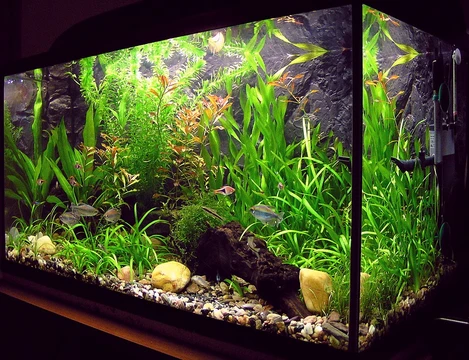
A planted tank is designed primarily around a living underwater garden, with deliberate substrate, hardscape, and plant layout, while fish play a supporting role. A standard fish tank usually prioritizes open swimming space and may include only a few decorative plants.
What role does CO2 injection play in a planted aquarium?
Supplementing dissolved CO2 through pressurized tanks or liquid carbon accelerates photosynthesis, letting faster-growing and more demanding species thrive. Without it, high-light plants tend to grow slowly or turn pale, though low-light species can manage on ambient CO2 alone.
What are the most common mistakes new aquarists make?
Overstocking the tank, skipping the nitrogen cycle, using untreated tap water, and expecting fast-growing plants to stay small are the most frequent pitfalls. Many beginners also purchase species that require high light and CO2 while providing only a basic LED, leading to frustration and plant loss.
What are some of the most prized or 'holy grail' aquatic plant species?
Bornean Bucephalandra variants, rare Anubias barteri forms, and delicate Rotala rotundifolia are often cited as top collection pieces. The community also reveres color-morphs like red Rotala under intense light and CO2, which produce the vivid crimson stems seen in contest-winning aquascapes.
What major events or competitions drive the community?
The Aquatic Plant Layout Contest (APLC) in Japan, founded by Takashi Amano, is the most prestigious international competition for planted aquascapes. Regional clubs, online forums, and YouTube channels also host monthly challenges that keep the hobby active and encourage new layouts.