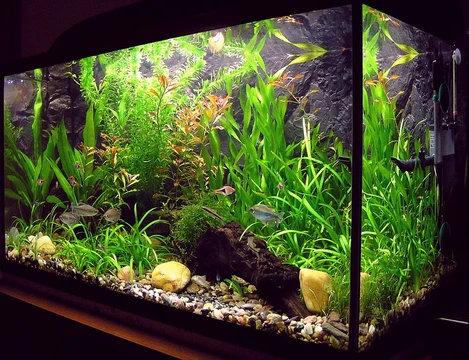
Alternanthera philoxeroides
Last updated
Alternanthera philoxeroides is a perennial herb that forms dense floating mats in shallow waters.[1] It is native to temperate South America but has spread to over 30 countries worldwide.[2]
Scientific classification
- CladeTracheophytes
- CladeAngiosperms
- CladeEudicots
- OrderCaryophyllales
- FamilyAmaranthaceae
- GenusAlternanthera
- SpeciesAlternanthera philoxeroides
Named by (Mart.) Griseb.
Sources: Wikipedia taxobox: Alternanthera philoxeroides (CC BY-SA 4.0)
Where the alternanthera philoxeroides has been recorded
Each dot is a place where the species has been observed and reported (40,023 records, half-degree grid) — not a modelled range. 265 inland records left out (institution coordinates).
Map: drawn by Codexery. Data: GBIF occurrence search (records CC0 / CC BY) · Natural Earth basemap (public domain)
Quick Facts
- Species
- philoxeroides
Facts from the source article.
Biology and range
The plant produces whitish, papery flowers on short stalks and has hollow, sprawling stems that float easily.[3] Its stolons can grow up to 10 meters in length, creating large surface mats.[3] Alternanthera philoxeroides tolerates saline conditions up to 10% salt by volume.[1] In its native range it produces viable seeds, but in introduced ranges it rarely does so.[4]
Reproduction in invaded areas occurs through fragmentation, with small stem or leaf cuttings regenerating into new plants.[4] The species generally will not establish in water deeper than 2 meters.[1] Its geographic range originally covered only the Parana River region of South America.[2] The plant was likely introduced to other continents via sediments on ship tanks and cargo.[2]
What the specialist sources record
The Texas Invasives account notes that alligatorweed forms thick mats that crowd out native aquatic vegetation and retard water flow.[1] These mats lower dissolved oxygen levels and increase sedimentation in water bodies.[1] Mechanical removal provides only temporary control because the plant regenerates from rootstocks and stem fragments.[1] Three South American insect species were released between 1964 and 1971 to control A. philoxeroides, with varying success.[1]
The alligatorweed flea beetle Agasicles hygrophila can cause considerable damage to aquatic mats of the weed.[1] Establishment of competitive grasses or native species on banks can prevent the plant from gaining a terrestrial foothold.[1]
References
- "Texas Invasives", Texasinvasives.org. facts only, no text reused. texasinvasives.org
- Wikipedia, "Alternanthera philoxeroides" (CC BY-SA 4.0), which cites: "The evolutionary history of an invasive species: alligator weed, Alternanthera philoxeroides", Bugwoodcloud.org; "The evolutionary history of an invasive species: alligator weed, Alternanthera philoxeroides", Bugwoodcloud.org; "NSW WeedWise", Weeds.dpi.nsw.gov.au (original not read by us) en.wikipedia.org
- Wikipedia, "Alternanthera philoxeroides" (CC BY-SA 4.0), which cites: "Texas Invasives", Texasinvasives.org; "NSW WeedWise", Weeds.dpi.nsw.gov.au; "Alternanthera philoxeroides", Sms.si.edu (we also read that source) en.wikipedia.org
- Wikipedia, "Alternanthera philoxeroides" (CC BY-SA 4.0), which cites: "Pest plant risk assessment : Alligator weed (Alternanthera philoxeroides)", Daf.qld.gov.au; "Pest plant risk assessment : Alligator weed (Alternanthera philoxeroides)", Daf.qld.gov.au; "Details", Tsusinvasives.org; "NSW WeedWise", Weeds.dpi.nsw.gov.au (original not read by us) en.wikipedia.org
Each numbered sentence above was checked against the source it cites before publication. Sentences citing Wikipedia adapt text from the English Wikipedia article Alternanthera philoxeroides (contributors), used under CC BY-SA 4.0; this entry is available under the same licence. Other sources were used for facts only; no text or images are copied from them.
More in Aquarium and Aquatic Plants
Sources
Compiled from Wikipedia and the sources listed below. Text from Wikipedia is available under CC BY-SA 4.0; this entry is adapted from it.
- Wikipedia: Alternanthera philoxeroides (CC BY-SA 4.0).
- Occurrence records: GBIF (CC0 / CC BY). Basemap: Natural Earth (public domain).
Spotted an error? Know more?
Reader corrections go straight into our review queue. Suggest an edit · How this site is sourced