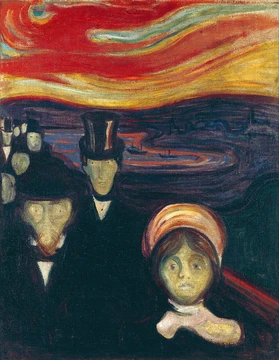
Anxiety disorder
Last updated
Anxiety disorders are a group of mental disorders marked by significant and uncontrollable feelings of anxiety and fear that impair social, occupational, and personal functioning. They are the second most common type of mental disorders worldwide after depressive disorders, affecting nearly 30% of adults at some point in their lives. With effective treatments available, most people can lead normal, productive lives.
Classification
Generalized anxiety disorder, or GAD, is a condition marked by persistent anxiety that isn’t tied to a specific trigger. People with GAD experience ongoing, vague fear and worry, often becoming excessively concerned with routine aspects of life. A diagnosis is made when someone has been overly worried about everyday issues—like family, work, social situations, or health—for at least six months, along with three or more symptoms such as restlessness, fatigue, trouble concentrating, irritability, muscle tension, or sleep problems.
This constant worry can make daily decisions and remembering commitments difficult. Physical signs may include sweaty hands, feet, or underarms, and tearfulness, which can sometimes point to depression. Before diagnosing GAD, doctors must rule out anxiety caused by drugs or other medical conditions. In children, GAD often starts around age eight or nine and can show up as headaches, restlessness, stomach pain, or heart palpitations.
The most common type of anxiety disorder is specific phobias, affecting 5% to 12% of people worldwide. A phobia involves an intense fear of a particular object or situation—like animals, blood, flying, or tunnels—that leads to terrifying expectations of encountering it. When faced with the phobia, a person may tremble, feel short of breath, or have a racing heart. They often go to great lengths to avoid the trigger, even though they know their fear is out of proportion to the actual danger.
Diagnosis
Diagnosing an anxiety disorder relies on a person’s reported symptoms, what triggers them, and their own and family medical history. There are no lab tests or biological markers that can confirm the condition. A doctor must first rule out other medical or mental health issues that could cause prolonged anxiety, since treatment approaches differ. Several questionnaires are used in clinical settings to provide an objective score, such as the GAD-7, which has a sensitivity between 57 and 94 percent and a specificity between 82 and 88 percent for generalized anxiety disorder.
If a screening questionnaire is positive, a full clinical interview is needed to assess distress, impairment, avoidance behaviors, symptom history, and how long symptoms have lasted. Some health organizations recommend routine screening for all adults, and the U.S. Preventive Services Task Force advises screening for adults under 65. For a diagnosis, symptoms generally must be present for at least six months, occur on more days than not, and significantly interfere with daily life.
These symptoms can include feeling nervous, on edge, excessive worry, trouble concentrating, restlessness, and irritability. Anxiety disorders are different from normal developmental fear or anxiety because they are excessive or last beyond age-appropriate periods. They also differ from temporary, stress-related anxiety by being persistent—usually lasting six months or more—though this duration guideline is flexible, especially in children.
Treatment
Treatment options include psychotherapy, medications, and lifestyle changes. Cognitive behavioral therapy (CBT) is a first-line treatment, effective for anxiety disorders and the most widely studied form of psychotherapy for them. CBT appears equally effective when delivered via the internet compared to face-to-face sessions. Meta-analysis shows CBT has medium to large benefit effect sizes for GAD, panic disorder, and social anxiety disorder, with low dropout rates and positive effects maintained for at least 12 months.
Sessions are often given once weekly for 8–20 weeks, with booster sessions possible for relapse. Exposure and response prevention (ERP) is effective for treating OCD. Several meta-analyses indicate mindfulness-based programs can be effective across diverse populations. There is no clear evidence whether psychotherapy or medication is more effective; medication decisions are made by doctor and patient based on circumstances.
If one medication does not improve anxiety, another may be offered. A 2015 Cochrane review found insufficient evidence for Morita therapy's effect on anxiety disorder in adults.
Epidemiology
Globally, as of 2010, approximately 273 million people (4.5% of the population) had an anxiety disorder, with higher prevalence in females (5.2%) than males (2.8%). Lifetime rates in Europe, Africa, and Asia range from 9 to 16%, with yearly rates between 4 and 7%. In the United States, lifetime prevalence is about 29%, with 11–18% of adults affected in a given year, making anxiety disorders the most prevalent psychiatric condition in the US outside of substance use disorder.
Cultural differences in interpreting anxiety symptoms affect these rates. Among children, 10–20% will develop a full-fledged anxiety disorder before age 18, making it the most common mental health issue in young people. Childhood anxiety is often harder to identify than in adults, as parents may struggle to distinguish it from normal fears, and children may express emotions physically through stomachaches or headaches, sometimes leading to misdiagnosis as attention deficit hyperactivity disorder or physical ailments.
Causes in children include biology, other conditions such as autism spectrum disorder, giftedness, traumatic events, or unknown factors. Anxiety in children tends to follow age-appropriate themes like fear of school, social rejection, or harm to loved ones, with disordered anxiety distinguished by duration and intensity.
Did You Know?
- People who rank highly in hypercompetitive traits are at increased risk of both anxiety and depression, according to a 2011 study.
- Prejudice that some people with mental illness turn against themselves is called self-stigma.
Frequently Asked Questions
What causes Anxiety disorder?
Listed causes of Anxiety disorder include Genetic, environmental and and psychological factors.
How is Anxiety disorder diagnosed?
Diagnosis of Anxiety disorder is based on psychological assessment.
More in Anxiety Disorders
Sources
Compiled from Wikipedia and the sources listed below. Text from Wikipedia is available under CC BY-SA 4.0; this entry is adapted from it.
- Wikipedia: Anxiety disorder (CC BY-SA 4.0).
- Word definitions: the Codexery glossary, each quoted from its Wikipedia article.
Spotted an error? Know more?
Reader corrections go straight into our review queue. Suggest an edit · How this site is sourced