Daniel 7
Vision of four beasts and the eternal kingdom of the holy ones.
Daniel 7 is the pivotal chapter of the Book of Daniel, recounting a vision of four beasts representing successive world-kingdoms that are ultimately replaced by an eternal kingdom ruled by the "holy ones" of the Most High. It is notable for its apocalyptic and eschatological themes, composed during the persecution of Jews under Antiochus IV Epiphanes in the mid-2nd century BCE.
Quick Facts
- Biblical book
- Daniel
- Chapter
- 7
- Setting
- First year of Belshazzar, king of Babylon (probably 553 BCE)
- Composition date
- 167–164 BCE
- Historical context
- Oppression of Jews by Antiochus IV Epiphanes
- Key event referenced
- Abomination of desolation (altar to Zeus in the Temple)
- Literary genre
- Apocalypse and eschatology
Facts from the source article.
Structure and composition
The Book of Daniel originated as a collection of folktales among the Jewish community in Babylon and Mesopotamia during the Persian and early Hellenistic periods (5th to 3rd centuries BCE), later expanded by the visions of chapters 7–12 in the Maccabean era (mid-2nd century BCE). Modern scholarship regards Daniel as a legendary figure, possibly chosen for the hero due to his reputation as a wise seer. The tales are narrated anonymously, except for chapter 4, which is a letter from King Nebuchadnezzar II.
Chapters 2–7 are in Aramaic and form a chiasmus, a poetic structure where the central message is framed by repeated elements: A (2:4b-49) dream of four kingdoms replaced by a fifth; B (3:1-30) Daniel's friends in the fiery furnace; C (4:1-37) Daniel interprets a dream for Nebuchadnezzar; C' (5:1-31) Daniel interprets handwriting for Belshazzar; B' (6:1-28) Daniel in the lions' den; A' (7:1-28) vision of four world kingdoms replaced by a fifth. Chapter 7 serves as a bridge between the tales (chapters 1–6) and the visions (7–12), using Aramaic and chiasmus to link to the first half, while first-person narration and visionary emphasis connect to the second.
A temporal shift occurs: the tales run from Nebuchadnezzar to Belshazzar to Darius, but chapter 7 moves back to Belshazzar's first year, then forward again. Most scholars accept the chapter as a unity, possibly based on an early anti-Hellenistic document from around 300 BCE; verse 9 is often printed as poetry and may be a fragment of an ancient psalm. The structure includes an introduction (verses 1–2a), a vision report (2b–14), interpretation (15–18), additional clarification (19–27), and a conclusion (28).
Genre and themes
The Book of Daniel is an apocalypse, a literary genre where a heavenly reality is revealed to a human recipient, characterized by visions, symbolism, an other-worldly mediator, cosmic events, angels and demons, and pseudonymity. Apocalypses were common from 300 BCE to 100 CE among Jews, Christians, Greeks, Romans, Persians, and Egyptians. Daniel, the hero, is a representative apocalyptic seer who has learned Babylonian wisdom but surpasses it because his God is the true source of knowledge; he is one of the maskilim, the wise, tasked with teaching righteousness.
The book is also an eschatology, a divine revelation about the end of the present age when God intervenes in history to establish the final kingdom. The overall theme is God's sovereignty over history, written to encourage Jews persecuted by Antiochus Epiphanes. The visions of chapters 7–12 predict the end of the Seleucid kingdom, its replacement by God's eternal kingdom, the resurrection of the dead, and final judgment. Chapter 7 reintroduces the theme of four successive world-empires, each worse than the last, until God ends oppression and introduces the eternal kingdom.
Historical background: from Babylon to the Greeks
In the late 7th and early 6th centuries BCE, the Neo-Babylonian empire dominated the Middle East. The Kingdom of Judah began as a Babylonian client state but, after rebellions, was reduced to a province, and its elite were taken into captivity. The Persian empire fell to Alexander the Great in the late 4th century BCE, and after his death in 323 BCE, his generals divided the empire. Judea came under Ptolemaic control from Egypt, then around 200 BCE passed to the Seleucids based in Syria.
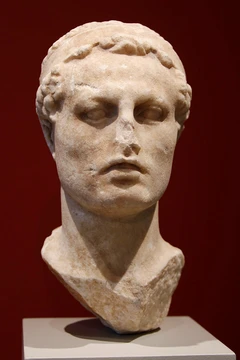
Both dynasties were Greek and promoted Greek culture, but the Seleucid ruler Antiochus IV Epiphanes (reigned 175–164 BCE) outlawed Jewish customs such as circumcision, kosher dietary restrictions, Sabbath observance, and the Torah. He built an altar to Zeus over the altar of burnt offerings in the Temple (the "abomination of desolation"), sparking a popular uprising in 167 BCE that led to the retaking of Jerusalem by Judas Maccabeus and the purification of the Temple in 164 BCE.
Imagery and symbolism
Many scholars see the imagery of Daniel 7 as originating from the Canaanite myth of Baʿal's battle with Yamm ("Sea"), symbolic of chaos. Although no exact prototype exists, parallels appear in the Baʿal Cycle from Ugarit, where chaos monsters appear as serpents. In Daniel 7, composed before Judas Maccabeus purified the temple in 164 BCE, the four beasts symbolize Babylon, the Medes, Persia, and Greece. The lion represents Babylon; its transformation into a man reverses Nebuchadnezzar's transformation into a beast in chapter 4, and the "human mind" may reflect his regained sanity, while the "plucked wings" indicate loss of power and transformation to a human state.
The bear symbolizes the Medes, the leopard Persia (its four heads possibly reflecting four Persian kings), and the fourth beast the Greeks, particularly the Seleucids of Syria. The ten horns on the fourth beast represent a round number for Seleucid kings from Seleucus I to Antiochus Epiphanes, comparable to the feet of iron and clay in chapter 2 and the succession in chapter 11. The "little horn" is Antiochus himself; the three horns uprooted reflect that Antiochus was fourth in line to the throne, becoming king after his brother and one nephew were murdered and another nephew exiled to Rome.
The author holds Antiochus responsible for all these deaths. Antiochus called himself Theos Epiphanes ("God Manifest"), suiting the "arrogant" speech of the little horn. The divine court scene shows multiple thrones, suggesting a mythic background despite Israelite monotheism. The "Ancient of Days" echoes the Canaanite god El, but his wheeled throne recalls Ezekiel's mobile throne of God.
He is surrounded by fire and an entourage of "ten thousand times ten thousand," alluding to the heavenly hosts attending Yahweh as he rides to battle. No battle occurs; instead, "the books" are opened, and Israel's enemies are judged by God's sovereign decision.
More in Antiochus IV Epiphanes
Spotted an error? Know more?
Reader corrections go straight into our review queue. Suggest an edit · How this site is sourced