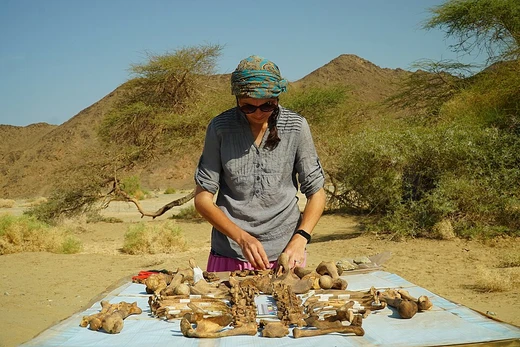
Ian Hodder
British archaeologist and pioneer of post-processual theory.

Ian Hodder is a British archaeologist and academic, born on 23 November 1948 in Bristol. He is recognized as a pioneer of post-processual archaeological theory and is widely known for directing long-term excavations at the Neolithic site of Çatalhöyük in Turkey. He holds the title of Dunlevie Family Professor Emeritus at Stanford University’s Department of Anthropology and also serves as a part-time professor in the Archaeology and History of Art Department at Koç University in Istanbul. Hodder’s early life included time in Singapore and Oxford, and he was educated at Magdalen College School, Oxford. He earned a first-class Bachelor of Arts in prehistoric archaeology from the Institute of Archaeology, University of London, in 1971, followed by a PhD from the University of Cambridge in 1975, supervised by David L. Clarke. His academic career began with a lectureship at the University of Leeds, after which he returned to Cambridge, eventually becoming a professor of archaeology and director of the Cambridge Archaeological Unit. In 1999, he moved to Stanford University. From 1993 to 2018, Hodder directed the Çatalhöyük Research Project, an international effort to conserve and interpret the 9,000-year-old site. He introduced reflexive methods that allowed excavators to record their own interpretations and involved more people in primary data recording. In 2012, he dismissed some team members, citing a need for change, and handed the site over to a Turkish team in 2018. Hodder is a leading figure in post-processual archaeology, which argues that interpretations of the past are socially contextual and that culture is actively constructed by knowledgeable agents. His 1986 book *Reading the Past* became a foundational text for this approach. He later developed entanglement theory, exploring how humans and material things are interdependent and co-constitutive, as elaborated in his 2012 book *Entangled*. His other major works include *Symbols in Action*, *The Domestication of Europe*, *The Archaeological Process*, and *The Leopard’s Tale*. He has received numerous honors, including the Oscar Montelius Medal, the Huxley Memorial Medal, the Fyssen Prize, the Gold Medal for Distinguished Archaeological Achievement, and honorary degrees from Bristol and Leiden universities. In the 2019 Queen’s Birthday Honours, he was appointed Companion of the Order of St Michael and St
- field
- Archaeology
- nationality
- British
- known_for
- Post-processual archaeological theory
Verified Timeline
Quick Facts
- Birth Date
- df=yes · 1948 · 11 · 23
- Birth Place
- Bristol, England
- Citizenship
- British
- Spouse
- Francoise Hivernel 1975-1984, / Christine Hastorf -2009, / Lynn Meskell
- Fields
- Archaeology, Anthropology
- Workplaces
- University of Leeds / University of Cambridge / Darwin College, Cambridge / Stanford University
- Education
- University of London / Peterhouse, Cambridge
- Known For
- Pioneering post-processual archaeology
Facts from the source article.
Lore & Background
Ian Hodder was one of the archaeologists who pioneered the post-processual movement in the United Kingdom during the late 1970s and early 1980s, alongside Daniel Miller, Christopher Tilley and Peter Ucko. They were influenced by French Marxist anthropology, postmodernism and similar trends in sociocultural anthropology. Within the post-processual movement, Hodder became 'the leading exponent of a structuralist approach.' In a 1984 article, he examined similarities between houses and tombs of Neolithic Europe, using structuralism as a basis for ideas on their symbolism. He then went on, in his seminal book *The Domestication of Europe* (1990), to use structuralist ideas to develop a theory that within Neolithic Europe there was a dichotomy between field (*agrios*) and house (*domus*), with this duality mediated by a boundary (*foris*). Hodder also stated that archaeologists had no right to interpret the prehistories of other ethnic or cultural groups, and that instead they should simply provide individuals from these groups with the ability to construct their own views of the past.
Reader's Guide
Ian Hodder's work is central to understanding post-processual archaeology. He argued that archaeologists always impose their own views and biases into interpretations of archaeological data, and that this bias is often political in nature. He believed that archaeologists from wealthy, Western countries had no right to interpret the prehistories of other ethnic or cultural groups, advocating instead that those groups should be empowered to construct their own views of the past. Hodder's structuralist approach, influenced by Claude Lévi-Strauss, held that underlying every culture was a deep structure governed by its own laws, and that all human thought was governed by conceptual dichotomies such as culture/nature, male/female, day/night, and life/death. His application of this theory to Neolithic Europe, particularly the *agrios*/*domus*/*foris* framework in *The Domestication of Europe* (1990), remains a key example of post-processual interpretation. Hodder's viewpoint that archaeologists should not interpret prehistories of other groups was not universally accepted among post-processualists, but it reflected the movement's support for opposing racism, colonialism and professional elitism within the discipline.
Did You Know?
- Ian Hodder was one of the archaeologists who pioneered the post-processual movement in the United Kingdom during the late 1970s and early 1980s.
- Hodder became 'the leading exponent of a structuralist approach' within the post-processual movement.
- In his 1990 book *The Domestication of Europe*, Hodder used structuralist ideas to propose a dichotomy between field (*agrios*) and house (*domus*) in Neolithic Europe.
- Hodder stated that archaeologists had no right to interpret the prehistories of other ethnic or cultural groups.
- Hodder's viewpoint on not interpreting other groups' prehistories was not universally accepted among post-processualists.
Frequently Asked Questions
Who is Ian Hodder?
Ian Richard Hodder is a British archaeologist born in Bristol, England, on 23 November 1948, who has built his career as a leading academic in the field. He currently holds the Dunlevie Family Professor Emeritus title at Stanford University and a part-time role at Koç University in Istanbul.
What is Ian Hodder best known for?
He is widely recognized as a pioneer of post-processual archaeological theory, a framework that reshaped how scholars interpret material culture and human behavior. His most prominent fieldwork centers on the long-term excavation and research program at Çatalhöyük in Turkey.
What university is Ian Hodder associated with?
Hodder serves as the Dunlevie Family Professor Emeritus at Stanford University, where he has spent much of his academic career. He also maintains a part-time professorship at Koç University in Istanbul.
What is Ian Hodder's major excavation project?
His signature fieldwork is the extended excavation and research program at Çatalhöyük, a Neolithic settlement in Turkey. This long-term project has become one of the most studied sites in prehistoric archaeology.
Why is Ian Hodder important in archaeology?
He helped reshape the discipline by championing post-processual theory, which encourages multiple interpretations of the past rather than a single objective narrative. His decades of hands-on work at Çatalhöyük further cemented his influence on how Neolithic societies are understood.
More in Anthropologists And Archaeologists 1-24
Spotted an error? Know more?
This is a living reference — every entry is fact-audited, and reader corrections feed straight into our audit queue. Suggest an edit · See this site's audit record