Sociobiology
Field explaining social behavior through evolutionary biology and genetics.

Sociobiology is a field of biology that aims to explain social behavior in terms of evolution, drawing from disciplines including psychology, ethology, anthropology, evolution, zoology, archaeology, and population genetics. It argues that just as selection pressure led to animals evolving useful ways of interacting with the natural environment, so also it led to the genetic evolution of advantageous social behavior. The concept gained major recognition with the publication of E. O. Wilson's book *Sociobiology: The New Synthesis* in 1975, sparking intense scientific controversy.
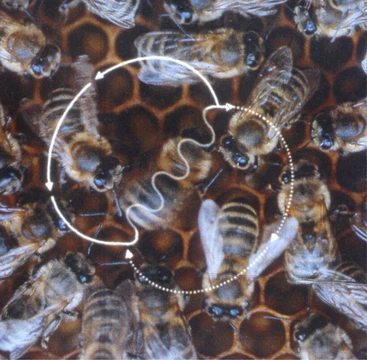
The field investigates behaviors such as mating patterns, territorial fights, pack hunting, and the hive society of social insects. Its core premise is that some social and individual behaviors are at least partly inherited and can be shaped by natural selection, with behavior seen as an effort to preserve one’s genes in the population. For example, a male lion killing cubs he did not father is interpreted as an adaptive, inherited behavior that eliminates competition for his own offspring and brings females into heat sooner, increasing his genetic success. The term "sociobiology" originated as early as the 1940s, with geneticist John Paul Scott coining it at a 1948 conference. A "Section of Animal Behavior and Sociobiology" was created in 1956, and E. O. Wilson encountered this emerging field through his PhD student Stuart A. Altmann, who studied rhesus macaques as a "sociobiologist" in 1965. Wilson’s version of sociobiology differed by drawing on mathematical models of genetic fitness from researchers like W. D. Hamilton and Robert Trivers. The 1975 book popularized the evolutionary explanation of altruism, aggression, and nurturance, especially in ants. The field quickly became controversial; critics like Richard Lewontin and Stephen Jay Gould argued that traits such as aggressiveness could be explained by social environment rather than biology, while sociobiologists emphasized the complex relationship between nature and nurture. The controversy over levels of selection was settled between D. S. Wilson and E. O. Wilson in 2007. Despite public debate, sociobiology is now considered a core part of biology curricula and a foundation for field biologists, with research on nonhuman organisms continuing to grow.
- field
- Biology, evolutionary theory
- known_for
- Explaining social behavior through natural selection and genetics
- key_contributors
- E. O. Wilson, John Paul Scott, Stuart A. Altmann
- major_publication
- Sociobiology: The New Synthesis (1975)
- related_disciplines
- Evolutionary anthropology, human behavioral ecology, evolutionary psychology, sociology
Lore & Background
E. O. Wilson came in contact with this emerging sociobiology through his PhD student Stuart A. Wilson's sociobiology differed from Scott's or Altmann's by drawing on mathematical models of social behavior centered on the maximization of genetic fitness by W. D. Hamilton, Robert Trivers, John Maynard Smith, and George R. Price. The three sociobiologies by Scott, Altmann, and Wilson have in common placing naturalist studies at the core of research on animal social behavior and drawing alliances with emerging research methodologies, at a time when 'biology in the field' was threatened to be made old-fashioned by modern practices of science. Once a specialist term, 'sociobiology' became widely known in 1975 when Wilson published his book Sociobiology: The New Synthesis, sparking intense controversy. Since then, 'sociobiology' has largely been equated with Wilson's vision. The field quickly became the subject of scientific controversy. Critics, led by Richard Lewontin and Stephen Jay Gould, argued that genes played a role in human behavior, but that traits such as aggressiveness could be explained by social environment rather than by biology. Sociobiologists responded by pointing to the complex relationship between nature and nurture. Among sociobiologists, the controversy between laying weight to different levels of selection was settled between D.S. Wilson and E.O.
Reader's Guide
Sociobiology represents a significant shift in the study of behavior, applying evolutionary theory and population biology to social organization. Its core premise—that some behaviors are at least partly inherited and can be affected by natural selection—has become foundational in biology, despite ongoing controversy regarding human applications. The field's influence is evident in its integration into core research and curriculum of virtually all biology departments, and it serves as a foundation for the work of almost all field biologists. Sociobiological research on nonhuman organisms has increased dramatically and continuously in top scientific journals such as Nature and Science. The more general term 'behavioral ecology' is commonly substituted to avoid public controversy. The discipline's legacy includes the development of mathematical models of social behavior, the study of altruism, aggression, and nurturance, and the ongoing debate about the relative roles of genes and environment in shaping human behavior. Edward H. Hagen writes in The Handbook of Evolutionary Psychology that sociobiology is, despite the public controversy on its application to humans, 'one of the scientific triumphs of the twentieth century.'
Did You Know?
- E. O. Wilson defined sociobiology as 'the extension of population biology and evolutionary theory to social organization'.
- Sociobiology is based on the premise that some behaviors are at least partly inherited and can be affected by natural selection.
More in Animal Biology And Behavior 1-21
Spotted an error? Know more?
This is a living reference — every entry is fact-audited, and reader corrections feed straight into our audit queue. Suggest an edit · See this site's audit record