Sleep in animals
Sleep is a conserved biological state found across the animal kingdom.

Sleep is a biological necessity observed across virtually all animals, from simple cnidarians like jellyfish and hydra to complex vertebrates. Its near-universal conservation suggests an ancient evolutionary origin, with circadian clock genes regulating sleep in most taxa except sponges. Sleep is defined by physiological criteria (reversible unconsciousness, brainwave patterns, sleep homeostasis) or behavioral criteria (minimal movement, increased sensory threshold, typical posture), with the behavioral definition applied to simpler animals lacking complex brains. The large majority of taxa with documented sleep physiology are bilaterians, but sleep-like states have been increasingly observed in non-bilaterians such as the jellyfish *Cassiopea* and hydra, and even sponges. In all these groups except sponges, regulation involves circadian or clock genes whose transcription oscillates with time, forming an internal circadian clock. Biological sleep schedules fall into three categories: diurnal, nocturnal, and crepuscular, corresponding to waking periods during day, night, or twilight. Sleep patterns and durations vary widely, with some species sleeping or foregoing sleep for extended periods. Certain porpoises engage in unihemispheric sleep, where only one brain hemisphere sleeps at a time to maintain motion or homeostasis in marine environments. The presence of sleep physiology is nearly universally conserved, indicating a very ancient evolutionary origin. Broader chronobiological mechanisms, including non-sleep oscillating processes, are documented among many microbes and likely reflect the day-night cycle as an early environmental stimulus for gene regulation. Some evolutionary biologists suggest time-based activity oscillations may represent ancient niche partitioning to minimize competition. Sleep is quickly reversible, unlike hibernation or coma, and deprivation leads to longer or deeper rebound sleep. Studies show that if rats are deprived of sleep, they die within weeks despite adequate food, losing weight and appetite. No complex animals have been found that do not sleep, require no recovery sleep, or suffer no serious consequences from lack of sleep. While some sharks must remain in motion to breathe, they may still sleep one hemisphere at a time, though definitive evidence of unihemispheric sleep in fish is lacking. Invertebrates such as the nematod
- field
- Chronobiology and Comparative Physiology
- known_for
- Documenting sleep-like states in basal animals (e.g., Cassiopea jellyfish, Hydra) and demonstrating sleep's necessity across phyla
- key_taxa
- Bilaterians, cnidarians, nematodes, insects, fish, cephalopods
Lore & Background
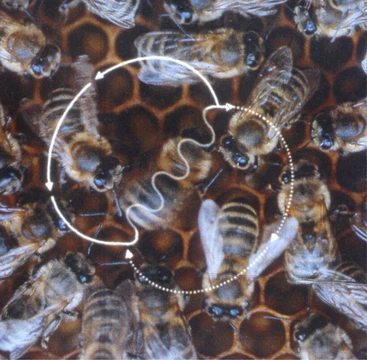
Sleep research has expanded from mammals and birds to include invertebrates such as the fruit fly Drosophila melanogaster, where gene expression studies confirmed shared lethargy-related orthology with mammals. In honeybees, sleep is used to store long-term memories. Jumping spiders exhibit retinal movements suggesting an REM sleep–like state, and cuttlefish and octopuses show signs of REM-sleep behaviors. Octopuses have a two-staged sleep: a 'quiet sleep' lasting about 60 minutes with eyes closed and flat posture, followed by an 'active sleep' of about 1 minute with eye and body movements and color changes.
Reader's Guide
The study of sleep in animals reveals its fundamental role across evolution, from cnidarians without brains to complex vertebrates. Sleep is considered essential because no complex animal has been found that does not sleep, lacks recovery sleep after deprivation, or suffers no consequences from lack of sleep. In rats, sleep deprivation leads to death within weeks. The presence of sleep in basal animals like Hydra and Cassiopea indicates that sleep does not require a centralized nervous system. Fish present ongoing research: some species like zebrafish become motionless and unresponsive, while others such as sharks may engage in unihemispheric sleep, though definitive evidence is lacking. Insects like cockroaches and crayfish show prolonged rest after deprivation, with characteristic postures and reduced sensitivity. This research underscores sleep's ancient origins and its link to developmental processes, as seen in the nematode C. elegans, where sleep occurs before each moult.
Did You Know?
- Sleep-like states have been observed in the jellyfish Cassiopea and the hydra Hydra vulgaris, which lack a brain or central nervous system.
- Fruit flies deprived of sleep take longer to learn to choose a dark tunnel over a light one and forget the task more quickly.
- Octopuses exhibit a two-staged sleep: a quiet stage lasting about 60 minutes, followed by an active stage of about 1 minute with color changes and body movements.
- Some fish, such as rays and sharks, may have unihemispheric sleep, allowing half the brain to sleep while the other remains active for swimming.
More in Animal Biology And Behavior 1-21
Spotted an error? Know more?
This is a living reference — every entry is fact-audited, and reader corrections feed straight into our audit queue. Suggest an edit · See this site's audit record