Titus Quinctius Flamininus
Roman general who secured Roman dominance in Greece.

via Wikipedia: Titus Quinctius Flamininus · see source
Titus Quinctius Flamininus (c. 229–174 BC) was a Roman politician and general. He was instrumental in the Roman conquest of Greece.
Quick Facts
- Born
- c. 229 BC
- Died
- 174 BC (aged approx 55)
- Office
- Consul (198 BC); Censor (189 BC)
Facts from the source article.
Family background
Titus Quinctius Flamininus came from the Quinctia clan, a patrician family with a storied past in Rome’s early days—most famously through the legendary Lucius Quinctius Cincinnatus—but one that had faded politically by the mid-300s BC. His great-grandfather, Caeso Quinctius Claudus, served as consul in 271, the last Quinctius to hold a curule office until 209. Flamininus’s grandfather, Lucius Quinctius, was flamen Dialis, the high priest of Jupiter, during the third quarter of the third century; the family’s later surname, Flamininus, came from this role.
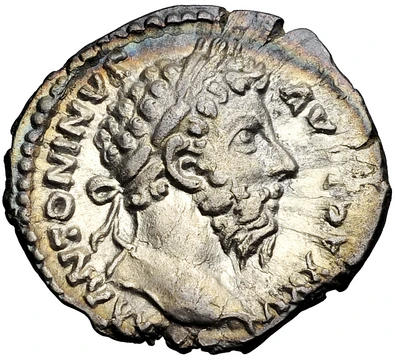
A denarius struck by Flamininus’s great-grandson later featured the apex, the flamen’s head covering, as a family emblem. Flamininus’s father, also named Titus, is unknown. He had two sons: the elder Titus, born around 228, and the younger Lucius. By the late third century, the Quinctii had regained influence: Flamininus’s uncle Caeso built the Temple of Concord in 217, his younger brother became an augur in 213, and his distant cousin Titus Quinctius Crispinus was consul in 208.
The Quinctii had long been connected to the powerful Fabii, likely adopting the rare first name Caeso through intermarriage. Flamininus probably married a Fabia; according to Polybius, Quintus Fabius Buteo, who later served under him in Greece, was his wife’s nephew.
Early career
Flamininus' early career was unusual, as he skipped several steps of the cursus honorum, a pattern seen in the Second Punic War. He began in 208 as military tribune under Marcus Claudius Marcellus, who died in an ambush near Crotone that year. Flamininus then became quaestor, probably in 206, and was sent to Tarentum to assist his uncle Quinctius Claudus Flamininus, the propraetor commanding the Roman garrison. After his uncle likely died in 205, Flamininus appears to have taken over the command, becoming propraetor before age 25—an extraordinary achievement explained by the need for experienced commanders at the war's end.
Livy records that his command was prorogued in 204, but is silent on later years; he may have remained until the war ended in 202. During his time at Tarentum, he developed good relations with the Greek population and became familiar with Greek language and culture. In 201, he served on a ten-man commission settling Scipio Africanus' veterans in Samnium and Apulia, and in 200 he was simultaneously appointed to a three-man commission enrolling settlers in Venusia—the only known instance of a man serving on two commissions at once.
Consulship and command in Greece (198–194 BC)
In 199, Flamininus ran for the consulship while under 30, breaking tradition despite the cursus honorum not yet being formally organised. He was younger than Scipio Africanus, who had been elected consul at 31 with impressive military records and family support. Flamininus came from a smaller family and lacked notable achievements in the war against Hannibal. Two tribunes of the plebs, Marcus Fulvius and Manius Curius, vetoed his candidacy on grounds of age and lack of curule office, but the Senate compelled them to withdraw the veto.
Modern historians have debated whether Flamininus was backed by powerful politicians; early prosopographers like Friedrich Münzer and H. H. Scullard suggested an alliance with the Fabii, but this view has been contested as the Fabii were in decline after the deaths of Buteo and the Cunctator. Flamininus was elected consul posterior alongside the plebeian Sextus Aelius Paetus Catus. Plutarch attributed his success to land distributions that made him popular with settlers.
The consuls could not agree on provincial allocation and turned to sortition; the main prize was the Second Macedonian War against Philip V of Macedon. Although some scholars suspected the lottery was rigged, it appears Flamininus was simply lucky, as known rigged sortitions occurred much later.
More in Ancient Roman Triumphators
Spotted an error? Know more?
Reader corrections go straight into our review queue. Suggest an edit · How this site is sourced