Frequently Asked Questions
The most-asked questions about american thrash metal musical groups.
What is American thrash metal?
American thrash metal is a heavy metal subgenre that crystallized in the early 1980s, blending aggressive palm-muted guitar riffs, rapid tempos, and raw vocal delivery with a punk-derived sense of urgency. It occupies a middle ground between hardcore punk's speed and traditional metal's technicality, prioritizing sheer intensity and directness over studio polish.
Who are the most iconic American thrash bands?
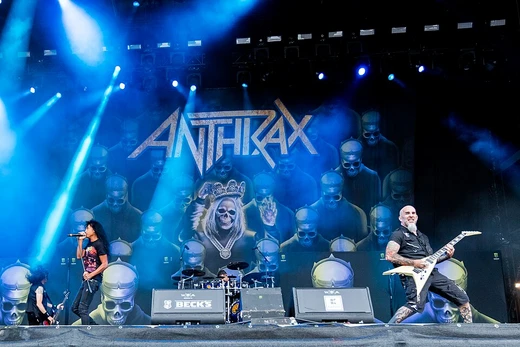
Metallica, Slayer, Megadeth, and Anthrax are the four acts most commonly grouped together as the genre's pillars, a grouping fans and journalists often call the "Big Four." Exodus, Sacred Reich, Overkill, and Testament are also widely cited as essential, foundational voices in the scene.
Where should a newcomer start listening?
A frequently suggested entry point is Metallica's *Master of Puppets*, Slayer's *Reign in Blood*, and Anthrax's *Spreading the Disease*, which together sketch the genre's stylistic range. Stepping into Exodus's *Bonded by Blood* or Overkill's *The Years of Decay* afterward deepens the picture considerably.
How does American thrash differ from German thrash?
American thrash tends to lean into punk aggression, groove, and a grittier, more shouted vocal style, while the German scene (Kreator, Sodom, Destruction) often favors relentless mechanical speed and a more uniform blast of riffs. The American sound also absorbed influences from New York hardcore and the Los Angeles punk scene in ways the European scene largely did not.
What era is considered the golden age of American thrash?
Roughly 1983 through 1989 is generally regarded as the peak window, when the genre defined its sound and produced the recordings most often cited as definitive. By the early 1990s, the commercial surge of grunge and groove metal pulled audience attention away and the scene began to fragment.
Which independent labels were central to the scene?
Metal Blade Records, founded in 1982, became the genre's most important home, issuing landmark releases from Slayer, Exodus, and Overkill. Roadrunner Records, Combat Records, and Roadkill also played significant roles, each championing different corners of the thrash spectrum.
What distinguishes thrash metal from death metal and groove metal?
Thrash emphasizes fast, chugging riffs and a punk-inherited sense of urgency, whereas death metal trades much of that speed for deeper vocals and more complex, slower song structures. Groove metal, which partially absorbed thrash in the mid-1990s, swaps speed for heavier, syncopated rhythms and a more head-nodding, hip-driven feel.
Who are key figures beyond the bands themselves?
Producers such as Rob Caggiano and Scott Burns shaped the sonic identity of a large share of the genre's landmark records. Multi-instrumentalists and primary songwriters like Dave Mustaine and Kerry King are also frequently highlighted as the creative engines behind some of the most memorable material.
Did American thrash survive the 1990s and beyond?
The scene fragmented in the early 1990s as bands shifted toward groove metal, went on hiatus, or disbanded, but a steady underground kept the style alive throughout the decade. The 2000s and 2010s brought a notable resurgence, with original acts reuniting and a new generation of bands building directly on the 1980s blueprint.
Are there distinct regional clusters within American thrash?
The San Francisco Bay Area (Metallica, Exodus, Testament) and the New York City metro area (Slayer, Anthrax, Overkill) are the two most prominent geographic hubs. Secondary scenes in Los Angeles, Detroit, and the Midwest also produced influential acts, though they are less often grouped under a single regional banner.