Airwolf
A high-tech helicopter and its crew return for a fourth season.

istolethetv · CC BY 2.0
Airwolf is an American action military drama television series that centers on a high-technology attack helicopter, code-named Airwolf, and its crew. The series originally aired on CBS from January 22, 1984, until its cancellation after the third season, and was subsequently revived by the USA Network for a fourth season in 1987. The revival is notable for a complete recasting, a move to Canada, and a significantly reduced budget.
Quick Facts
- Runtime
- 48 minutes (CBS episodes) / 45 minutes (USA Network episodes)
- Genre
- Action / Military drama
- Creator
- Donald P. Bellisario
- Starring
- Jan-Michael Vincent / Ernest Borgnine / Alex Cord / Jean Bruce Scott
- Theme Music Composer
- Sylvester Levay
- Composer
- Sylvester Levay (S1–3) / Udi Harpaz (S2–3)
- Country
- United States / Canada (S4)
- Company
- Belisarius Productions / Universal Television / Atlantis Communications (1987) / MCA TV (1987)
- Language
- English
- Network
- CBS (1984–1986) / USA (1987)
- First Aired
- 1984-01-22
- Last Aired
- 1987-08-07
Facts from the source article.
Lore & Background
The series was created by Donald P. Bellisario and ran for four seasons. The first three seasons aired on CBS, featuring a main cast that included Jan-Michael Vincent, Ernest Borgnine, Alex Cord, Deborah Pratt (who departed after season two when her husband Bellisario left the series), and Jean Bruce Scott (who became a regular in seasons two and three). The show was cancelled after the third season, but the USA Network picked it up for a fourth season. This revival was completely recast, with Jan-Michael Vincent appearing in a first transitional episode; a body double for Ernest Borgnine seen only from the back represented Santini, who was killed off in an explosion; Archangel was said to have suddenly been assigned overseas. The fourth season was filmed in Canada, and the aerial scenes relied heavily on stock footage or repeated footage from the first three seasons. The musical score was composed and conducted mainly by Sylvester Levay.
Reader's Guide
The revival of Airwolf for a fourth season on the USA Network was driven by a desire to increase the episode count to make the show eligible for broadcast syndication, thereby generating a return against the series' overall production costs. The original cast was written out: Jan-Michael Vincent appeared only in a transitional first episode; a body double for Ernest Borgnine represented Santini, who was killed off in an explosion; Archangel was said to have been assigned overseas; and no mention was made of Caitlin. Stringfellow's brother St. John Hawke, now played by Barry Van Dyke, was suddenly revealed to be alive and replaced Stringfellow as the central character. Production moved to Vancouver, British Columbia, on a reduced budget that was less than one-third of the original CBS budget. The production crew was composed of many people who had never worked on a television series before. The revival is notable for these drastic changes and its role in extending the series' life for syndication.
Did You Know?
- The fourth season was filmed in Canada with a budget less than one-third of the original CBS budget.
- The fourth season introduced Barry Van Dyke as St. John Hawke, replacing Jan-Michael Vincent as the central character.
- The revival was produced by Atlantis and The Arthur Company in association with MCA.
From Backdoor Pilot to Full Series
Donald P. Bellisario's path to Airwolf began well before the helicopter ever took flight on screen. In 1982, two episodes of his own series Tales of the Gold Monkey—"Legends Are Forever" and "Honor Thy Brother"—featured actor William Lucking in the role of a combat pilot, a character concept that clearly resonated with Bellisario. The following year, he developed that seed into a third-season episode of Magnum, P.I. called "Two Birds of a Feather," designed to function as a backdoor pilot for a potential spinoff. The network never greenlit a separate series, but Bellisario refused to let the idea die. He went back to the drawing board, heavily reworking the premise, the characters, and the tone until the concept crystallized into something entirely new: a show built around a single, almost mythic machine and the men who flew it. That reworked vision premiered on CBS in January 1984, launching what would become a four-season run totaling seventy-nine episodes.
The Machine and Its Maker
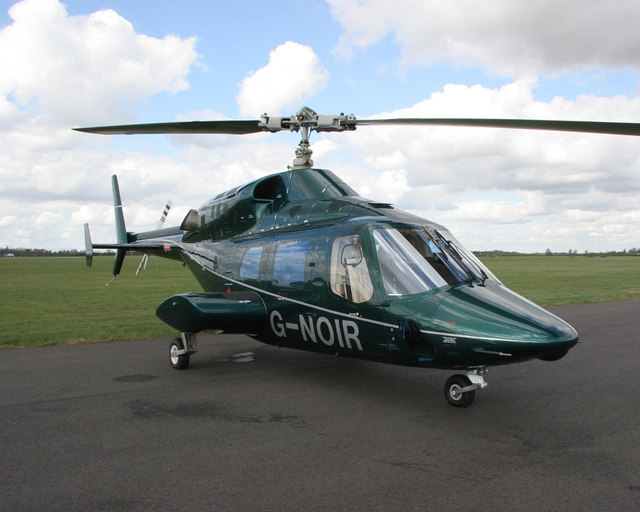
At the heart of the series is not merely a helicopter but a character in its own right: a supersonic, stealth-capable attack gunship armed with a formidable arsenal. It was designed by Charles Henry Moffet, a brilliant engineer portrayed as a psychopath with a disturbing fondness for torturing and killing women. The aircraft was constructed by "the Firm," a shadowy division of the Central Intelligence Agency—a deliberate nod to the CIA's informal nickname, "the Company." During a live-fire weapons test, Moffet and his crew seize the helicopter, and in the chaos he opens fire on the Firm's own bunker, killing a sitting United States senator and seriously wounding deputy director Michael Coldsmith-Briggs III, codenamed Archangel. Moffet then flies Airwolf to Libya, where he carries out acts of aggression on behalf of Muammar Gaddafi, including sinking an American destroyer, in exchange for being granted sanctuary on Libyan soil. This single act of theft sets every subsequent plot in motion.
Cast, Crew, and Production Realities
The first three seasons featured a core ensemble: Jan-Michael Vincent as Hawke, Ernest Borgnine as Dominic Santini, Alex Cord, Deborah Pratt, and Jean Bruce Scott, who joined as a regular in season two. Pratt's departure after the second season coincided with the exit of her husband, creator Donald P. Bellisario, from the series. When CBS cancelled the show after season three, USA Network stepped in to produce a fourth season, but the changes were drastic. The cast was almost entirely replaced, with Vincent reduced to a minor appearance in only the first episode. Filming moved to Canada, and the aerial sequences leaned heavily on stock footage or material recycled from earlier seasons—a practice seeded during season one, when editors reused pilot footage to keep special-effects costs down. Throughout all four seasons, the musical score was composed and conducted primarily by Sylvester Levay, giving the show a consistent sonic identity even as the on-screen faces changed.
From Cold War Thriller to Family Television
Airwolf debuted on CBS on January 22, 1984, as the lead-out program following Super Bowl XVIII, entering the schedule as a late-season replacement with only a pilot completed. The initial order was eight episodes, and the show landed in the top sixty but toward the bottom of the ratings, well behind sitcoms like The Golden Girls, The Cosby Show, Cheers, and Family Ties. Still, the numbers were sufficient to trigger a "back nine" extension, bringing season one to twelve episodes. The first season carried a distinctly dark, Cold War–inflected tone, with Firm operatives dressed in white to signal their supposed moral superiority. By season two, however, CBS pushed the series toward a more family-friendly register, recasting Hawke and Santini as cooperative partners working alongside the Firm rather than adversaries. That lighter tone carried forward into the fourth season's "Company" era. In total, the series produced fifty-five episodes on CBS and twenty-four on USA Network, with parts filmed in Monument Valley, Utah, and international broadcasts reaching markets as far as Indonesia, where a reedited version received a theatrical release.
Gallery



Frequently Asked Questions
Why was Airwolf cancelled and then brought back?
CBS dropped the series after its third season in 1984, but USA Network picked it up to produce a fourth season in 1987, giving the show a second run on a different channel.
What changed in the Airwolf revival?
The fourth season swapped out the entire cast, relocated production to Canada, and operated on a noticeably smaller budget than the original CBS run.
Who starred in Airwolf before the revival?
The first three seasons featured Jan-Michael Vincent, Ernest Borgnine, and Alex Cord as core leads, alongside Deborah Pratt and Jean Bruce Scott in prominent recurring or regular roles.
What is Airwolf as a TV series?
It is an American action military drama built around a team of pilots and operators who fly a highly advanced, code-named attack helicopter through a string of high-stakes missions.
How many seasons did Airwolf run in total?
The show completed three seasons on CBS starting in January 1984, then added a fourth and final season on USA Network in 1987.
More in American Television Series Revived After Cancellation 1-24
Spotted an error? Know more?
Reader corrections go straight into our review queue. Suggest an edit · How this site is sourced