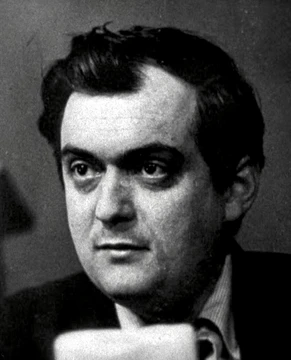
Irvin Kershner
Director of The Empire Strikes Back and other blockbusters.
Irvin Kershner was an American director for film and television who began his career with independent dramas and later directed high-budget blockbusters. He is notable for helming Star Wars: The Empire Strikes Back, the James Bond adaptation Never Say Never Again, and RoboCop 2. Over his career he received a Primetime Emmy Award nomination and a Palme d'Or nomination.
Quick Facts
- Birth name
- Isadore Kershner
- Born
- 29 April 1923
- Birthplace
- Philadelphia, Pennsylvania, U.S.
- Died
- 27 November 2010
- Place of death
- Los Angeles, California, U.S.
- Education
- University of Southern California
- Occupation
- Film director
- producer
- actor
- Years active
- 1952–2009
Facts from the source article.
Early life
Irvin Kershner was born in Philadelphia to parents who had emigrated from Ukraine. His upbringing blended art and music, with his early years dominated by studying violin, viola, and composition. He studied fine arts at Temple University's Tyler School, then learned painting under Hans Hofmann in New York and Provincetown. After moving to Los Angeles, he studied photography at the Art Center College of Design.
During World War II, he served three years as a flight engineer with the U.S. Eighth Air Force. His film career began at the University of Southern California's School of Cinematic Arts, where he taught photography and took cinema courses from Slavko Vorkapić. He then took a job as a still photographer for a State Department film project in Iran under the Point Four Program. That work led to directing and cinematography assignments for documentaries in Iran, Greece, and Turkey with the United States Information Service.
Career
After returning to the States, Kershner developed the documentary television series Confidential File with Paul Coates, working as writer, director, cinematographer, and editor. He later developed and directed the television series The Rebel (1959–61) and pilots for Peyton Place, Cain's Hundred, Philip Marlowe, and others. He moved on to feature films including The Hoodlum Priest, The Luck of Ginger Coffey, A Fine Madness, The Flim-Flam Man, Loving, Up the Sandbox, The Return of a Man Called Horse, the TV movie Raid on Entebbe (nominated for nine Emmys including Best Direction), and Eyes of Laura Mars.
Kershner considered himself an internationalist, stating he had studied Christianity, the historical basis of the Muslim religion, and Buddhism, and that he did not follow Jewish customs. He directed The Empire Strikes Back (1980), the sequel to the 1977 hit Star Wars. Writer-producer George Lucas knew Kershner as a teacher at USC School of Cinematic Arts. Kershner was a surprising choice; when he asked Lucas why he was chosen over younger hot-shots, Lucas replied that Kershner knew everything a Hollywood director should know but was not Hollywood.
Lucas valued Kershner's concern for character development. Kershner initially refused Lucas's offer over lunch but later accepted after his agent encouraged him. He said he was grabbed by the fairytale Lucas invented and wanted to help keep it alive. Of his style, Kershner said he liked to fill the frame with characters' faces, finding nothing more interesting than the landscape of the human face.
More in American Science Fiction Film Directors
Spotted an error? Know more?
Reader corrections go straight into our review queue. Suggest an edit · How this site is sourced