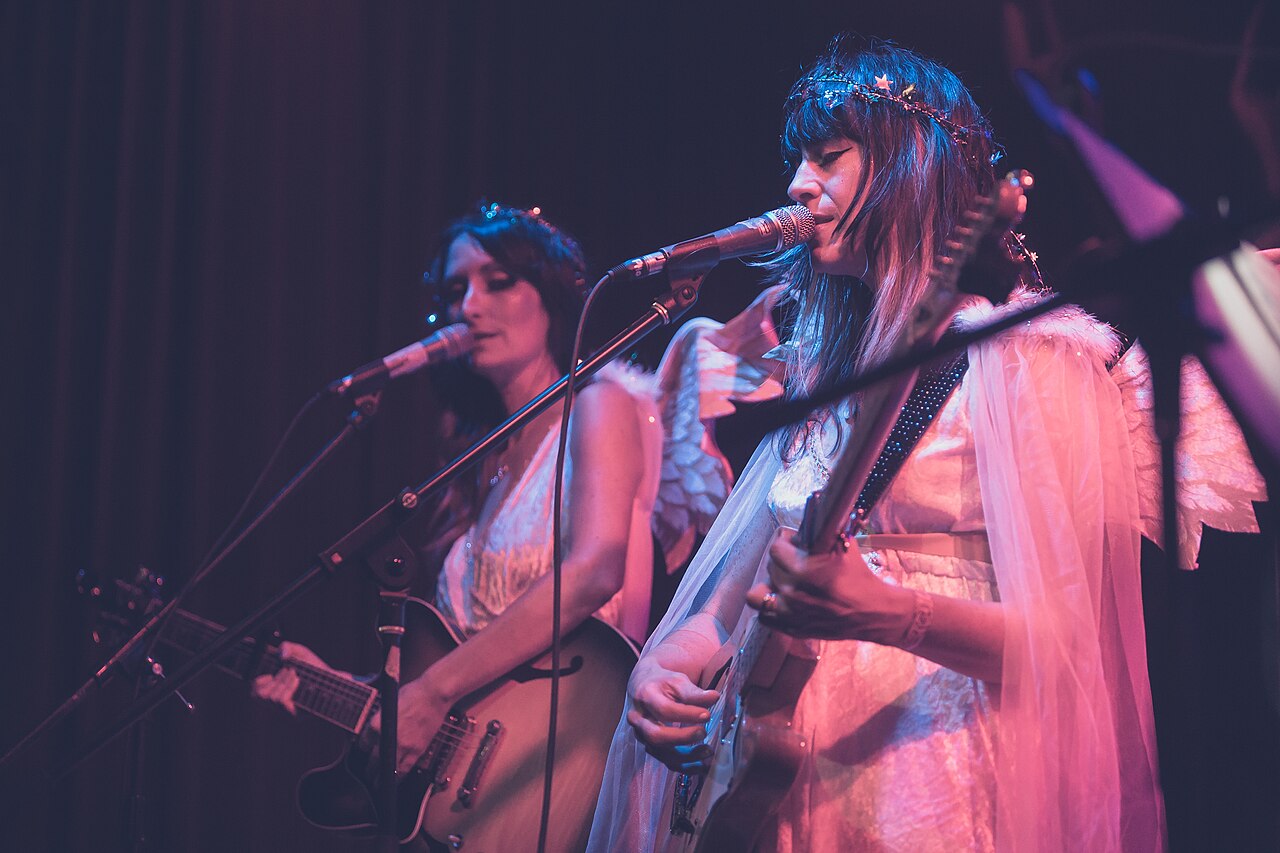
Azure Ray
American dream pop duo from Athens, Georgia.

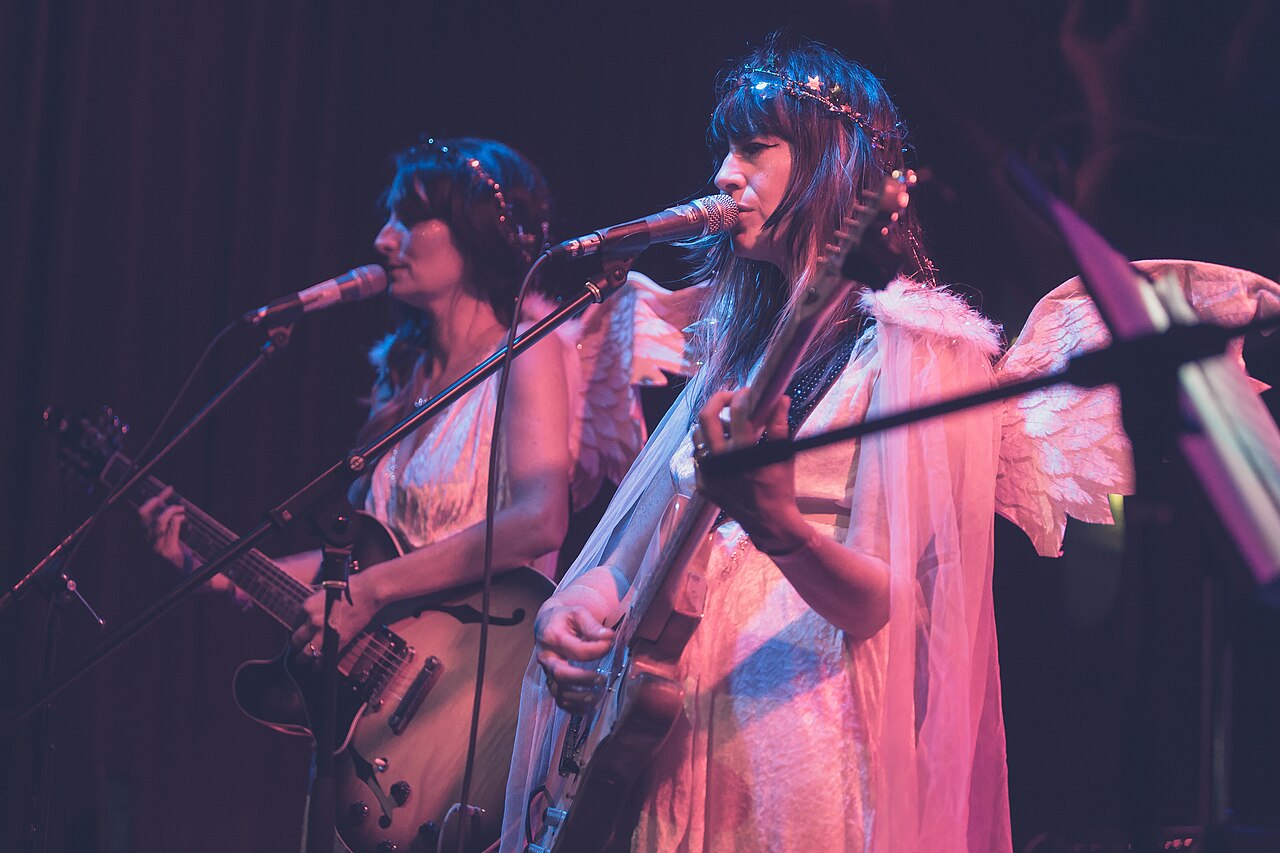
Veronika Reinert · CC BY-SA 4.0
Azure Ray is an American dream pop duo made up of Orenda Fink and Maria Taylor. The pair first met at the Alabama School of Fine Arts in Birmingham and later fronted the band Little Red Rocket, which released two albums and drew comparisons to Veruca Salt. After that group dissolved, Fink and Taylor moved to Athens, Georgia, where they formed Azure Ray in 2001. Taylor has said that the songs on their first album came out of a period of personal loss, written as a way to cope.
Their self-titled debut album was released in 2001 on the Warm Electronic Recordings label, produced by Eric Bachmann. Pitchfork gave it a 7 out of 10, calling it a collection of “maudlin but beautiful, expertly crafted pop songs.” The track “Sleep” was included in a breakup playlist Taylor Swift made for a fan in 2015.
The duo’s second album, *Burn and Shiver*, came out in 2002, again produced by Bachmann. Pitchfork noted that with this record, the duo had “come closer than ever to wielding an emotional potency like master Cohen’s.” After meeting Bright Eyes frontman Conor Oberst in Athens, they were invited on tour and introduced to Saddle Creek Records. They relocated to Omaha, Nebraska, and joined that label’s music scene, which also included Bright Eyes, The Faint, and Cursive. Their first release for Saddle Creek was the *November EP* in 2002.
Their third full-length, *Hold On Love*, was released in 2003. Pitchfork described it as a departure, noting “newly arresting manipulations of electronic elements interlock with the duo’s traditional organic fare.” The single “New Resolution” was released as an EP in 2004. The band then went on hiatus, allowing Fink and Taylor to focus on solo work and other projects, including a stint in Now It’s Overhead.
Azure Ray reunited for a one-off show at the Troubadour in Los Angeles in November 2008. In 2009, Taylor announced on KCRW that the duo had reformed semi-permanently, planning a few shows before working on a new album. Their fourth album, *Drawing Down the Moon*, was released in September 2010. Pitchfork said it “sounds warmly familiar, a reminder of why we missed them in the first place.”
- field
- Dream pop, indie music
- nationality
- American
- known_for
- Dream pop sound, Saddle Creek Records, film/TV placements
- formed
- 2001
- origin
- Athens, Georgia, USA
- albums
- 5
Lore & Background
Orenda Fink and Maria Taylor met at the Alabama School of Fine Arts in Birmingham and fronted the band Little Red Rocket, which released two albums and drew comparisons to Veruca Salt. After that band broke up, they moved to Athens, Georgia, and formed Azure Ray. Taylor noted that the death of her boyfriend inspired the songs that became their debut album. They signed to Warm Electronic Recordings and released their self-titled debut in 2001, produced by Eric Bachmann. The song 'Sleep' was included in a Taylor Swift breakup playlist in 2015.
Their second album, Burn and Shiver (2002), was also produced by Bachmann. After meeting Conor Oberst, they relocated to Omaha, Nebraska, and joined Saddle Creek Records, releasing the November EP in 2002.
Reader's Guide
Azure Ray's significance lies in their role within the Saddle Creek Records scene, which also included Bright Eyes, The Faint, and Cursive. Their dream pop sound, characterized by delicate harmonies and introspective lyrics, earned them critical praise from outlets like Pitchfork and the BBC. Their music reached wider audiences through placements in television shows such as Six Feet Under and Grey's Anatomy, and the film The Devil Wears Prada. The duo's ability to blend organic instrumentation with electronic elements, as noted in reviews of Hold On Love, showcased their evolving artistry. Their periodic reunions and continued output, including the 2021 album Remedy, demonstrate their enduring appeal and influence within indie music. Their legacy is also tied to their collaborative work with artists like Moby and Conor Oberst, and their establishment of their own label, Flower Moon Records, to re-release their catalog.
Did You Know?
- The duo met at the Alabama School of Fine Arts in Birmingham.
- Their song 'Sleep' was included in Taylor Swift's 2015 breakup playlist on Tumblr.
- They co-wrote songs with Moby for his album 18 and the XXX soundtrack.
- Their 2010 album Drawing Down the Moon was recorded with Mark Linkous of Sparklehorse.
Origins in Grief and Birmingham
Fink and Taylor met at the Alabama School of Fine Arts in Birmingham, where they fronted a band called Little Red Rocket. That project produced two albums—Who Did You Pay in 1997 and It's in the Sound in 2000—earning comparisons to Veruca Salt. Drummer Louis Schefano co-wrote material on the first record and remained a frequent collaborator. After Little Red Rocket dissolved, the pair relocated to Athens, Georgia, and began writing what would become their Azure Ray material. Taylor later recalled that the songs emerged from a period of profound personal loss: her boyfriend had died, and the two had written tracks to help them process the grief. A gathering of friends and family became the first live performance of those songs, which ultimately shaped their debut record. That self-titled album arrived in 2001 on Warm Electronic Recordings, produced by Eric Bachmann, who had previously worked with Crooked Fingers and Archers of Loaf. Pitchfork awarded it seven out of ten, calling the collection "maudlin but beautiful, expertly crafted pop songs."
The Saddle Creek Years
After meeting Bright Eyes frontman Conor Oberst in Athens, Fink and Taylor were invited on tour and introduced to the people behind Saddle Creek Records. They relocated to Omaha, Nebraska, embedding themselves in a scene that also housed The Faint and Cursive. Their second album, Burn and Shiver (2002), again produced by Bachmann, drew a Pitchfork comparison to Leonard Cohen's emotional potency. The November EP, released January 22, 2002, marked their first Saddle Creek release. The duo also crossed paths with Moby, co-writing "Great Escape" for his album 18 and "Landing" for the XXX soundtrack, before joining him on tour. Hold On Love (2003) represented a sonic shift—Pitchfork noted "newly arresting manipulations of electronic elements" interlocking with their organic songcraft and bolder production. The New Resolution EP followed in January 2004. By that point, however, the duo had entered a hiatus, turning to solo albums and a stint in the supergroup Now It's Overhead.
Reunions and the Flower Moon Era
The band's first reunion came in November 2008 with a one-off show at Los Angeles' Troubadour, joined by Andy LeMaster and Nick White. In 2009, Taylor announced on KCRW that Azure Ray had reformed semi-permanently, with plans for a handful of shows and a new album. Drawing Down the Moon arrived in September 2010; Pitchfork called it "warmly familiar," and the BBC likened it to "a warming blanket." A single, "Silverlake," recorded with Sparklehorse's Mark Linkous, followed in January 2011. After another two-year break, the As Above So Below EP (2012) brought a more hypnotic, electronica-influenced sound, recorded with LeMaster and Todd Fink while Taylor was pregnant. In 2017, Taylor's own label, Flower Moon Records, reissued the debut and Burn and Shiver. The duo reunited again for a January 2018 show at the Lodge Room, and in September 2018 released the Waves EP, featuring "Palindrome" and a new take on "Hold On Love." Their first new album in eleven years, Remedy, arrived in 2021, and the band has since begun re-releasing their back catalogue through Flower Moon.
Songs That Outlived the Studio
Azure Ray's recordings have found a second life well beyond the concert stage. "Sleep" from their 2001 debut was featured in the 2006 film The Devil Wears Prada, which earned an Academy Award nomination. In February 2015, Taylor Swift included "Sleep" on a six-song breakup playlist she shared with a fan via her official Tumblr. DJ Paul Kalkbrenner sampled "Rise" in his 2008 track "Azure." The duo's music also appeared in episodes of Six Feet Under and Grey's Anatomy, broadening their audience through television. Beyond film and TV, their collaborative reach extended to Moby's touring lineup and the XXX soundtrack, while their membership in Now It's Overhead connected them to a wider indie network. Both Fink and Taylor have released numerous solo albums, and the band's repeated cycles of hiatus and reunion—punctuated by landmark one-off shows at the Troubadour and the Lodge Room—have kept their catalogue in cultural rotation. Flower Moon Records now serves as the home for both new material and reissues, ensuring that songs written in grief in a Birmingham schoolroom continue to reach new listeners.
Gallery




Frequently Asked Questions
Who is Azure Ray?
Azure Ray is an American dream pop duo consisting of Orenda Fink and Maria Taylor, both originally from Birmingham, Alabama. They are based in Athens, Georgia, and have been active since 2001.
How did Azure Ray get started?
Fink and Taylor first crossed paths at the Alabama School of Fine Arts and later shared fronting duties in the band Little Red Rocket. After that project ended, the two relocated to Athens, Georgia, and launched Azure Ray in 2001 as a new creative outlet.
What does Azure Ray's sound like?
Their music sits firmly in the dream pop and indie space, characterized by layered, atmospheric guitar work and soft, melodic vocal harmonies. Taylor has noted that much of their early material was written as a way to process personal loss, which gives the songs an intimate, reflective quality.
What albums has Azure Ray released?
The duo has put out five studio albums in total. Their self-titled debut arrived in 2001 on the Warm Electronic Recordings imprint, with Eric Bachmann handling production duties.
Why is Azure Ray notable in the indie scene?
They gained a dedicated following through their association with Saddle Creek Records and a distinctive, shimmering dream pop aesthetic. Their tracks have also found an audience outside the music world through placements in films and television shows.
More in American rock music duos 1-24
Spotted an error? Know more?
This is a living reference — every entry is fact-audited, and reader corrections feed straight into our audit queue. Suggest an edit · See this site's audit record