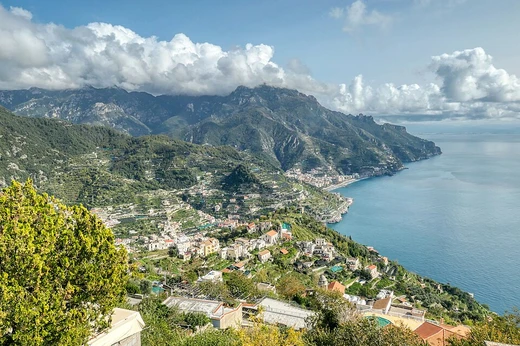
Cetara, Campania
A fishing village on the Amalfi Coast.

via Wikipedia: Cetara, Campania · see source
Cetara is a town and comune in the province of Salerno in the Campania region of south-western Italy. It is located in the territory of the Amalfi Coast, by the Tyrrhenian Sea, on the Amalfi Drive road between the "Marina" of Albori and Erchie. It borders the municipalities of Vietri sul Mare and Maiori. Its municipality extends from the coast to Mount Falerio and counts only one civil parish (frazione): the little village of Fuenti, situated on the hills close to the Amalfi Drive.
Quick Facts
- Official name
- Comune di Cetara
- Region
- Campania
- Province
- Salerno (SA)
- Mayor party
- lista civica "Cetara D'Amare"
- Mayor
- Fortunato Della Monica
- Area (km²)
- 4.97
- Population
- 1902
- Demonym
- Cetaresi
Facts from the source article.
Did You Know?
- Cetara's name probably originates from the Latin word Cetaria (in Greek Ketèia), meaning almadraba (in Italian tonnara), or from cetari, meaning fishmongers of big fishes.
- Cetara was originally a base of an Arab army during the Siege of Salerno.
Monuments and places of interest
The Tower of Cetara, built during the Angevin period in the 16th century, was later transformed and further fortified during the Aragonese domination. The Church and Convent of San Francesco, from the 17th century, has a dome frescoed by the painter Marco Benincasa. The Church of San Pietro Apostolo, renovated in the 18th century, has a Baroque interior, a majolica dome, and a 13th-century bell tower with mullioned windows and an octagonal belfry. The Church of Santa Maria di Costantinopoli dates to the 19th century.
Culture
Cetara has been used as a film set for the films Man, the Beast, and Virtue, Chestnuts Are Good, Sgarro alla Camorra, Lie, The Sea Is No Comparison, the TV series I Diavoli, and the drama Capri 2. Its traditional cuisine is essentially seafood-based, especially tuna and anchovies. A typical dish is spaghetti with anchovy sauce, which is the result of fermenting anchovies marinated in jars: the ancient Roman "garum." Another popular local delicacy is the so-called "cuòppo," a paper bag containing fish prepared and fried in various ways, especially anchovies and mixed fish. The patronal feast of Saint Peter takes place on June 29th, accompanied by fireworks over the sea.
More in Amalfi Coast
Spotted an error? Know more?
Reader corrections go straight into our review queue. Suggest an edit · How this site is sourced