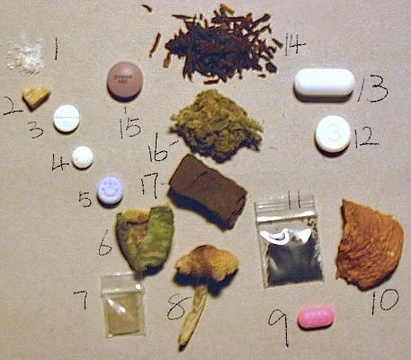
Heroin

Heroin, known chemically as diacetylmorphine or diamorphine, is an opioid derived from the dried latex of the opium poppy. While primarily used recreationally for its euphoric effects, it has recognized medical applications in some countries, including the relief of severe pain during childbirth or a heart attack. The substance was first synthesized in 1874 by C. R. Alder Wright from morphine, a natural component of the poppy. Medical-grade diamorphine is supplied as a pure hydrochloride salt, whereas illegal heroin is typically sold as white or brown powders that are routinely diluted with cutting agents such as sugar, starch, caffeine, quinine, or other opioids like fentanyl. A distinct form known as black tar heroin consists of a crude mixture of morphine derivatives, predominantly 6-monoacetylmorphine (6-MAM), resulting from incomplete acetylation during clandestine production.
Heroin can be administered in several ways: most commonly by intravenous injection, but also by intramuscular or subcutaneous injection, snorting, smoking, or inhalation. In clinical settings, intravenous injection is the standard route, though oral tablets are also used. The onset of effects is rapid, typically lasting a few hours. Common side effects include respiratory depression, dry mouth, drowsiness, impaired mental function, constipation, and addiction. Injection use carries additional risks such as abscesses, infected heart valves, blood-borne infections, and pneumonia. Withdrawal symptoms can begin within hours after long-term use. When injected, heroin is two to three times more potent than an equivalent dose of morphine. Treatment for addiction often combines behavioral therapy with medications like buprenorphine, methadone, or naltrexone, while an overdose can be reversed with naloxone. Internationally, heroin is controlled under Schedules I and IV of the Single Convention on Narcotic Drugs, making unlicensed production, possession, or sale generally illegal. In 2016, approximately 448 tons of heroin were produced globally, with Afghanistan accounting for about 66% of the world's opium in 2015.
- synthesized_by
- C. R. Alder Wright
- class
- morphinan opioid
- source
- dried latex of the opium poppy
- medical_use
- pain relief (e.g., childbirth, heart attack)
- common_forms
- white or brown powder, black tar heroin
- controlled_under
- Schedules I and IV of the Single Convention on Narcotic Drugs
Quick Facts
- Inn
- Diamorphine
- Watchedfields
- changed
- Verifiedrevid
- 443854562
- Iupac Name
- (5α,6α)-7,8-didehydro-4,5-epoxy-17-methylmorphinan-3,6-diol diacetate
- Pronounce
- Heroin: ˈ · h · ɛr · oʊ · ᵻ · n
- Tradename
- Diaphin
- Drugs.Com
- parent · heroin
- Dependency Liability
- Very high
- Routes Of Administration
- Intravenous, inhalation, oromucosal, by mouth, intranasal, rectal, intramuscular, subcutaneous, intrathecal
- Class
- Opioid
- Atc Prefix
- N07
- Atc Suffix
- BC06
Facts from the source article.
Lore & Background
Heroin was first made by C. R. It is typically injected, snorted, smoked, or inhaled, with rapid onset of effects lasting a few hours. Common side effects include respiratory depression, dry mouth, drowsiness, impaired mental function, constipation, and addiction. Use by injection can result in abscesses, infected heart valves, blood-borne infections, and pneumonia. After long-term use, withdrawal symptoms can begin within hours of the last use. When injected into a vein, heroin has two to three times the effect of a similar dose of morphine. Illegal heroin is often mixed with substances such as sugar, starch, caffeine, quinine, or other opioids like fentanyl.
Reader's Guide
Heroin is a morphinan opioid synthesized from the dried latex of the opium poppy, first created in 1874 from morphine. It is typically injected intravenously but can also be snorted, smoked, or inhaled, with effects that are rapid in onset and last a few hours. Common side effects include respiratory depression, drowsiness, constipation, and addiction; injection use may lead to abscesses, infected heart valves, and pneumonia. Withdrawal symptoms can begin within hours of the last use after long-term use. Intravenous heroin has two to three times the effect of a similar dose of morphine. Illegally sold heroin is often diluted with substances such as sugar, starch, caffeine, quinine, or other opioids like fentanyl. Black tar heroin is a crude mixture of morphine derivatives, predominantly 6-MAM. Medically, under the name diamorphine, it is used in some countries for pain relief during childbirth, heart attacks, and palliative care, often administered via injection or tablets. Recreational use is driven by intense euphoria, deep contentment, and relaxation, though tolerance develops quickly. In 2015, an estimated 17 million people used opiates non-medically, with heroin being the most common, and opioid use resulted in roughly 109–129 thousand deaths that year. The drug is controlled internationally under Schedules I and IV of the Single Convention on Narcotic Drugs, and about 448 tons were produced in 2016, with Afghanistan supplying about 66% of the world's opium in 2015.
Did You Know?
- When injected into a vein, heroin has two to three times the effect of a similar dose of morphine.
Frequently Asked Questions
What is Heroin?
Heroin, chemically called diacetylmorphine or diamorphine, is a morphinan opioid derived from the dried latex of the opium poppy. It is best known as a powerful recreational drug but also has limited medical applications in certain countries.
What does Heroin look like?
It most commonly appears as a white or brown powder, though a darker, sticky variant known as black tar heroin is also encountered in some regions.
Is Heroin used in medicine?
Yes—several countries employ it as a painkiller in specific clinical situations, such as managing pain during childbirth or in the aftermath of a heart attack.
Why is Heroin so widely discussed?
Its intense euphoric effect combined with a very high risk of physical dependence makes it one of the most notorious and heavily regulated opioids in the world.
More in Addictive Substances & Medications 1-24
Spotted an error? Know more?
This is a living reference — every entry is fact-audited, and reader corrections feed straight into our audit queue. Suggest an edit · See this site's audit record