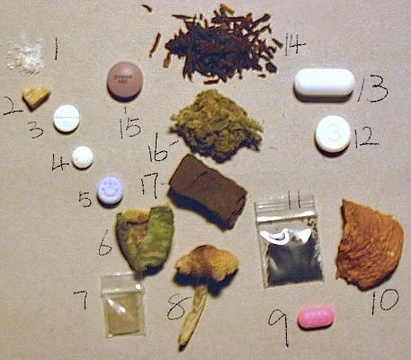
Drug overdose
Overdose is the ingestion of a drug in quantities risking health or death.

When someone takes or applies a drug or another substance in an amount far above the usual recommendation, it is called a drug overdose, often shortened to overdose or OD. The term is generally used when there is a possible threat to health, and the result can be poisoning or death. Because the word "overdose" assumes there is a standard safe dose for the substance, it usually refers to drugs rather than poisons—even though many poisons are also harmless in small amounts.
Drug overdose can be a method of suicide, or it can happen through either intentional or accidental misuse of medication. Intentional misuse might involve taking too much of a prescribed or illegal drug to get high. Using street drugs in large amounts, or taking them after a period of not using them, can also lead to an overdose. People who inject cocaine or opioids intravenously are at high risk of accidental overdose because the difference between a pleasant effect and a dangerous one is small. Unintentional misuse includes dosage errors from not reading or understanding labels, over-prescription, not recognizing a drug's active ingredient, or a child accidentally ingesting something. A common accidental overdose in young children involves multivitamins that contain iron. The term "overdose" is sometimes incorrectly used to describe negative drug reactions or harmful interactions from mixing several drugs at once.
Signs and symptoms of an overdose depend on the drug, its ingredients, how much was taken, and exposure to toxins. These symptoms often fall into different toxidromes, which can help identify the class of drug or toxin causing the problem. For opioid overdoses, symptoms include slow breathing, a slow heart rate and pulse, pinpoint pupils, and blue lips and nails from low blood oxygen. A person may also have muscle spasms, seizures, and reduced consciousness. Someone having an opiate overdose typically will not wake up, even if their name is called or they are shaken hard.
The drugs or toxins most often linked to overdose and death are grouped by ICD-10 codes. Added flavoring can be a factor because masking an unpleasant taste may make it harder to judge the drug's strength. For example, lean is often made as a drink by mixing cough syrup with soft drinks like Sprite, Mountain Dew, or Fanta, usually served in a foam cup, sometimes with a hard candy like a Jolly Rancher added for sweetness.
To diagnose an overdose, the substance taken can often be identified by asking the person. If they cannot or will not say—due to an altered mental state—searching the home or asking friends and family may help. Checking for toxidromes, drug testing, or lab tests can also be useful. Other lab tests, such as glucose, urea and electrolytes, paracetamol levels, and salicylate levels, are commonly done. Negative drug-drug interactions have sometimes been mistaken for an acute overdose, which can lead to a false assumption of suicide.
Prevention includes giving naloxone to injection drug users and other opioid users, which lowers the risk of death from overdose. The CDC estimates that U.S. programs providing take-home naloxone and training to drug users and their caregivers have prevented about 10,000 opioid overdose deaths. Healthcare-based naloxone prescription programs in North Carolina have also reduced opioid overdose rates, and similar programs have been used in the U.S. military. However, expanding these healthcare-based interventions is limited by providers' lack of knowledge and negative attitudes toward prescribing take-home naloxone. Training police and fire personnel to use naloxone for opioid overdoses has also shown promise. Supervised injection sites, also called overdose prevention centers, help prevent overdoses by offering naloxone, medical help, and treatment options, as well as clean needles to reduce the spread of diseases like HIV/AIDS and hepatitis.
For management, the first step is stabilizing the person's airway, breathing, and circulation (ABCs). Ventilation is used if breathing is too slow or blood gases show low oxygen. The patient should be monitored before and during treatment, with attention to temperature, pulse, breathing rate, blood pressure, urine output, ECG, and oxygen levels. Poison control centers and medical toxicologists can offer guidance on overdoses to both doctors and the public.
Specific antidotes exist for some overdoses. Naloxone reverses opiates like heroin or morphine, and flumazenil can reverse benzodiazepine overdoses. Activated charcoal is often recommended if taken within one hour of a significant ingestion. Gastric lavage, syrup of ipecac, and whole bowel irrigation are rarely used.
In terms of epidemiology, a bar chart shows the overdose or drug-related death rate per 1 million people (unadjusted) for 2022 by country or region. In the U.S., about 77,600 people died in the 12-month period ending March 31, 2025, at a rate of 213 deaths per 1 million.
- definition
- Ingestion or application of a drug in quantities much greater than recommended
- common_cause
- Intentional or unintentional misuse of medication, illicit drug use
- leading_drugs_involved
- Opioid painkillers, benzodiazepines, alcohol
- antidote_example
- Naloxone for opiates
Lore & Background
Drug overdose is sometimes used as a means to commit suicide, as the result of intentional or unintentional misuse of medication. Intentional misuse leading to overdose can include using prescribed or non-prescribed drugs in excessive quantities in an attempt to produce euphoria. Usage of illicit drugs, in large quantities, or after a period of drug abstinence can also induce overdose. Cocaine and opioid users who inject intravenously can easily overdose accidentally, as the margin between a pleasurable drug sensation and an overdose is small. Unintentional misuse can include errors in dosage caused by failure to read or understand product labels. Accidental overdoses may also be the result of over-prescription, failure to recognize a drug's active ingredient or unwitting ingestion by children. A common unintentional overdose in young children involves multivitamins containing iron.
Reader's Guide
Drug overdose is a significant cause of injury death, particularly among people 25 to 64 years old, where it caused more deaths than motor vehicle traffic crashes in 2013. The vast majority of overdoses involve multiple drugs, often in combination with alcohol. Prevention efforts include distribution of naloxone to opioid users, supervised injection sites, and training for police and fire personnel. Management focuses on stabilizing airway, breathing, and circulation, with specific antidotes such as naloxone for opiates and flumazenil for benzodiazepines. The term 'overdose' is sometimes misused to describe adverse drug reactions or negative drug interactions due to mixing multiple drugs simultaneously.
Did You Know?
- The term 'overdose' is commonly applied only to drugs, not poisons, even though many poisons are harmless at a low enough dosage.
- A common unintentional overdose in young children involves multivitamins containing iron.
- The distribution of naloxone to injection drug users is estimated to have prevented 10,000 opioid overdose deaths in U.S. programs.
- Most overdoses occur when drugs are ingested in combination with alcohol.
More in Addictive Substances & Medications 1-24
Spotted an error? Know more?
This is a living reference — every entry is fact-audited, and reader corrections feed straight into our audit queue. Suggest an edit · See this site's audit record