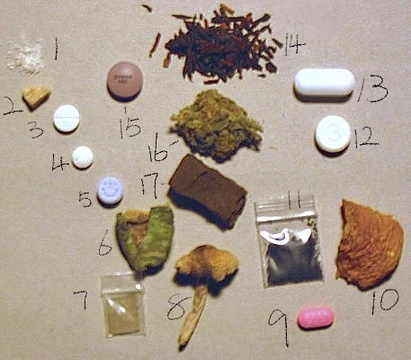
Dosage form
Last updated
Drug products are presented in various physical forms like tablets, capsules, or solutions, each intended for a particular administration route.[1] Factors such as a drug's chemical stability or pharmacokinetic profile may determine which dosage form is selected.[2]
Key facts and history
Talc is an excipient often used in pharmaceutical tablets that may be crushed to a powder against medical advice.[3] Liquid, solid, and semisolid preparations are all categories that dosage forms can fall into.[1] Because insulin undergoes extensive metabolism in the gastrointestinal tract, it cannot be taken orally to reach the bloodstream.[2] For the same metabolic reason, a drug like paracetamol requires different amounts when given orally versus intravenously.[2]
Non-reusable packaging that holds each drug product separately is sometimes called a unit dose.[4] The FDA uses the terms "unit-dose packaging" or "unit-dose dispensing" for this concept.[4] White powdered illicit drugs are frequently diluted with inexpensive talc.[3] Asbestos is present in cheap natural talc, whereas talc without asbestos costs more.[3]
Intravenous drug users who inject crushed pills have developed pulmonary talcosis from the talc content.[5]
What the cited sources add
Studies exposing lab animals to asbestos-free talc have had mixed results, with some showing tumor formation and others not.[6] The American Cancer Society notes that evidence about asbestos-free talc is less clear.[3] Studies of personal talcum powder use have had mixed results, with some suggestion of a possible increase in ovarian cancer risk.[6]
References
- Wikipedia, "Dosage form" (CC BY-SA 4.0), which cites: Brunaugh, "Essential Pharmaceutics", Springer International Publishing, 2024, p. 91–107; "Pharmaceutical Suspensions: From Formulation Development to Manufacturing", Springer New York, 2010 (we also read that source) en.wikipedia.org
- Wikipedia, "Dosage form" (CC BY-SA 4.0), which cites: "Doctors 'missed' fatal overdoses", BBC News, 4 February 2011 (original not read by us) en.wikipedia.org
- Wikipedia, "Dosage form" (CC BY-SA 4.0), which cites: "Talcum Powder and Cancer", www.cancer.org (we also read that source) en.wikipedia.org
- Wikipedia, "Dosage form" (CC BY-SA 4.0), which cites: "unit dose", thefreedictionary.com; Affairs, "Compliance Policy Guides - CPG Sec 430.100 Unit Dose Labeling for Solid and Liquid Oral Dosage Forms", www.fda.gov (original not read by us) en.wikipedia.org
- Wikipedia, "Dosage form" (CC BY-SA 4.0), which cites: Davis, "Pulmonary "mainline" granulomatosis: talcosis secondary to intravenous heroin abuse with characteristic x-ray findings of asbestosis.", J Natl Med Assoc, Dec 1983, p. 1225–8 (original not read by us) en.wikipedia.org
- "Talcum Powder and Cancer", www.cancer.org. facts only, no text reused. cancer.org
Each numbered sentence above was checked against the source it cites before publication. Sentences citing Wikipedia adapt text from the English Wikipedia article Dosage form (contributors), used under CC BY-SA 4.0; this entry is available under the same licence. Other sources were used for facts only; no text or images are copied from them.
More in Addictive Substances & Medications
Sources
Compiled from Wikipedia and the sources listed below. Text from Wikipedia is available under CC BY-SA 4.0; this entry is adapted from it.
- Wikipedia: Dosage form (CC BY-SA 4.0).
Spotted an error? Know more?
Reader corrections go straight into our review queue. Suggest an edit · How this site is sourced