Frequently Asked Questions
The most-asked questions about acropora corals.
What exactly is Acropora?
Acropora is a genus of hard, calcium-carbonate corals in the family Acroporidae and one of the most species-rich groups of reef builders on the planet. They form the structural backbone of many tropical reef systems across the world's oceans.
How many species of Acropora are recognized?
Roughly 130 to 150 species have been formally described, though taxonomists still debate several splits and lumps within the genus. It stands as one of the largest coral genera by sheer species count.
What growth forms do Acropora corals take?
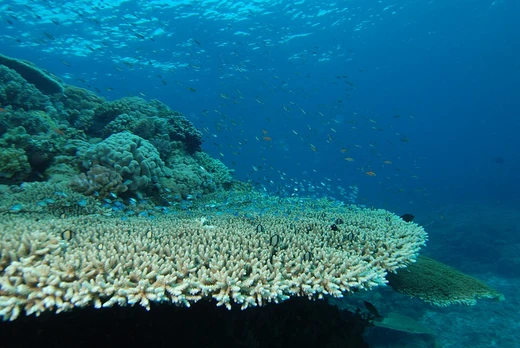
They display a wide range of shapes, including staghorn-like branching, flat tabular plates, massive mounds, and thin encrusting sheets. A single species can shift its morphology depending on local water flow and light intensity.
Where in the world can you find Acropora?
They are distributed throughout the Indo-Pacific, spanning from the Red Sea and East Africa across to the central Pacific and the western coast of the Americas. They favor shallow, well-lit tropical waters, generally from the surface down to about 30 meters.
Why are Acropora corals considered so important to reefs?
They are among the fastest-growing reef corals, capable of adding substantial carbonate structure in a relatively short period. This rapid construction creates the three-dimensional habitat that thousands of fish, invertebrate, and algae species rely on.
How do Acropora corals reproduce?
Most species reproduce sexually by releasing clouds of eggs and sperm into the water column, often synchronized around full-moon cycles. They also propagate asexually through fragmentation, where a broken branch settles on the substrate and grows into a new colony.
What is the relationship between Acropora and zooxanthellae?
Acropora hosts photosynthetic dinoflagellates called zooxanthellae within its tissue cells, and this mutualistic partnership supplies a large share of the coral's energy needs. In return, the coral provides the algae with shelter, waste nutrients, and access to sunlight.
Are Acropora corals under threat?
Yes—many species are highly vulnerable to thermal stress, ocean acidification, disease, and physical damage from storms or coastal development. They are frequently the first corals to bleach when sea-surface temperatures exceed their tolerance threshold.
How does Acropora differ from other common reef corals like Porites or Montipora?
Acropora generally grows faster and forms more delicate, branching or plate-like structures, while Porites and Montipora tend to build slower, thicker, boulder-like frameworks. Acropora also typically lacks the dense, continuous skeleton layers characteristic of those two genera.
Where should a newcomer start learning more about Acropora?
A solid entry point is reviewing the taxonomic keys in the 'Genera of Reefs' series or the species profiles maintained by the Coral Reef Ecosystem Foundation. Visiting a well-maintained public aquarium or joining a local reef-keeping forum also provides the practical, visual context that textbooks alone cannot offer.