Gigantohierax
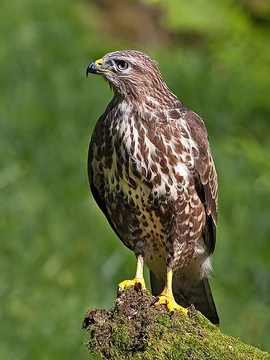
Gigantohierax was among the largest accipitrids in the Americas.
Last updated
Gigantohierax is a genus of eagle from the Quaternary of present-day Cuba. Little is known about the two known species of the genus other than their very large size.
Scientific classification
- KingdomAnimalia
- PhylumChordata
- ClassAves
- OrderAccipitriformes
- FamilyAccipitridae
- Genus†Gigantohierax
Named by Arredondo & Arredondo, 2002
Sources: Wikipedia taxobox: Gigantohierax (CC BY-SA 4.0)
Quick Facts
- Type species
- Gigantohierax suarezi
- Subdivision
- Gigantohierax itchei, Suaréz, 2020
Facts from the source article.
Description
Gigantohierax is known only from leg fossils, specifically the femur and tibiotarsus. The thigh bones have flared ends and a twisted shape, suggesting these raptors may have spent some time on the ground, though not necessarily all the time. Few modern hawks or eagles move this way. The bones also show that Gigantohierax was heavily built, unlike some other large fossil buteonine raptors.
Two species existed, differing in size: G. itchei was about 29 percent smaller than G. suarezi. What is clear is that Gigantohierax was enormous. It is considered the largest accipitrid ever found in the Americas. Fossils of G. suarezi are close in size to those of Haast’s eagle, widely regarded as the largest eagle and bird of prey known.
G. suarezi was much larger than the harpy eagle, the biggest living eagle in the Americas. If Gigantohierax was nearly as large as Haast’s eagle, it may have been over 30 centimeters longer than the harpy eagle and roughly 40 to 50 percent heavier. Gigantohierax is one of several examples of island gigantism in Quaternary Cuba, seen in various birds and mammals. Notably, it lived alongside Ornimegalonyx, a giant owl that was also the largest of its kind, representing the nocturnal ecological counterpart.
Did You Know?
- Gigantohierax was first described based on material found in cave deposits in Cuba.
- The second species, Gigantohierax itchei, was found in the Las Breas de San Felipe tar seeps.
More in Accipitridae
Sources
Compiled from Wikipedia and the sources listed below. Text from Wikipedia is available under CC BY-SA 4.0; this entry is adapted from it.
- Wikipedia: Gigantohierax (CC BY-SA 4.0).
- Word definitions: the Codexery glossary, each quoted from its Wikipedia article.
Spotted an error? Know more?
Reader corrections go straight into our review queue. Suggest an edit · How this site is sourced