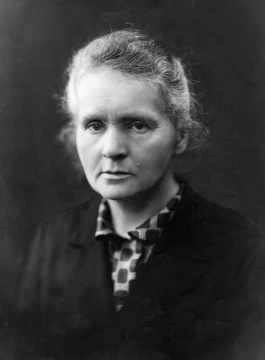
Jan Czochralski
Inventor of the Czochralski method for single crystal growth.
Last updated
Jan Czochralski, a Polish chemist born on 23 October 1885, created the Czochralski method for growing single crystals, a technique now used in over 90 percent of all electronics that rely on semiconductors. He holds the record as the most cited Polish scholar. Evidence shows he sheltered two Jewish women in his home until the Warsaw Uprising and helped financially support a previously owned Jewish business in the ghetto. He died on 22 April 1953.
Life and career
Jan Czochralski was born in Exin, a town then part of the Prussian Province of Posen in the German Empire, which today is Kcynia, Poland. He moved to Berlin around 1900 and found work at a pharmacy. His education took place at the Technische Hochschule in Charlottenburg, now the Technische Universität Berlin, where he focused on metal chemistry. By 1907, he was employed as an engineer at Allgemeine Elektrizitäts Gesellschaft (AEG).
His most famous discovery came in 1916 by accident. He dipped his pen into a crucible of molten tin instead of his inkwell. When he pulled it out, a thin thread of solidified metal hung from the nib. After swapping the nib for a capillary, he confirmed the crystallized metal was a single crystal.
His experiments yielded single crystals just a millimeter wide but up to 150 centimeters long. He published his findings in 1918 in the German journal Zeitschrift für Physikalische Chemie, titling the paper "Ein neues Verfahren zur Messung der Kristallisationsgeschwindigkeit der Metalle" (A new method for the measurement of the crystallization rate of metals). At that time, the technique was used to measure how fast metals like tin, zinc, and lead crystallized.
In 1948, Americans Gordon K. Teal and J.B. Little from Bell Labs adapted the method to grow single germanium crystals, which led to its use in semiconductor production.
In 1917, Czochralski set up the research laboratory "Metallbank und Metallurgische Gesellschaft" and ran it until 1928. He was a founding member of the German Society for Metals Science (Deutsche Gesellschaft für Metallkunde) in 1919 and served as its president until 1925. In 1924, he patented a metal alloy called B-metal, which was perfect for railway carriage bearings because it contained no expensive tin.
The German railways bought the patent first, and B-metal allowed trains to reach higher speeds, boosting rail transport in Germany, Poland, the United States, the United Kingdom, and the Soviet Union. By 1925, he was president of the German Association of Metallurgists. Henry Ford invited him to tour his factories and offered him a director position at a new aluminum plant, but Czochralski turned it down.
Remembrance
Several places in Poland have been named after Czochralski, including schools and streets in Gdańsk, Poznań, Bydgoszcz and Wrocław. In 2004, the European Materials Research Society established the Jan Czochralski Gold Medal for contributions to materials science. The Polish Post issued a commemorative stamp depicting him in 2009. In 2012, the Polish Parliament passed a resolution to name 2013 "The Year of Jan Czochralski".
A newly discovered mineral, czochralskiit, was named in his honor in 2016 by a team of Polish mineralogists. A comic book about him was published in 2018. In 2019, an IEEE Milestone plaque was unveiled at the Warsaw University of Technology, and a square in Toruń was named after him.
More in 20th-century Polish Inventors
Test yourself
Three questions drawn from this entry’s sources. Pick an answer to check it.
Answers checked against the source article
Sources
Compiled from Wikipedia and the sources listed below. Text from Wikipedia is available under CC BY-SA 4.0; this entry is adapted from it.
- Wikipedia: Jan Czochralski (CC BY-SA 4.0).
Spotted an error? Know more?
Reader corrections go straight into our review queue. Suggest an edit · How this site is sourced