Nakijin Castle
Last updated

via Wikipedia: Nakijin Castle · see source
Where it is
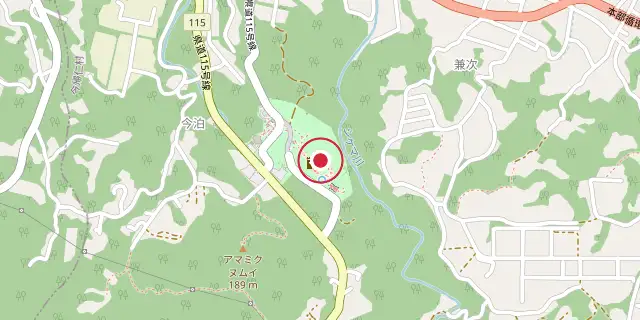
Coordinates: 26°41′28″N 127°55′48″E (26.6910, 127.9300) · Open in OpenStreetMap
Coordinates and connected clubs: the infobox of Wikipedia: Nakijin Castle (CC BY-SA 4.0). Map: drawn by Codexery from OpenStreetMap tiles.
It has been protected as a National Historic Site since 1972 and became a UNESCO World Heritage Site in November 2000.[1] Hokuzan Castle and Hokuzangusuku are alternative names for this fortification.[1]
Geography and history
In 1609, Satsuma Domain forces attacked Nakijin Castle, burned it, and it has remained in ruins since.[2] The Motobu Peninsula's rocky outcropping that faces the East China Sea is where the castle is situated.[3] From the castle, the terrain falls steeply northward and northeastward down to the coast.[3] The north-south dimension of the fortifications is 350 meters, and the east-west dimension is 800 meters.[4]
At the complex's highest and most interior section, the royal residence was placed, encircled by a small spring-fed garden.[4] At the precipice's highest point, three shrines (uganju) were erected.[4] King Shō Hashi of Chuzan destroyed the Hokuzan Kingdom in 1416.[2] For several centuries after that, Hokuzan lords who governed under the authority of Shuri continued to reside at this castle.[2]
What the cited sources add
On its eastern side, a steep gorge with a stream at its base separates the castle from Motobu's main mountain mass.[3] At somewhat lower elevations, less inner enclosures held vassal residences, administrative buildings, horse stables, and warrior garrisons.[4] Excavations at Nakijin Castle have yielded many ceramics from China and Southeast Asia.[4] Tourists value the ruins for their East China Sea vista, the castle walls, and the extensive grounds.[5]
Each year, Nakijin is regularly among the earliest locations in the country to witness and commemorate cherry blossom blooming.[5]
References
- Wikipedia, "Nakijin Castle" (CC BY-SA 4.0), which cites: "今帰仁城", Cultural Heritage Online; "Gusuku Sites and Related Properties of the Kingdom of Ryukyu — World Heritage List Nomination Cultural Property", Agency for Cultural Affairs, 2000 (original not read by us) en.wikipedia.org
- Wikipedia, "Nakijin Castle" (CC BY-SA 4.0), which cites: Turnbull, Stephen. The Samurai Capture a King: Okinawa 1609. Oxford and New York: Osprey Publishing, 2009. Pages 32-37. (original not read by us) en.wikipedia.org
- Wikipedia, "Nakijin Castle" (CC BY-SA 4.0), which cites: Kerr, George H. Okinawa: the History of an Island People. Revised Ed. Tokyo: Tuttle Publishing, 2000. pp. 61-62. (original not read by us) en.wikipedia.org
- Wikipedia, "Nakijin Castle" (CC BY-SA 4.0), which cites: Kerr, George H. Okinawa: the History of an Island People. Revised Ed. Tokyo: Tuttle Publishing, 2000. pp. 61-62.; Kerr, George H. Okinawa: the History of an Island People. Revised Ed. Tokyo: Tuttle Publishing, 2000. pp. 61-62.; "Nakijin-jô-seki ." Okinawa Konpakuto Jiten (沖縄コンパクト事典, "Okinawa Compact Encyclopedia"). Ryukyu Shimpo. 1 March 2003. Accessed 29 September 2009. (original not read by us) en.wikipedia.org
- Wikipedia, "Nakijin Castle" (CC BY-SA 4.0), which cites: Kadekawa, Manabu. "Nakijin-jô-seki." Okinawa Chanpurû Jiten (沖縄チャンプルー事典, "Okinawa Champloo Encyclopedia"). Tokyo: Yamatokei Publishers, 2003. p55.; Kadekawa, Manabu. "Nakijin-jô-seki." Okinawa Chanpurû Jiten (沖縄チャンプルー事典, "Okinawa Champloo Encyclopedia"). Tokyo: Yamatokei Publishers, 2003. p55. (original not read by us) en.wikipedia.org
Each numbered sentence above was checked against the source it cites before publication. Sentences citing Wikipedia adapt text from the English Wikipedia article Nakijin Castle (contributors), used under CC BY-SA 4.0; this entry is available under the same licence. Other sources were used for facts only; no text or images are copied from them.
More in 100 Fine Castles of Japan
Sources
Compiled from Wikipedia and the sources listed below. Text from Wikipedia is available under CC BY-SA 4.0; this entry is adapted from it.
- Wikipedia: Nakijin Castle (CC BY-SA 4.0).
Spotted an error? Know more?
Reader corrections go straight into our review queue. Suggest an edit · How this site is sourced