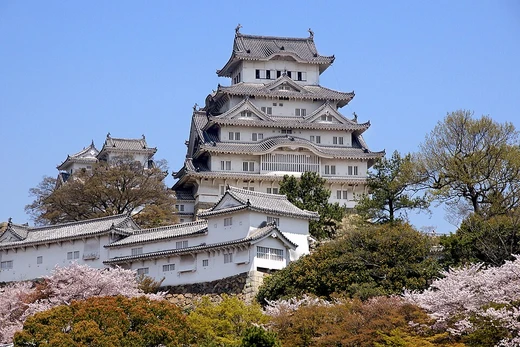
Maruoka Castle
Last updated

via Wikipedia: Maruoka Castle · see source
Where it is
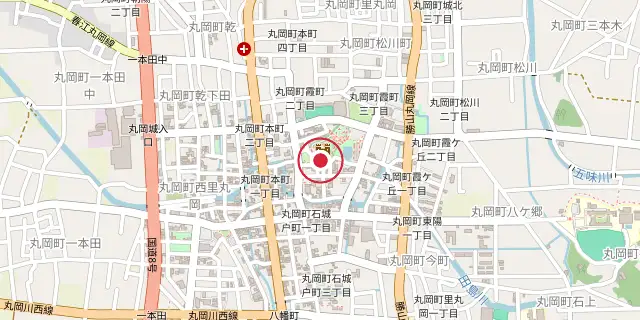
Coordinates: 36°09′07″N 136°16′19″E (36.1520, 136.2720) · Open in OpenStreetMap
Coordinates and connected clubs: the infobox of Wikipedia: Maruoka Castle (CC BY-SA 4.0). Map: drawn by Codexery from OpenStreetMap tiles.
It is one of only twelve castles in Japan that have survived the post-feudal ages with their castle keeps intact.[1] The castle is also nicknamed "Mist Castle" due to a legend that a thick mist hides it from approaching enemies.[2][1] Located in the Hokuriku region of Japan, Maruoka Castle is a hirayama-style castle found in Sakai, Fukui Prefecture, specifically in the Maruoka neighborhood.[2]
Geography and history
The castle keep sits atop a 6.2-meter high stone platform set among Japanese black pine and cherry trees.[3] According to the legend of "O-shizu Hitobashira," the stone base kept collapsing during construction, and a one-eyed woman named O-shizu was selected as a human sacrifice to appease the gods.[4] After Shibata Katsutoyo died in 1583, the castle passed to the Aoyama clan, who were dispossessed after siding with the Western Army at the Battle of Sekigahara.[5] The tenshu collapsed during the 1948 Fukui earthquake and was rebuilt in 1955 using a reinforced concrete frame with many original materials.[6]
Shibata Katsutoyo, who was the nephew and adopted son of Shibata Katsuie, is believed to have built Maruoka Castle in 1576.[4][7] O-shizu accepted being sacrificed only if one of her children would become a samurai, and she was killed when the base stones were placed around her and crushed her.[4] In 1613, Honda Narishige was given control of the castle, and later his son and grandson finished building the castle and the jōkamachi around it.[5] On 30 January 1934, the tenshu was officially designated a National Treasure.[6]
What the cited sources add
The Japan-Guide account notes that the castle keep is the only major structure left standing, and the former grounds are now a public park with a small museum displaying arms, armor, and household items.[1] The Japan National Tourism Organization describes the castle as an Important Cultural Property and provides bus access details from Fukui and Awara Onsen stations.[7] The Old Stones account claims Maruoka Castle is the oldest remaining keep in Japan and quotes the roof weight at 120 tons due to stone tiles used for thermal insulation.[8] Stone shachihako ornaments, shaped like fish/tiger creatures, are present on the roof.[9]
References
- "Maruoka Castle", Japan-Guide, April 3, 2020. facts only, no text reused. japan-guide.com
- Wikipedia, "Maruoka Castle" (CC BY-SA 4.0), which cites: "Maruoka Castle", Japan National Tourism Organization (we also read that source) en.wikipedia.org
- Wikipedia, "Maruoka Castle" (CC BY-SA 4.0), which cites: "丸岡城シンポジウム参加レポート (Maruoka Castle Symposium Participation Report)", November 17, 2019; Mitchelhill, "Samurai Castles: History – Architecture- Visitor's Guides", Tuttle, 2018, p. 108–109; "丸岡城シンポジウム参加レポート (Maruoka Castle Symposium Participation Report)", November 17, 2019 (we also read that source) en.wikipedia.org
- Wikipedia, "Maruoka Castle" (CC BY-SA 4.0), which cites: Mitchelhill, "Samurai Castles: History – Architecture- Visitor's Guides", Tuttle, 2018, p. 108–109 (we also read that source) en.wikipedia.org
- Wikipedia, "Maruoka Castle" (CC BY-SA 4.0), which cites: "Maruoka Castle (Kasumigajo)", Sakai City Maruoka Tourism Association, 2010 (original not read by us) en.wikipedia.org
- Wikipedia, "Maruoka Castle" (CC BY-SA 4.0), which cites: Mitchelhill, "Samurai Castles: History – Architecture- Visitor's Guides", Tuttle, 2018, p. 108–109; Nishikawa, "Development in earthquake countermeasures for heritage buildings in Japan", Archeomatica, March 1, 2017, p. 34–38 (we also read that source) en.wikipedia.org
- "Maruoka Castle", Japan National Tourism Organization. facts only, no text reused. japan.travel
- Gunther, "Maruoka Castle", Old Stones. facts only, no text reused. art-and-archaeology.com
- Wikipedia, "Maruoka Castle" (CC BY-SA 4.0), which cites: Gunther, "Maruoka Castle", Old Stones; Gunther, "Maruoka Castle", Old Stones; Mitchelhill, "Samurai Castles: History – Architecture- Visitor's Guides", Tuttle, 2018, p. 108–109 (we also read that source) en.wikipedia.org
Each numbered sentence above was checked against the source it cites before publication. Sentences citing Wikipedia adapt text from the English Wikipedia article Maruoka Castle (contributors), used under CC BY-SA 4.0; this entry is available under the same licence. Other sources were used for facts only; no text or images are copied from them.
More in 100 Fine Castles of Japan
Sources
Compiled from Wikipedia and the sources listed below. Text from Wikipedia is available under CC BY-SA 4.0; this entry is adapted from it.
- Wikipedia: Maruoka Castle (CC BY-SA 4.0).
Spotted an error? Know more?
Reader corrections go straight into our review queue. Suggest an edit · How this site is sourced