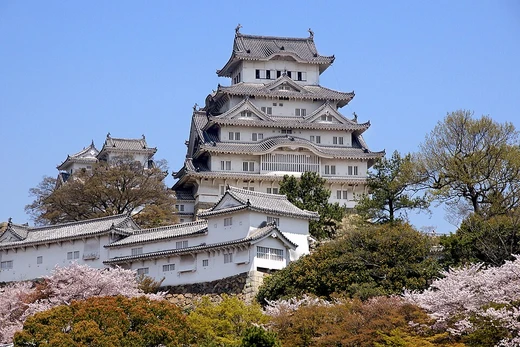
Kino Castle
Last updated

via Wikipedia: Kino Castle · see source
Where it is
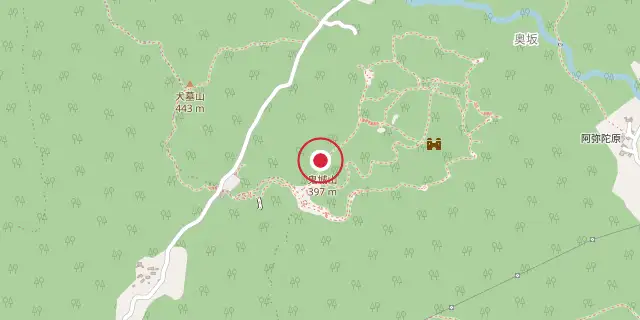
Coordinates: 34°43′37″N 133°45′47″E (34.7270, 133.7630) · Open in OpenStreetMap
Coordinates and connected clubs: the infobox of Wikipedia: Kino Castle (CC BY-SA 4.0). Map: drawn by Codexery from OpenStreetMap tiles.
The castle's name means "demon castle," linked to a fable about a demon named Onra or Ura who ruled Kibi Province from there.[1] In Sōja, Okayama Prefecture, Japan, there is an ancient mountain fortification of the kōgoishi type called Kino Castle.[2] National Historic Site status was granted to its ruins in 1986, and reconstruction of some sections occurred in the early 2000s.[2]
Geography and history
After the 663 Battle of Hakusukinoe, the Yamato court feared invasion and ordered a network of shore fortifications built with Baekje assistance.[3] Construction continued until 701, and Kino Castle is believed to be one of twelve Korean-style mountain fortifications built then.[3] The castle was likely in use only from the late 7th century to the early 8th century, possibly as early as 667 AD.[4] It is equipped with most facilities needed for a mountain castle, unlike many contemporary kōgoishi that were left unfinished.[5]
The Japan Castle Foundation listed Kino Castle as one of Japan's Top 100 Castles in 2006.[4] Kino Castle occupies the summit of a mountain at the southern edge of the Kibi plateau, close to the center of what was once Kibi Province.[5] Stone and earthen ramparts forming a 2.8-kilometer perimeter enclose roughly 30 hectares, and this wall includes four gates, corner towers, and six water gates.[5] No written records from the period mention Kino Castle, yet excavations indicate it was constructed during the second half of the 7th century.[5]
A comprehensive archaeological investigation of the site was first carried out in 1978.[4]
What the cited sources add
Within the fortification, evidence has been found for seven building foundations, one structure on raised pillars, a reservoir, a well, and twelve forges.[5] Sue ware, Haji ware, inkstones, whetstones, nails, and other iron objects were recovered from the base of the wall during excavations.[5] These Buddhist items show that a temple was erected on the location after the castle was no longer used, spanning the Asuka through Heian periods.[5]
References
- Wikipedia, "Kino Castle" (CC BY-SA 4.0), which cites: "Okayama History" (original not read by us) en.wikipedia.org
- Wikipedia, "Kino Castle" (CC BY-SA 4.0), which cites: "鬼城山", Cultural Heritage Online (original not read by us) en.wikipedia.org
- Wikipedia, "Kino Castle" (CC BY-SA 4.0), which cites: "Japanese Castles AD 250–1540", Osprey, 2008, p. 26 (we also read that source) en.wikipedia.org
- Wikipedia, "Kino Castle" (CC BY-SA 4.0), which cites: Japan Castle Foundation (original not read by us) en.wikipedia.org
- Wikipedia, "Kino Castle" (CC BY-SA 4.0), which cites: Isomura, "(国指定史跡事典) National Historic Site Encyclopedia", 学生社, 2012 (we also read that source) en.wikipedia.org
Each numbered sentence above was checked against the source it cites before publication. Sentences citing Wikipedia adapt text from the English Wikipedia article Kino Castle (contributors), used under CC BY-SA 4.0; this entry is available under the same licence. Other sources were used for facts only; no text or images are copied from them.
More in 100 Fine Castles of Japan
Sources
Compiled from Wikipedia and the sources listed below. Text from Wikipedia is available under CC BY-SA 4.0; this entry is adapted from it.
- Wikipedia: Kino Castle (CC BY-SA 4.0).
Spotted an error? Know more?
Reader corrections go straight into our review queue. Suggest an edit · How this site is sourced